


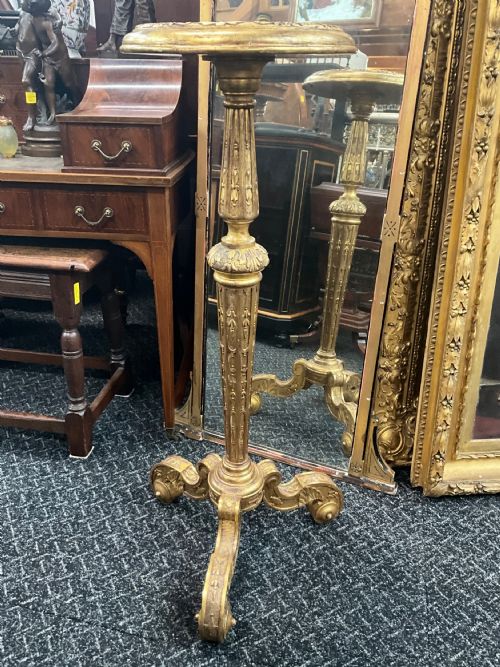


19th Century Giltwood Stands
These 19th century giltwood stands bring gilded architectural presence and display surfaces into a room.
19th Century Giltwood Stands
When you search for 19th century giltwood stands, you are looking at functional display pieces and decorative furnishings finished in gold leaf or gesso across the nineteenth century. The selection ranges from French Empire and Regency side tables to Victorian torchaires, pedestals, and jardiniere stands.
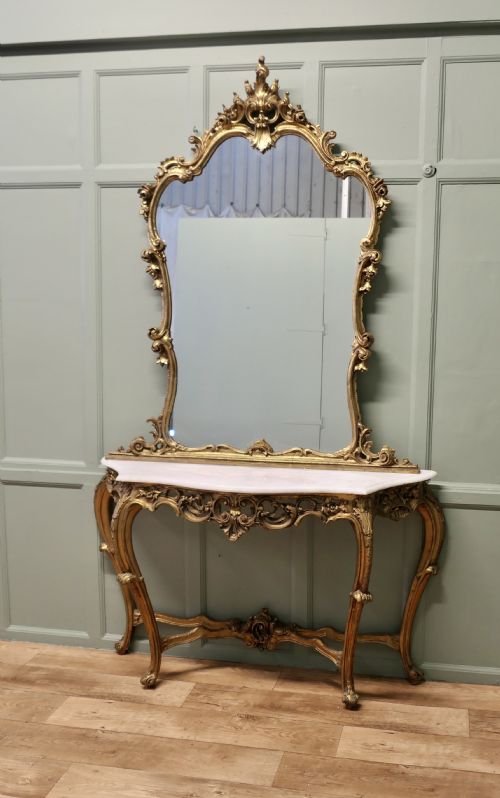
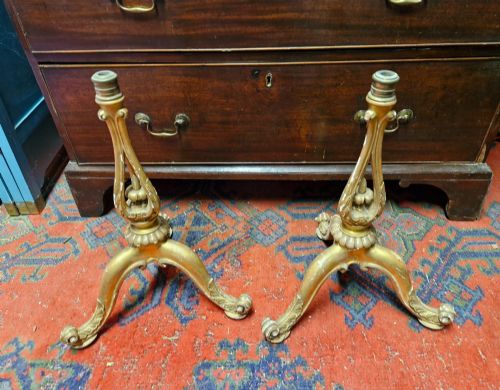
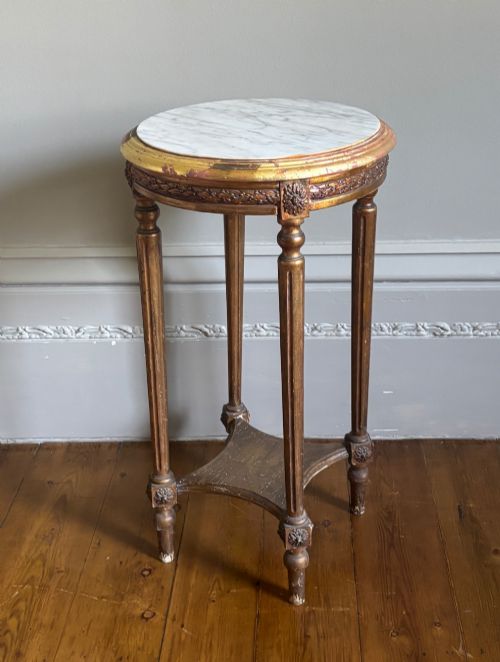
You are most likely to meet Italian and French carved wooden examples on this page, spanning console tables, urn stands, and tripod bases. These forms often incorporate decorative details like marble tops, onyx inserts, and moulded flower motifs.
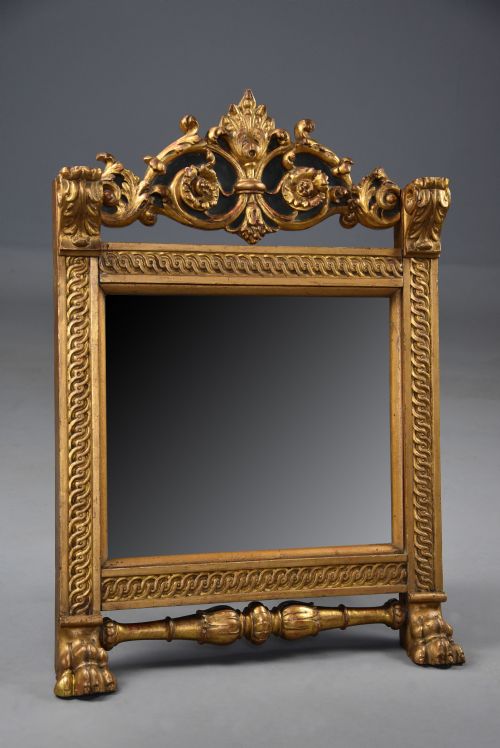
The objects serve varied roles, functioning as lamp bases, cheval mirrors, easel table mirrors, and display cabinets. Their origins cross regional workshops in England, France, and Italy, reflecting diverse revivalist movements from Rococo to Renaissance.
How they were made
Maker workshops built these stands primarily from carved wood, applying layers of gesso to create smooth surfaces for subsequent gilding with gold leaf. This combination of carved timber and metallic leaf gave the objects their characteristic luminous finish.
Many pieces incorporate inset stone or glass elements, pairing gilded wooden frames with marble tops, onyx slabs, or mirror glass. Structural stability in tables and pedestals often relied on turned columns, tripod legs, and brass or metal reinforcement.
Surface ornamentation relied heavily on hand-carving and moulding applied directly to the gesso or wood substrate. Artisans executed intricate floral motifs, scrollwork, and architectural detailing before sealing the metallic surfaces.
Listings feature 19th Century, Regency, and Victorian periods alongside materials like marble, brass, and glass.
What varies in quality
The depth and crispness of the hand-carving distinguish finer pieces from simpler production. Superior stands exhibit sharply defined foliage, scrolls, and mouldings where the artisan worked the wood and gesso with precision.
The integrity of the gilding and the underlying preparation layers dictate visual success. High-grade examples maintain even application of gold leaf over well-smoothed gesso, whereas lesser items show coarse preparation or clumsy later gilding overhauls.
Material selection for inset surfaces marks another tier of distinction. Stands integrating high-grade marble or onyx slabs and sturdy structural joinery sit above those utilising thin secondary woods and plain glass inserts.
The 19th Century Giltwood Stands Glossary
- Giltwood
- Timber that has been coated with gold leaf or gold paint. This finish creates the bright, reflective surface characteristic of these decorative stands.
- Gesso
- A plaster mix applied to wood surfaces as a preparation base for gilding. It provides a smooth ground that can be moulded and carved before applying gold leaf.
- Torchare
- A tall stand or pedestal designed to support a light fixture or decorative object. These vertical pieces elevate lamps and urns within a room.
- Jardiniere
- A decorative stand or container made to hold plants and flowers. Examples in this category often feature waterproof linings or tiered platforms.
- Tripod base
- A support structure resting on three legs. This configuration appears frequently on smaller tables, lamp bases, and display stands.
19th Century Giltwood Stands: Frequently Asked Questions
What rooms suit a giltwood stand?
These pieces fit well in drawing rooms, hallways, and living spaces where they function as display surfaces for lamps, urns, and decorative objects. Their reflective surfaces catch natural light effectively.
They also serve effectively as bedside tables or plant stands depending on the specific form, whether a tall torchaire or a low side table.
How do I clean giltwood?
Dust gently with a dry, soft cloth to prevent accumulation without disturbing the delicate gold leaf layer. Avoid chemical cleaning products entirely.
Moisture can damage both the gesso and the underlying wood, so damp cloths should not be used on the gilded surfaces.
Are marble tops original?
Many nineteenth-century tables and stands were manufactured specifically to house inset marble or onyx slabs. These stone surfaces provided stable, durable tops for display.
Inspect the fit between the stone and the wooden rebate to understand how the top integrates with the supporting frame.
How do I identify French styles?
French pieces from this era often display specific revival characteristics, such as Louis XVI symmetry or exuberant Rococo curves. Look for serpentine outlines and classical column supports.
Design motifs like floral mouldings and Neoclassical proportions help separate French workshop outputs from English or Italian equivalents.
What is a torchaire?
A torchaire is a tall, slender pedestal or stand historically used to hold lighting devices like candles or oil lamps. In nineteenth-century interiors, they functioned primarily as decorative vertical accents.
Today they operate effectively as display columns for sculptures, vases, or modern table lamps.