



19th Century Flat Desk
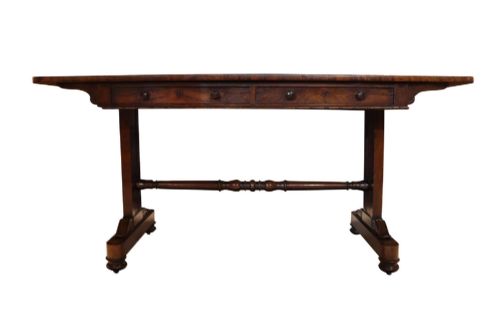
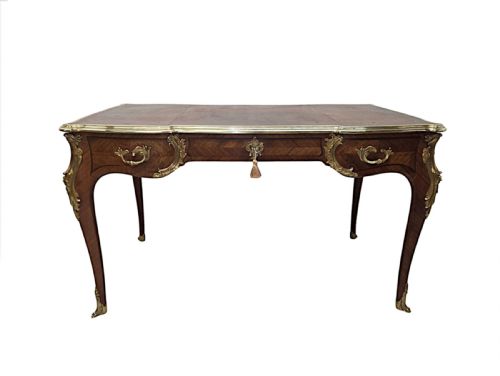
A 19th century flat desk offers a grand writing surface for the study, most often taking the form of a French bureau plat.
19th Century Flat Desk
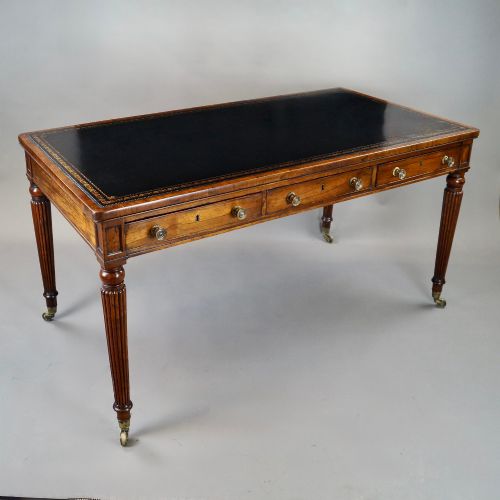
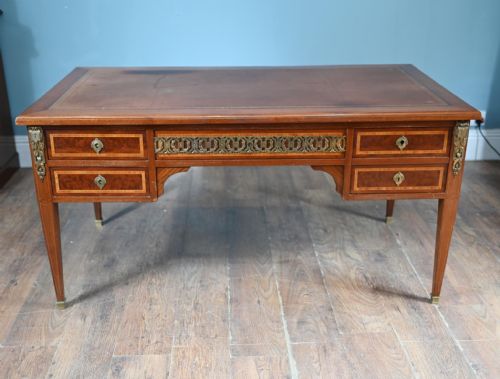
When you search for a 19th century flat desk, you are looking at large writing tables and free-standing bureau plat forms designed for formal rooms. These pieces provide a broad writing surface supported by slender or cabriole legs, often fitted with frieze drawers.
The versions you are most likely to meet on this page span the 19th century, drawing heavily on French aesthetic traditions such as Louis XV, Louis XVI, and Directoire styles. They appear in rich cabinet woods like mahogany, rosewood, and walnut.
Makers adapted these historical designs throughout the period, producing both restrained Regency library tables and heavily ornamented revival pieces with distinct continental influences.
How they were made
Cabinetmakers constructed these writing tables using dense timbers like mahogany, rosewood, and burl walnut, often over a stable oak or pine secondary framing. Selected veneers provide the primary visual grain across the wide top surfaces.
Metalwork played a defining role in the construction of French revival pieces, employing cast or chased ormolu and gilt bronze mounts to accent the corners, drawer edges, and legs. Desk surfaces frequently incorporate inset panels of tooled leather to create a smooth writing plane.
19th Century Flat Desk Retail Price Guide 2026
Typical asking prices for 19th century flat desk among the pieces listed under this phrase on Sellingantiques today, from the lower quarter to the upper quarter. They describe what is for sale here now, not the wider market.
Secret drawers occasionally hide within the thick frieze rails, waiting for someone to discover the release mechanism.
What varies in quality
The standard of a 19th century flat desk depends heavily on the precision of its cabinetwork and the weight of its metal fittings. Finer pieces display crisp, hand-chased ormolu mounts rather than light, mass-cast bronze details, along with finely figured timber veneers.
The architecture of the frame and the execution of historical revival styles separate ordinary utility tables from exceptional maker-attributed bureau plat examples. Structural harmony, clean drawer movement, and balanced proportions mark the upper end of the range.
William Trotter·Gillow & Co·Henry Dasson·Zweiner
The 19th Century Flat Desk Glossary
- Bureau plat
- A freestanding French writing table with a flat top and one or more rows of drawers beneath. This form served as the primary desk for writing and administration in formal rooms.
- Ormolu
- Gilt bronze mounts applied to furniture for decoration. This technique involves gilding a bronze base with a mercury and gold amalgam.
- Directoire style
- A transitional neoclassical design movement bridging Louis XVI and Empire styles. It relies on clean architectural lines, classical restraint, and understated symmetry.
- Frieze
- The horizontal band running directly beneath the top surface of a desk or table. This section commonly houses the pull-out drawers.
19th Century Flat Desk: Frequently Asked Questions
What is a bureau plat?
A bureau plat is a traditional French writing table featuring a flat top and drawers integrated into the frieze. These pieces are finished on all sides to stand anywhere in a room.
Unlike traditional wall-facing desks, they were designed to occupy the centre of a library or study.
How do I style a flat desk?
Position the desk away from the wall to showcase its finished back and any decorative bronze mounts. Pair it with a low-backed chair that allows comfortable clearance beneath the frieze drawers.
Keep the large leather-insets surface mostly clear to highlight the grain of the wood and the fitted brass details.
What woods were used?
Cabinetmakers utilised dense hardwoods including mahogany, rosewood, kingwood, and walnut for these writing tables. Burl walnut and exotic veneers frequently supplied the decorative surface patterns.
Secondary timbers like oak supported the internal framing and drawer construction.
How do I identify a revival style?
Revival pieces borrow motifs from earlier French reigns, such as the sweeping cabriole legs of Louis XV or the straight fluted supports of Louis XVI. Look at the mounts and leg shapes to determine which historical period inspired the design.
Maker attribution stamps and specific hardware styles also help date these later interpretations.