



19th Century Equine Painting
These works capture horses and their handlers across the 19th century equine painting genre, offering collectors a direct window into historical sporting life.
19th Century Equine Painting
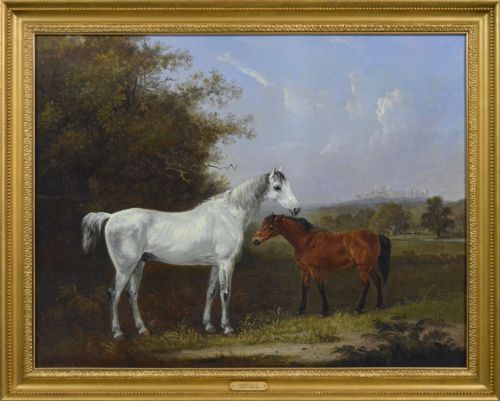
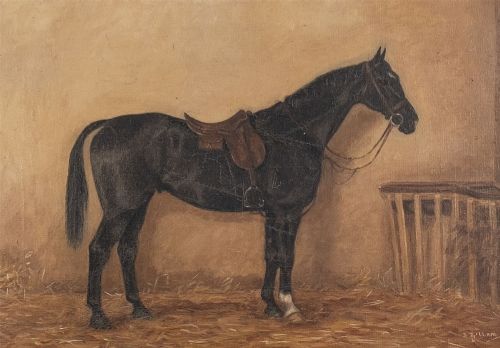
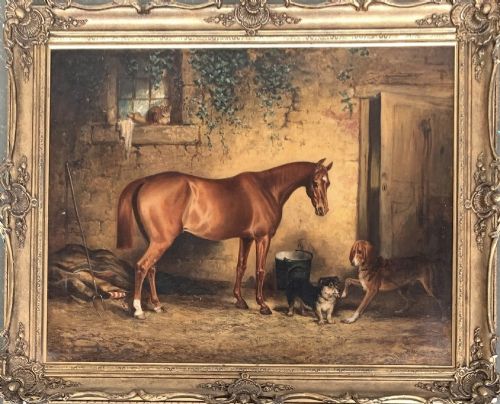
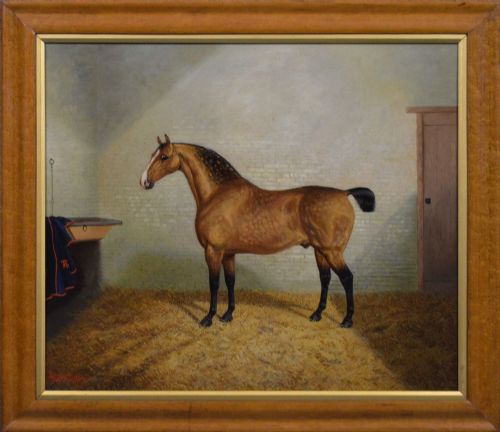
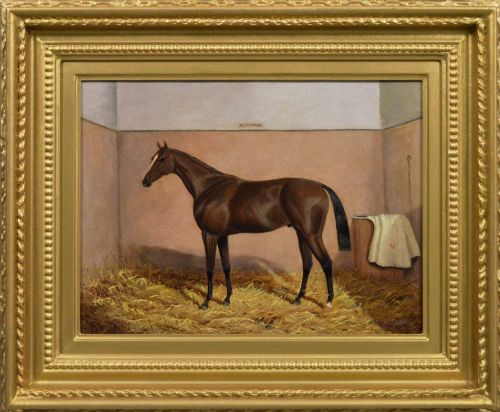
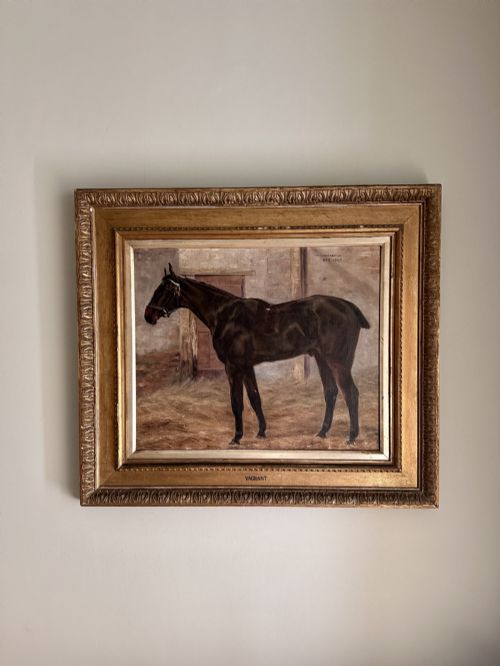
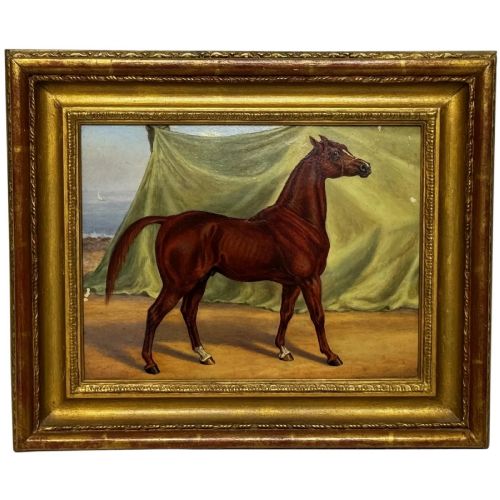
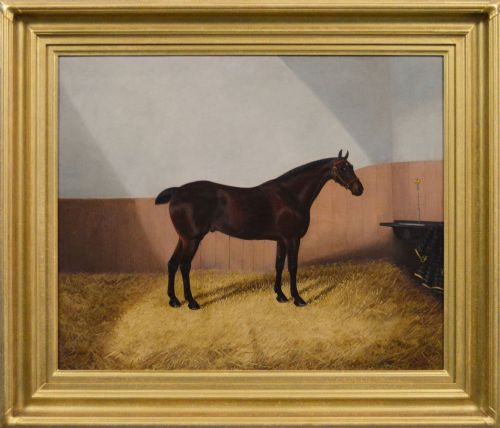
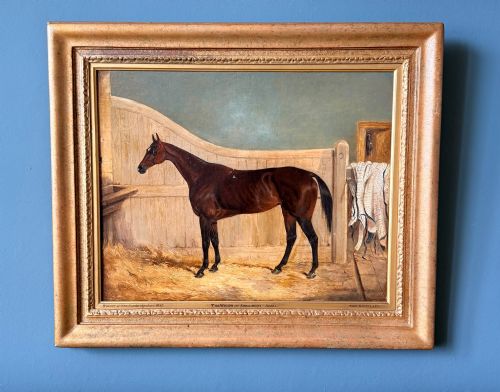
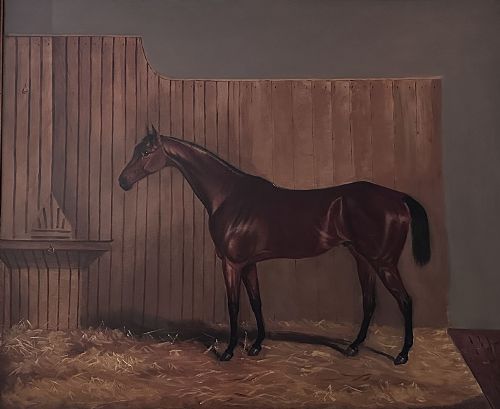
A 19th century equine painting depicts horses in various settings, ranging from stable portraits and racecourses to rural landscapes and coastal paths. Buyers seek these pieces to capture the distinctive character of individual animals, famous racehorses, and working farm horses recorded during the period.
The most common examples on this page are oil paintings on canvas, alongside select watercolours on paper. These works frequently record specific named horses, owners, and estates, often framed in period wood and giltwood.
The visual vocabulary spans British sporting art, Victorian equestrian scenes, and colonial subjects. Painters placed their subjects in landscapes or architectural stable interiors, reflecting the deep cultural importance of horses in transport, sport, and agriculture.
How They Were Made
Painters utilised oil paint on stretched canvas or applied watercolour pigments to paper, building up depth through layered brushwork. Many canvases remain set within original or period-appropriate giltwood frames decorated with gold leaf.
The technical approach prioritised accurate anatomical rendering of the horse, often combined with detailed background landscapes, stable architecture, or portraits of grooms and jockeys.
One recorded watercolour captures a young foal caught in the act of stealing fruit from a basket.
What Varies in Quality
Quality rests upon the artist's command of equine anatomy, proportion, and movement. Superior works capture the tension in muscle and spirit in the eye, whereas weaker examples present stiff or generic animal forms.
The handling of the surrounding landscape and light distinguishes accomplished hands from routine production. Paintings that integrate the horse convincingly into its environment command greater appreciation than those where the subject appears detached from the background.
Henry Barraud·Albert Clark·Fred Fitzpatrick·Thomas Walker Bretland·John Ferneley Senior·George E Sharpe·Eugene Joseph Verboeckhoven·John Frederick Herring·Helena Maguire·Benjamin Cam Norton·Clifton Tomson·Alfred Moginie Bryant·Abraham Cooper RA·Charles Bilger Spalding RA·George Goodwin Kilburne·Walter Duncan·John Nost Sartorius·Edward Lloyd·James Barenger·George Cole·John Parker Davis·J Emms
The 19th Century Equine Painting Glossary
- Giltwood
- Wood carved and coated with gold leaf or metallic paint. It forms the decorative border around many period frames.
- Hunter
- A horse bred and trained for fox hunting. These animals feature prominently in sporting art across the era.
- Provenance
- The documented history of ownership of an artwork. It establishes authenticity and traces the piece through collections and estates.
- Sporting Art
- Depictions of rural sports, racing, and animals associated with field pursuits. This genre forms the core of nineteenth-century equestrian output.
- Watercolour
- A painting method using water-soluble pigments on paper. These works offer a lighter, more translucent alternative to heavy oil paintings.
19th Century Equine Painting: Frequently Asked Questions
What subjects appear in these paintings?
The artworks display horses in stables, on racecourses, and across rural or coastal landscapes. Many record named hunters, racehorses, and working animals alongside grooms and jockeys.
Others place horses within broader farming scenes with livestock or figures. Each composition reflects the prominent role of horses in nineteenth-century society.
How do I identify the period?
Dating relies on stylistic markers, artist signatures, framing materials, and recorded biographical dates. Works span the Regency, Victorian, and late nineteenth-century eras.
Provenance notes and inscribed titles on canvases or frames frequently supply precise dates or named events.
Are watercolours as common as oils?
Oil paintings on canvas form the majority of the works recorded here. Watercolours on paper appear less frequently but offer a distinct medium.
Both formats capture the era's dedication to accurate equine portraiture and sporting traditions.
How should I care for these frames?
Giltwood frames require gentle dusting with a soft, dry brush to protect the delicate gold leaf surfaces. Avoid chemical cleaners and moisture.
Keep the paintings away from direct sunlight and fluctuating humidity to preserve both canvas and frame.