
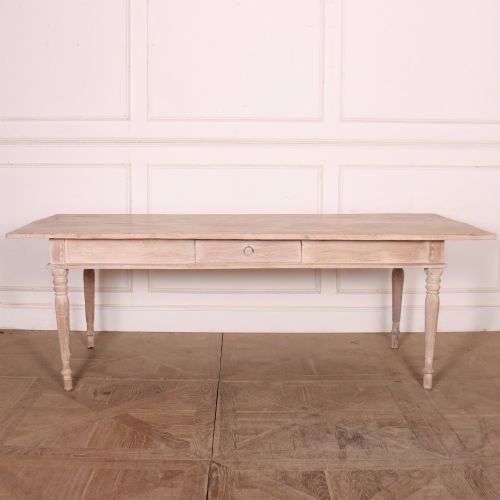
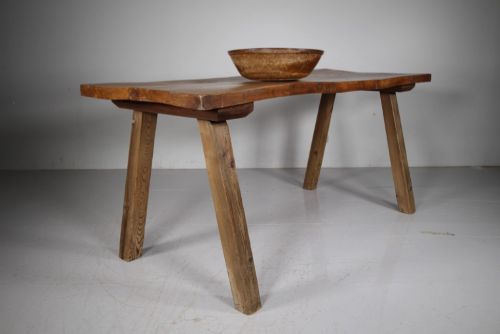
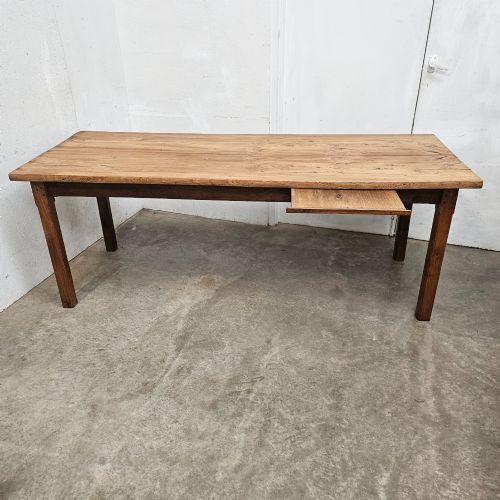
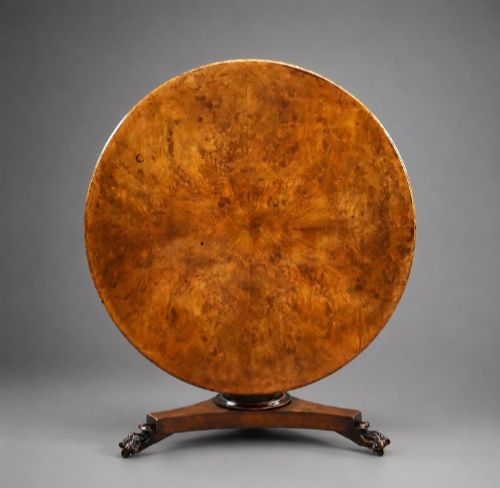



19th Century Elm Table
A 19th century elm table brings warmth to a room through deep grain and honest country use.
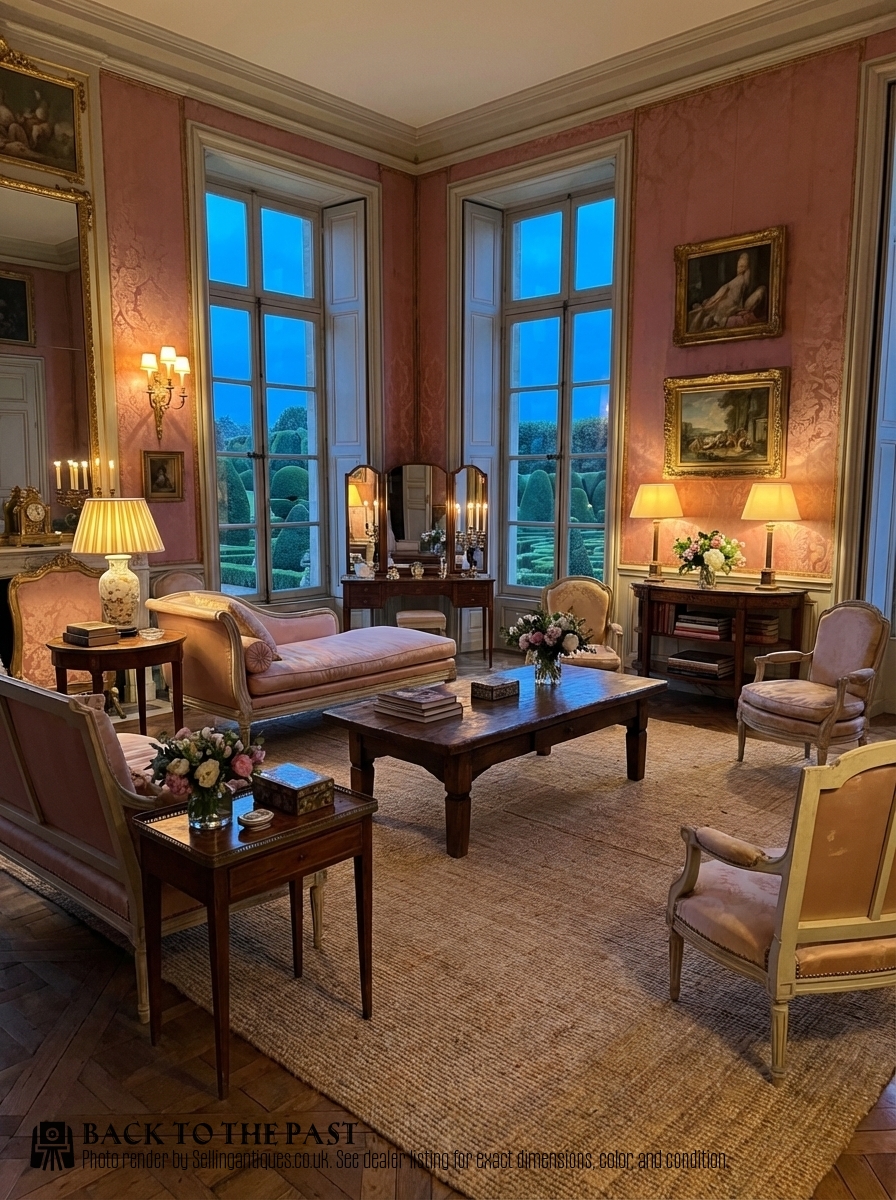
Forms and Origins
A 19th century elm table encompasses a broad family of domestic boards, from sprawling farmhouse dining formats to smaller side and coffee tables. You encounter English, French, Spanish, Italian, and Chinese examples that reflect regional woodworking traditions.
The most common formats on this page are rustic farmhouse and country dining tables alongside drop leaf, cricket, and centre tables. These pieces span the eighteenth and nineteenth centuries, carrying the marks of daily utility in kitchens, taverns, and workshops.
Materials and Construction
Elm provides the primary timber, often paired with pine, oak, ash, pear wood, maple, or hardwood frames. Joinery methods lean on solid planked tops supported by sturdy legs, occasionally incorporating metal or brass fittings.
Makers shaped these tables by hand, leaving visible grain patterns and tactile surfaces. Some pieces display hand carving, inlay, tilt top mechanisms, or drop leaf hinges designed for flexible domestic work.
Retail Price Guide 2026
Typical UK retail prices for 19th century elm table, calculated from the Sellingantiques database of over a million retail prices indexed since 2003. This retail price guide relies exclusively on Sellingantiques data; no external sources or auction records are used, so the figures do not describe the wider market.
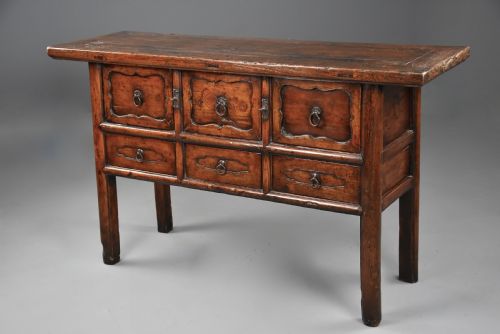
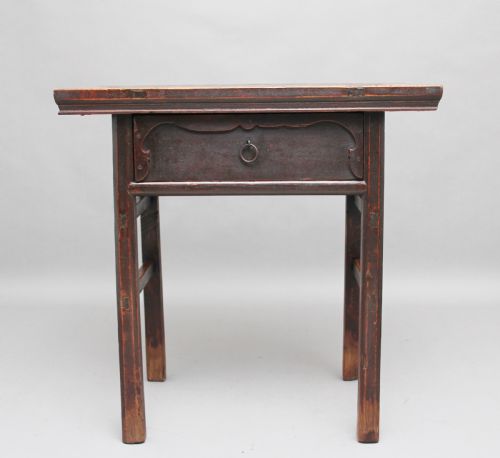
Table forms span dining, coffee, side, drop leaf, cricket, altar, tavern, refectory, and tilt top variations.
Judging Quality
Quality rests in the choice of timber and the integrity of the original construction. Burr elm tops with rich figure command attention, as do substantial refectory proportions that retain their structural stability over centuries.
The character of the surface tells the story of age. Pieces that keep an honest patination without over-restoration hold a distinct visual weight compared to heavily altered boards.
The 19th Century Elm Table Glossary
- Elm
- A dense, interlocking hardwood known for twisting grain and resistance to splitting, making it ideal for table tops and furniture frames.
- Cricket table
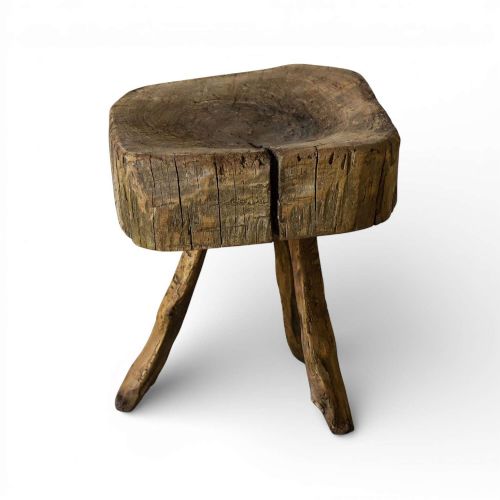
- A small, three-legged occasional table with a triangular base, traditionally used beside firesides in English country houses.
- Refectory table
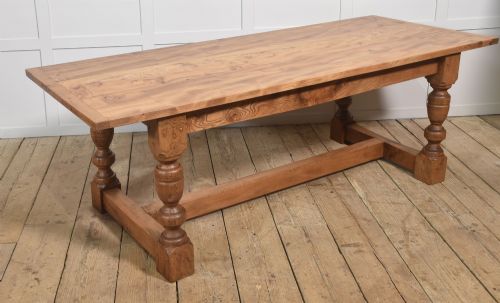
- A long, narrow dining table originally built for communal dining halls, adapted into heavy farmhouse formats.
- Tilt top table
- A table designed with a hinged top that tips vertically when not in use to save floor space.
- Drop leaf table
- A table with fixed centre leaves and hinged flaps that fold down to reduce the overall surface area.
Frequently Asked Questions
How do I clean a historic elm table?
Dust the surface regularly with a dry cloth to protect the timber.
Avoid chemical polishes and keep the wood away from direct heat sources to prevent splitting.
Are these tables suitable for daily dining?
Most of these pieces were built for heavy domestic labour and kitchen work.
Their solid construction handles everyday meals well, provided you use mats for hot dishes.
How can I tell English and French tables apart?
English examples often lean toward primitive vernacular styles like cricket or tavern tables.
French provincial pieces frequently display refined farmhouse proportions or softer lines suited to provincial kitchens.