




19th Century Dutch Cabinet
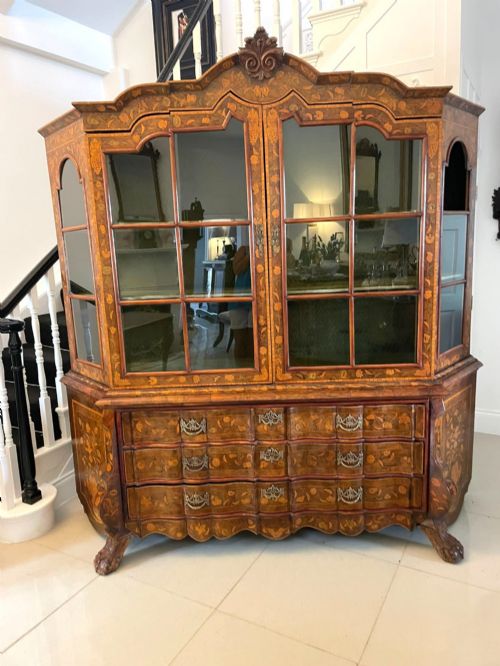
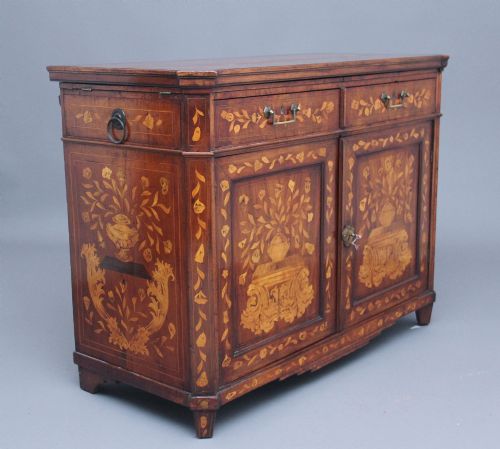
A 19th century dutch cabinet brings complex floral marquetry and warm burr walnut into a room, offering substantial display and storage space.
19th Century Dutch Cabinet
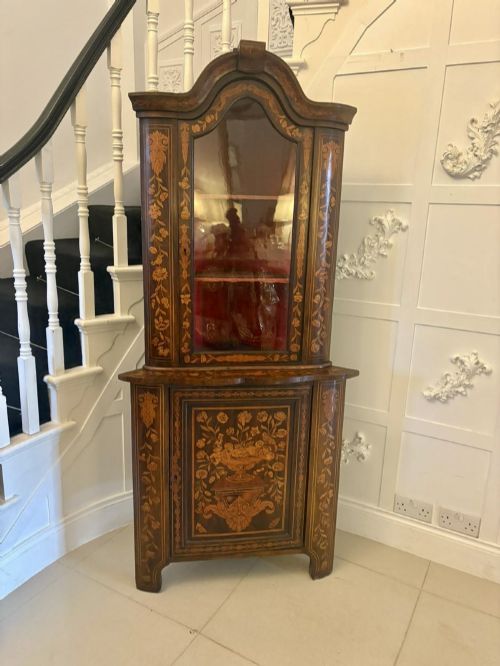
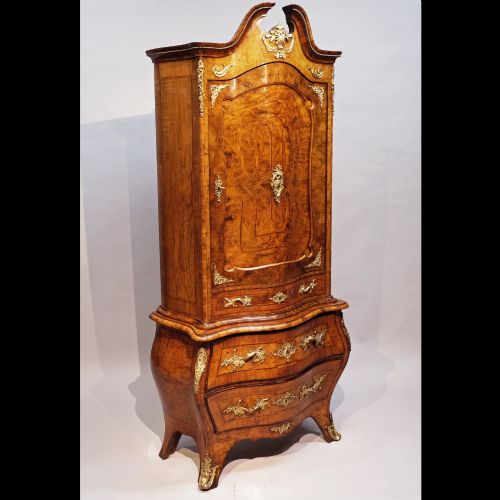
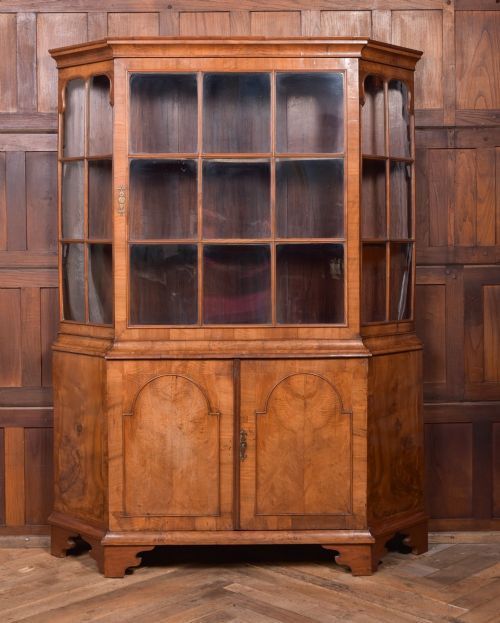
When you search for a 19th century dutch cabinet, you encounter a variety of forms designed for display and storage, ranging from corner cupboards and wall-hanging units to large bombé display cabinets on chests. These pieces originate from distinct periods across the nineteenth century, with walnut and burr walnut frequently housing collections behind glass doors.
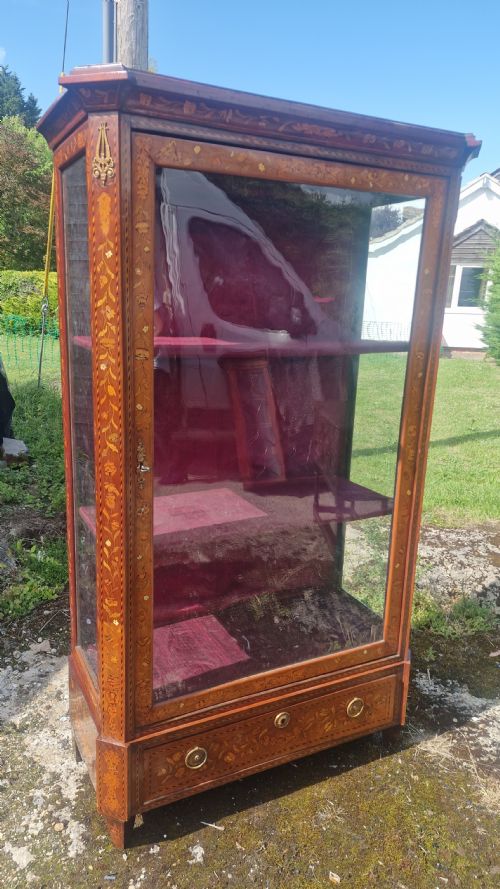
The selections on this page often take the form of glazed vitrines or secretaire cabinets, while chests of drawers and dressing tables also appear. Walnut and mahogany provide the primary structural carcasses for many examples, frequently decorated with elaborate marquetry floral inlays.
Materials and Technique
Cabinet makers utilised dense timbers such as walnut, mahogany, fruitwood, and ebony, often applying burr veneers to large surfaces. Iron and brass hardware such as hinges, locks, and handles complete the construction of these substantial pieces.
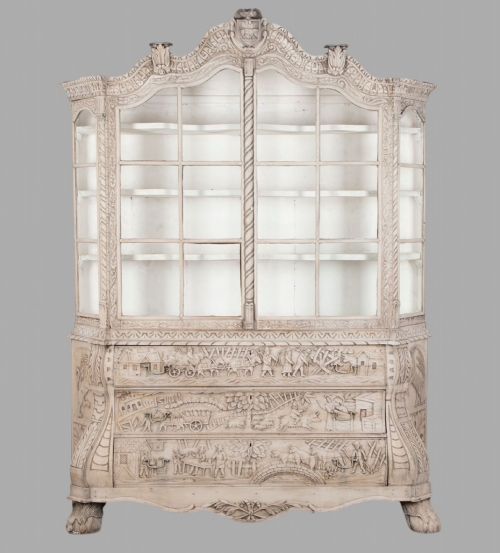
Marquetry technique defines a great number of these works, with floral and scroll designs cut from contrasting woods and laid into the primary carcase. Artisans also employed carving on oak and other hardwoods, alongside painted finishes seen in folk art items.
19th Century Dutch Cabinet Retail Price Guide 2026
Typical asking prices for 19th century dutch cabinet among the pieces listed under this phrase on Sellingantiques today, from the lower quarter to the upper quarter. They describe what is for sale here now, not the wider market.
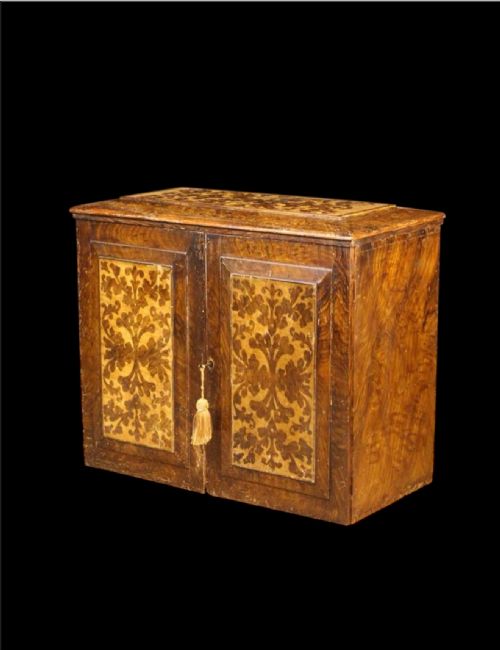
A travelling cabinet from the early nineteenth century offers a glimpse into portable luxury for journeys across rough roads.
Distinctions in Standard
The precision and complexity of the floral marquetry inlay separate standard examples from the finest pieces. Richness of tone in the burr walnut or mahogany veneer and the depth of the natural patina also distinguish superior craftsmanship.
Structural proportions and the crispness of carved details, particularly on bombé fronts and canted sides, indicate the level of care taken during manufacture. Glazing bars and original brass mounts further mark the distinction between everyday utility items and high-status display furniture.
Roosje Hindeloopen
The 19th Century Dutch Cabinet Glossary
- Marquetry
- Decorative patterns formed by fitting together thin veneers of wood and other materials onto a structural surface. This technique produces elaborate floral and pictorial scenes across drawer fronts and cabinet doors.
- Bombé
- A swelling, outward-curved contour found on the fronts and sides of certain storage furniture. This curving profile requires skilled shaping of the timber carcase.
- Vitrine
- A glass-fronted display cabinet used for showing porcelain, books, and curiosities. These pieces often feature glazed side panels to maximise light entry.
- Secretaire
- A cabinet incorporating a fitted writing drawer or drop-front desk section. It combines practical workspace with concealed compartments and central storage.
- Patina
- The surface sheen and mellowing of colour acquired by timber over many decades of handling and ageing. A desirable patina shows depth and warmth rather than flat factory finishes.
19th Century Dutch Cabinet: Frequently Asked Questions
Where were these cabinets placed?
These cabinets served primarily in reception rooms, parlours, and hallways as both storage units and formal display spaces for prized possessions.
Corner cupboards and wall-hanging variants made efficient use of smaller domestic spaces while keeping valuables elevated.
How do I care for burr walnut?
Keep wooden surfaces away from direct heat sources and strong sunlight to prevent the veneer from drying out or splitting over time.
Apply traditional wax polish sparingly and buff with a soft cloth to maintain the natural shine and protect the grain.
Are all these pieces marquetry?
While marquetry inlay appears on many examples, a significant number rely instead on plain walnut, mahogany, fruitwood, or painted finishes.
Makers selected the surface treatment according to regional styles and the specific function of each individual piece.