
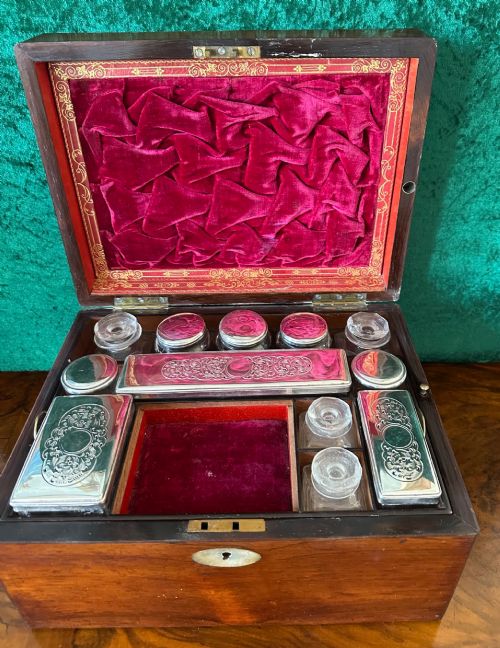
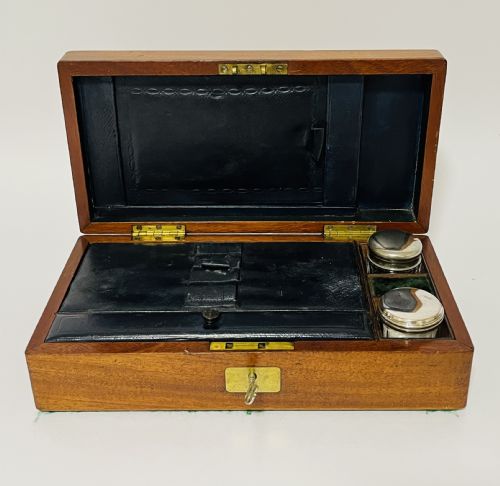


19th Century Dressing Case
These 19th century dressing case examples are portable vanity chests fitted for travel and daily toilet, combining compartmentalised storage with silver and glass.
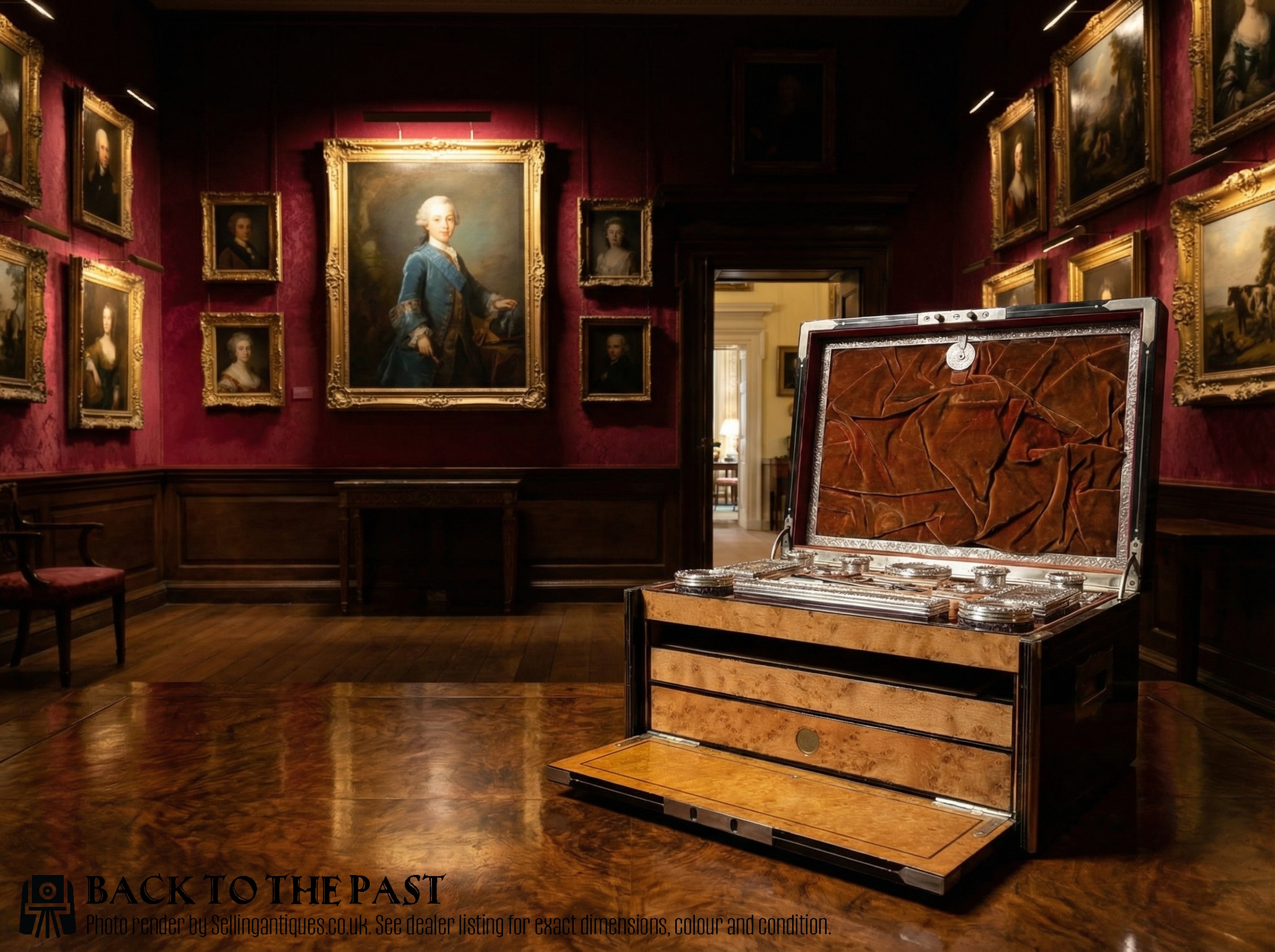
What a 19th century dressing case is
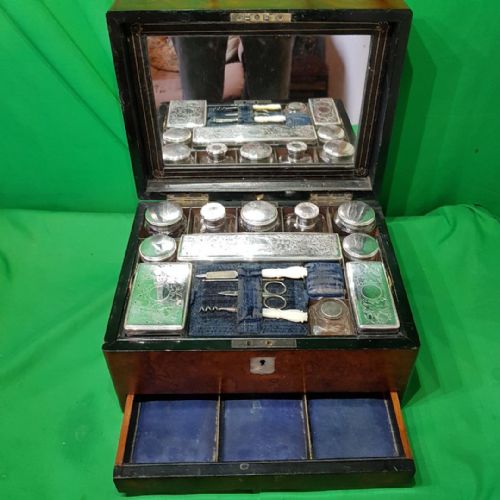
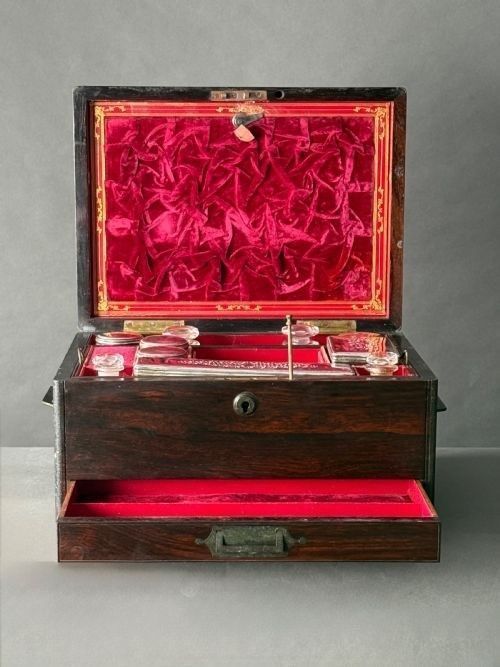
A 19th century dressing case is a fitted box designed to hold grooming implements, cosmetics, and jewellery during travel or on a dressing table. The pieces on this page include travelling sets, jewellery boxes, and dressing boxes originating in the Victorian period.
Most examples date from the middle to late nineteenth century, spanning decades such as the eighteen sixties, seventies, and nineties. Makers constructed these boxes for both ladies and gentlemen, incorporating specialised compartments for glass bottles and silver fittings.
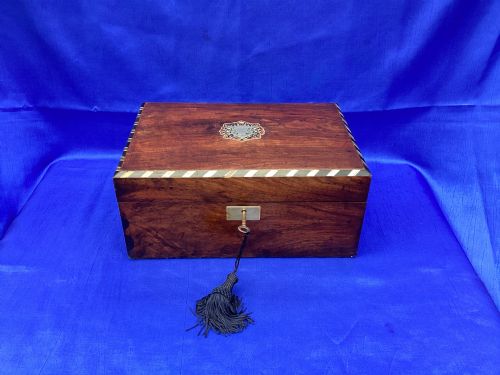
Forms vary from compact dressing cases to combined jewellery and travelling boxes. The primary versions met here include burr walnut, rosewood, walnut, and coromandel wood cases, often supplied with working keys.
Materials and construction
Workshops built these cases using timbers such as mahogany, rosewood, burr walnut, walnut, coromandel wood, and light oak. These hardwoods provided a stable foundation for veneering and polished exterior finishes.
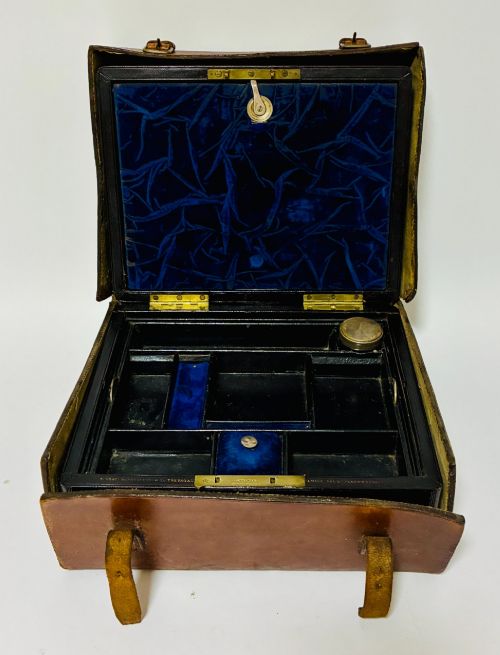
Interiors feature fitted compartments lined with velvet to cushion delicate glass bottles and silver items. Metal components such as brass hardware secure the lids, locks, and hinges, while hallmarked silver marks specific metal fittings.
Retail Price Guide 2026
Typical UK retail prices for 19th century dressing case, calculated from the Sellingantiques database of over a million retail prices indexed since 2003. This retail price guide relies exclusively on Sellingantiques data; no external sources or auction records are used, so the figures do not describe the wider market.
Some gentlemen's boxes include hidden compartments originally designed to keep pocket watches and collar studs safe from bumpy carriage rides.
Distinctions in quality
Quality in a 19th century dressing case rests in the choice of exotic veneers, such as burr walnut and coromandel, paired with the completeness of internal fittings like matching glass and hallmarked silver. Superior boxes integrate complex folding trays and secret drawers alongside robust working locks.
Simpler examples rely on standard timbers like mahogany or light oak with basic velvet linings and fewer fitted utensils. The presence of original matched sets of glass bottles and designated silver components elevates the execution of the piece.
The 19th Century Dressing Case Glossary
- Dressing case
- A portable box fitted with compartments for toiletries, cosmetics, and grooming implements. These containers served travellers and residents alike during the Victorian era.
- Coromandel wood
- A dense, heavily figured timber from Asia used for luxury Victorian boxes. Its dark brown grain with black stripes made it a prized choice for high-end dressing cases.
- Burr walnut
- Walnut timber taken from the tree's growth warts, displaying swirling knot patterns. Cabinetmakers sliced this wood into veneers for decorative box lids.
- Travelling set
- A collection of glass and silver vessels housed within a fitted wooden box. The set allowed owners to maintain personal grooming routines away from home.
- Hallmark
- An official stamp struck on silver items indicating the assay office, metal purity, and date. Pieces such as those from London in eighteen seventy-one carry these marks on their metal fittings.
Frequently Asked Questions
What is a 19th century dressing case?
A 19th century dressing case is a portable wooden box lined with velvet and fitted with compartments for personal grooming items, glass bottles, and jewellery. They served Victorians as travelling vanity chests.
These boxes house integrated sets of silver and glass pieces, designed to secure personal effects during transit and display neatly on a dressing table.
How were these boxes used?
Owners used dressing cases to transport cosmetics, brushes, and silver-topped bottles while travelling by carriage or train. They kept essential daily grooming tools organised and secure.
Inside the home, the box sat open on a dressing table or vanity, offering quick access to jewellery and small personal accessories.
Which woods were used for dressing cases?
Cabinetmakers utilised a range of decorative hardwoods including mahogany, rosewood, walnut, burr walnut, coromandel wood, and light oak. Rich veneers formed the exterior decorative surfaces.
Interiors typically combined polished wood partitions with velvet linings to protect the glass bottles and silver fittings stored inside.
How do I identify a Victorian dressing case?
Victorian dressing cases are identified through their typical nineteenth-century materials, such as burr walnut and coromandel, combined with period brass hardware and velvet interiors. Many incorporate specific construction styles characteristic of the era.
Some pieces feature hallmarked silver components dated to specific years, such as London hallmarks from the eighteen seventies, helping to confirm their period of manufacture.