
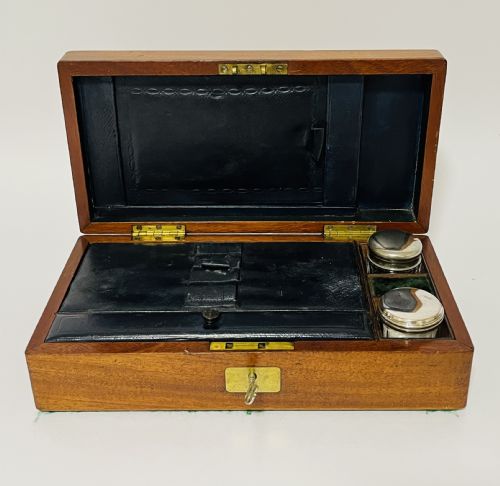
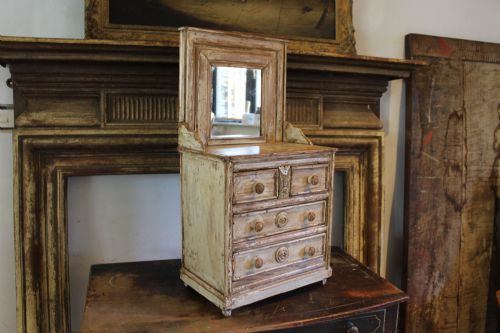


19th Century Dress Box
A 19th century dress box offers a glimpse into personal grooming and safekeeping from eras past, drawing collectors with its mix of fine timber and clever internal fittings.
19th Century Dress Box
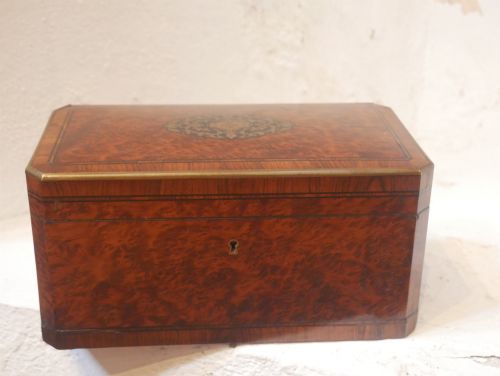
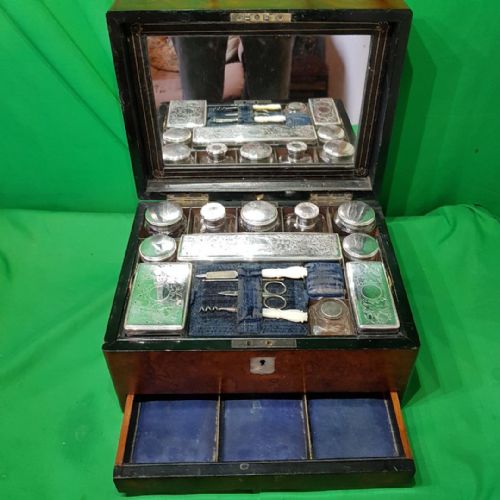
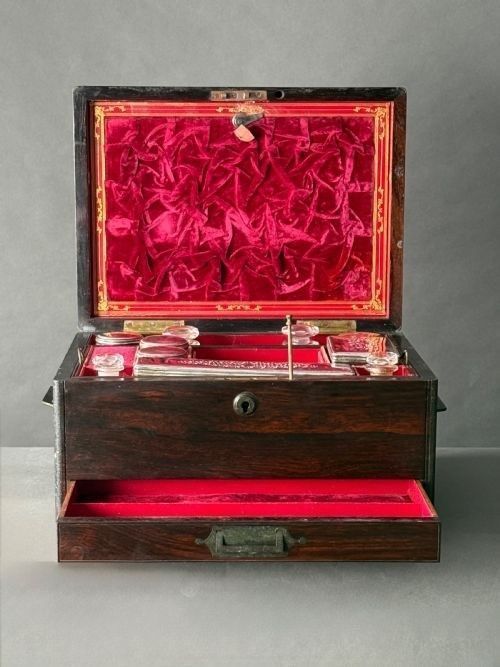
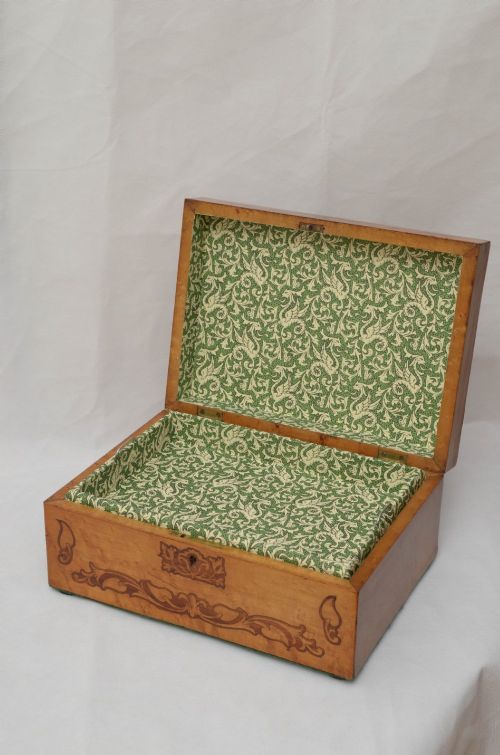
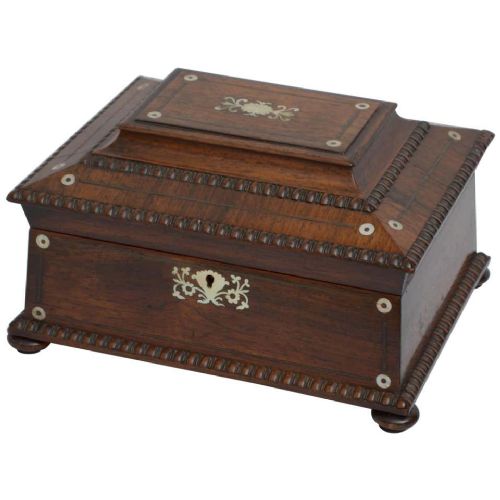
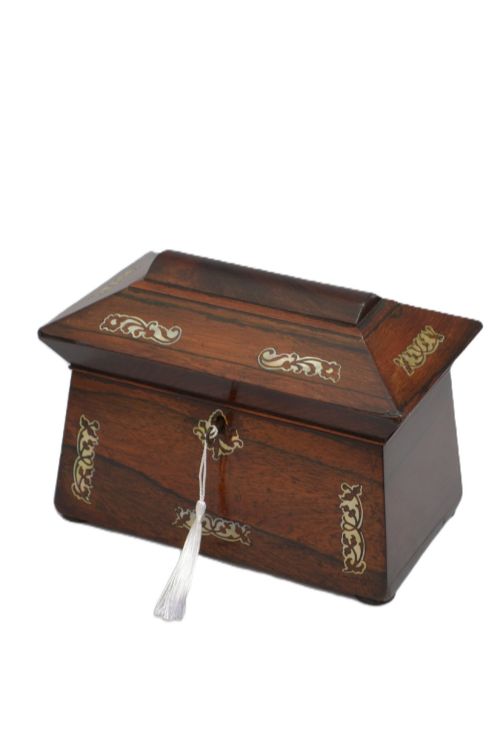
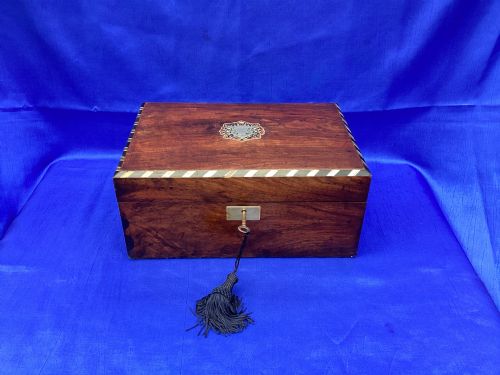
Most examples found in these listings date from the Victorian and Regency periods, utilising timbers such as mahogany, rosewood, and burr walnut alongside decorative accents of brass and leather. They often feature compartments, mirrors, and glass bottles configured for specific daily routines.
Makers utilised exotic woods and intricate inlays to signal status, resulting in pieces that functioned as both practical storage and dressing table ornaments. The variety spans English portable writing slopes to French enamel and glass jars.
Materials and construction
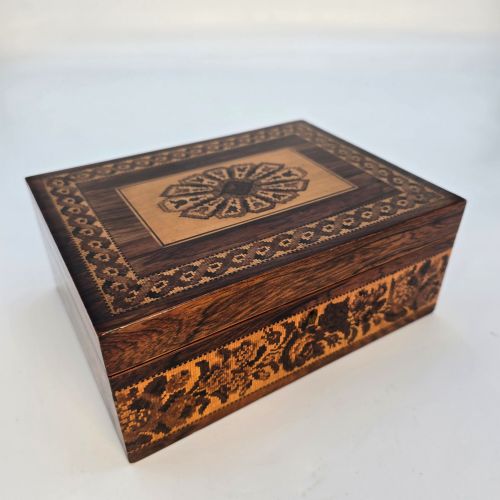
Cabinets were constructed from dense hardwoods like mahogany and rosewood, frequently veneered with burr walnut, coromandel, or bird's eye maple to display dramatic grain patterns. Tunbridge ware marquetry and mother of pearl inlays added geometric and floral decoration to the surfaces.
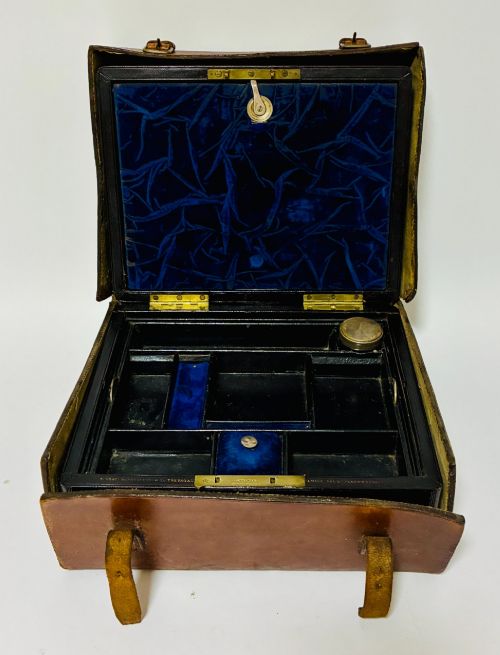
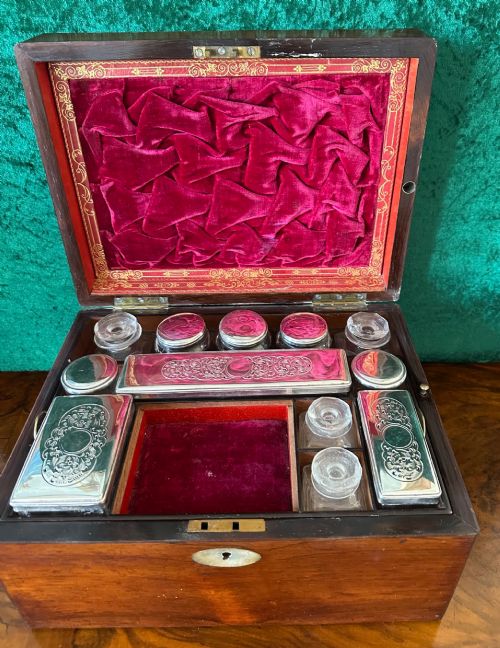
Metalwork played a structural and decorative role, with brass banding, campaign mounts, and sterling silver hinges reinforcing the wooden carcases. Leather bindings and velvet or silk linings protected the interior contents and fitted compartments.
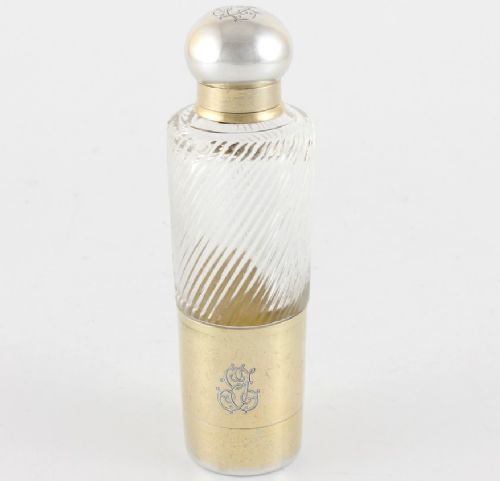
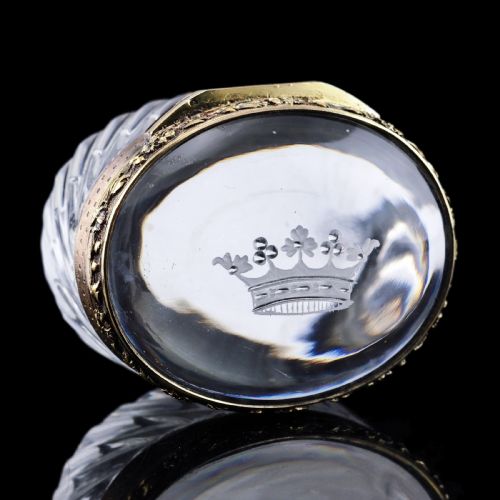
Glass and porcelain components, including scent bottles and pill boxes, were paired with silver mounts and enamel work, particularly in French pieces from the latter half of the century.
Some gentleman's vanity boxes secretly housed miniature medicine bottles alongside standard grooming brushes for the intrepid Victorian traveller.
Distinctions in quality
The degree of refinement in the internal fittings and the choice of primary timber separate standard utility boxes from exceptional examples. Boxes featuring comprehensive sets of original glass bottles with matching silver lids command greater interest than those with depleted interiors.
Joinery techniques, such as precision dovetailing and the seamless application of veneers and inlays like tulipwood or Tunbridge ware, indicate the skill of the maker. The presence of signed maker's plaques or identifiable marks from prominent workshops also elevates a piece.
Tahan Paris·Tonnel Paris·Edmund Nye·F. West·H Mitchell·Hawkes And Co·Posen·Emile Langlois
The 19th Century Dress Box Glossary
- Tunbridge ware
- A type of woodwork featuring intricate mosaic patterns made from tiny wood blocks of various natural colours. It was characteristic of items produced in Kent during the 19th century.
- Campaign box
- A portable chest or vanity case designed for travel, typically fitted with flush brass handles and corner brackets for protection.
- Coromandel
- A dense, heavy timber from Asia with dark brown and black grain patterns, frequently used for high-end Victorian vanity cases.
- Marquetry
- The art of applying pieces of veneer to a structure to form decorative patterns and pictures.
- Silver gilt
- Silver that has been coated with a thin layer of gold on its surface, often seen on internal mounts and pill boxes.
19th Century Dress Box: Frequently Asked Questions
What is the difference between a dressing box and a jewellery box?
A dressing box typically contains a complex arrangement of compartments for grooming items, glass jars, and mirrors, alongside space for valuables. A jewellery box focuses primarily on lined trays and partitioned storage specifically for gems and precious ornaments.
While both share exterior wooden or leather construction from the 19th century, their internal fittings reflect distinct daily uses.
How do I care for velvet and leather linings?
Velvet and leather interiors require protection from direct sunlight and damp conditions to prevent fading and degradation. Gentle dusting with a soft, dry brush helps maintain the fabric without introducing moisture.
Original linings are fragile, so avoiding liquid cleaners is essential for preserving the integrity of the materials.
Were these boxes used for travel?
Many examples, particularly those described as travelling sets or campaign boxes, were built for journeys by carriage, train, or ship. They feature secure locks, reinforced brass corners, and tightly fitted interiors designed to keep bottles and brushes stable in transit.
Other lighter caskets were intended strictly for static display on a dressing table or chest of drawers.
How can I tell a Regency box from a Victorian one?
Regency pieces often display classical proportions with restrained brass inlay and mahogany or rosewood surfaces dating from the early decades of the 19th century. Victorian boxes tend to use heavier burr walnut or coromandel, featuring more elaborate compartmentalisation and varied hardware.
Examining the construction style and wood choice helps clarify the period of origin.