


19th Century Double Bedstead
A 19th century double bedstead brings substantial period presence to a bedroom through robust metalwork and rich timber frames.
19th Century Double Bedstead
When you search for a 19th century double bedstead, you encounter substantial sleeping frames originating primarily from Victorian Britain and continental Europe. These pieces accommodate standard double mattresses while offering architectural heft that modern furniture rarely replicates.
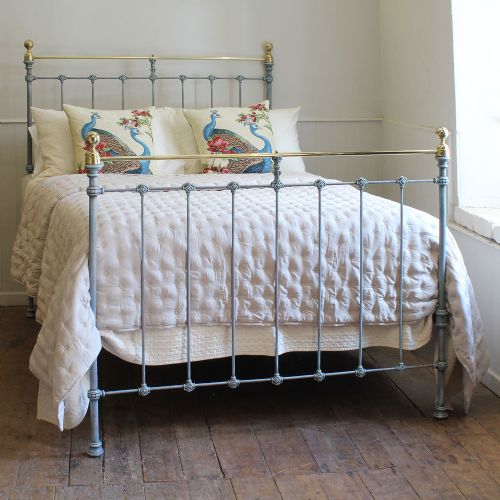
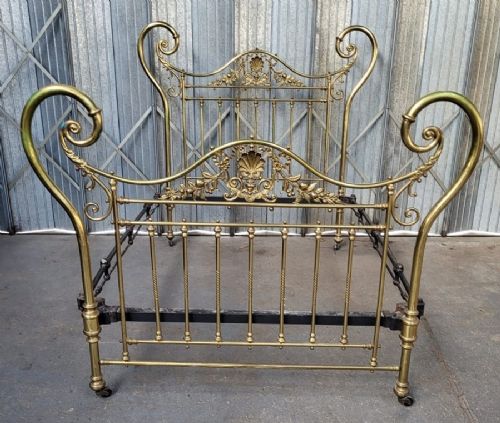
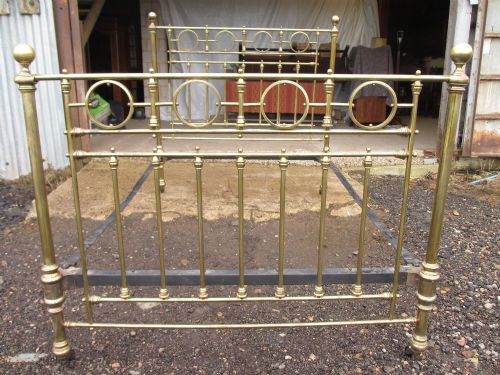
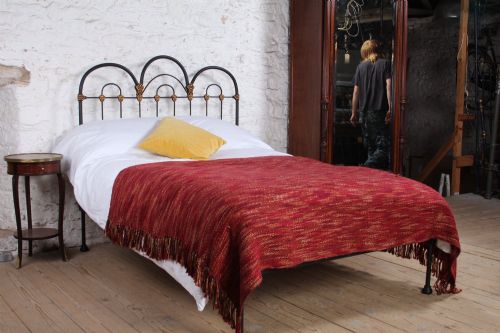
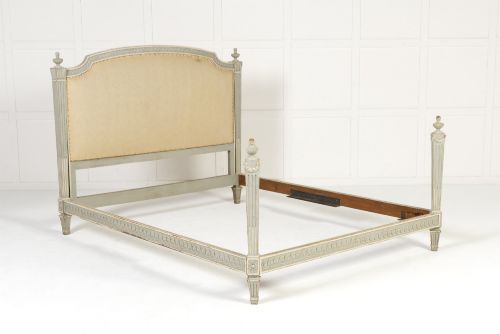
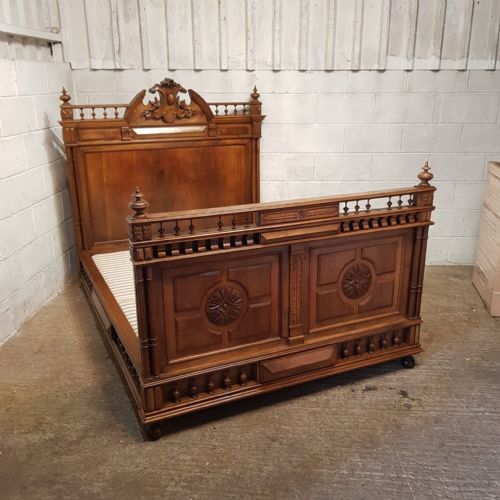
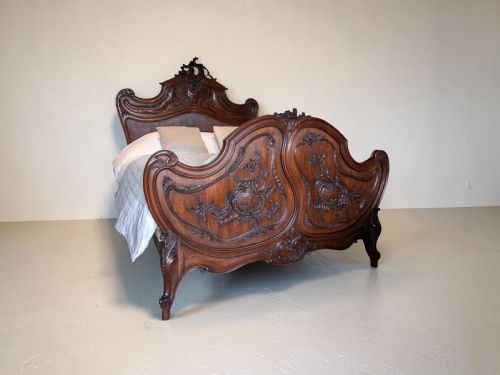
The most common versions on this page are constructed from gleaming brass, painted cast iron, or warm walnut and mahogany. You will find forms ranging from simple straight-rail frames to elaborate half-testers and ornate French revival designs.
Makers utilised diverse regional styles, spanning from British Victorian metalwork to French Empire and Renaissance revival woodworking. Each bedstead reflects the domestic comfort and aesthetic ambitions of the 1800s.
Materials and construction methods
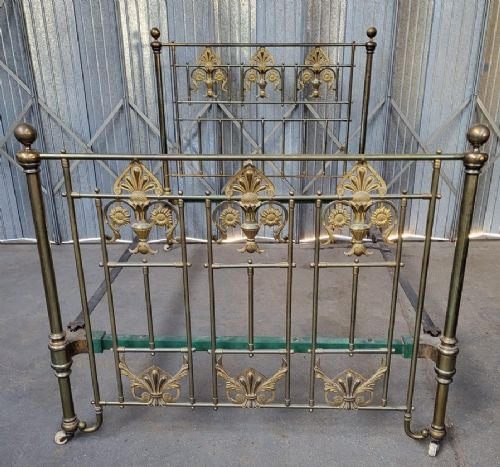
Metal bedframes combine cast iron and brass components, often utilising slot-in iron frames set on castors for mobility. Brass tubing is shaped and polished, whilst iron provides structural rigidity through heavy casting and forged wrought elements.
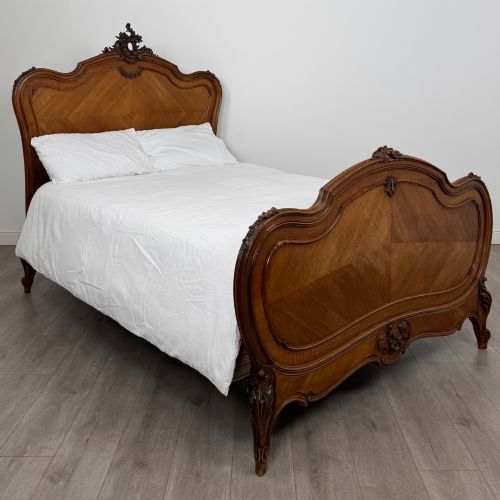
Wooden bedsteads rely on solid timbers such as walnut, mahogany, and pine, frequently enhanced with carved details or burr veneers. French examples incorporate painted finishes or rich plum pudding mahogany to accentuate the natural grain.
Joints and connections utilise period mechanical fixings, while upholstery fabrics provide padded comfort on high-back headboards and specialised half-tester canopies.
Current listings feature diverse timber varieties including walnut, mahogany, pine, and oak across various 19th-century periods.
Judging quality and craftsmanship
Quality reveals itself in the weight and thickness of the metal components and the depth of hand-carved timber details. Solid brass and heavy cast iron demonstrate superior durability compared to thinner, mass-produced alternatives.
The sophistication of the stylistic execution distinguishes standard pieces from exceptional examples. Beds featuring detailed brass castings, fine mahogany veneers, or complex architectural half-tester frames represent the pinnacle of period craftsmanship.
RW Winfield
The 19th Century Double Bedstead Glossary
- Bedstead
- The framework of a bed, comprising the headboard, footboard, and side rails. This structural assembly supports the mattress and base.
- Half-tester
- A canopy projecting from the wall over the head of a bed, supported by the headboard posts without full corner pillars. It traditionally held decorative curtains.
- Castor
- A small wheel mounted on a swivel assembly attached to the feet of the bedstead. It allowed heavy iron and brass frames to move easily across floor coverings.
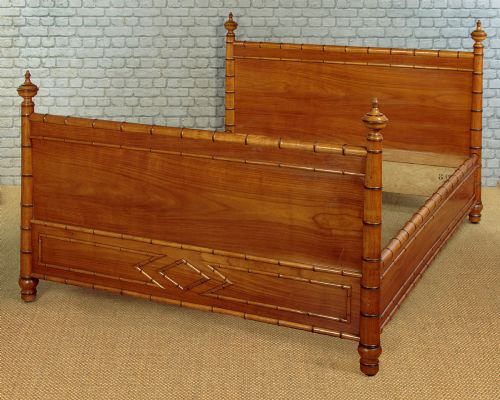
- Faux bamboo
- A decorative finish where wood or metal is carved and painted to resemble natural bamboo stalks. This technique gained popularity during the late 19th century.
- Plum pudding mahogany
- A distinctive mahogany veneer exhibiting mottled, circular grain patterns resembling the surface of a traditional Christmas pudding.
19th Century Double Bedstead: Frequently Asked Questions
Will a 19th century double bedstead fit modern mattresses?
Many period bedsteads vary slightly from contemporary standard sizes due to nineteenth-century manufacturing tolerances. You may need to check the exact internal rail dimensions before purchasing a standard mattress.
Adjustment or custom support slats are frequently utilised to ensure modern mattresses sit securely within antique iron and wooden frames.
How do I assemble an antique metal bed?
Most metal frames rely on a simple slot-in wedge system where the side rails lock directly into the headboard and footboard sockets. Gravity and the weight of the mattress keep the entire structure stable.
Ensure the frame sits squarely on its castors and tighten any historical bolt fixings carefully to prevent structural movement during daily use.
How do I care for brass and iron frames?
Metal frames require regular dusting with a soft cloth to prevent particulate accumulation on polished surfaces. Avoid abrasive chemical cleaners that can strip historical lacquer from brass components.
Cast iron elements finished in black paint should be kept dry and maintained with gentle cleaning methods to preserve the original surface finish.