


19th Century Dog Statue
A 19th century dog statue captures the fidelity and character of domestic and sporting hounds through enduring bronze, earthenware, and marble forms.
19th Century Dog Statue
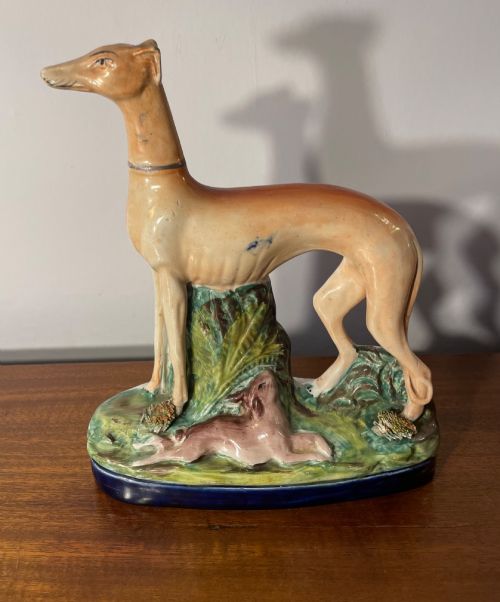
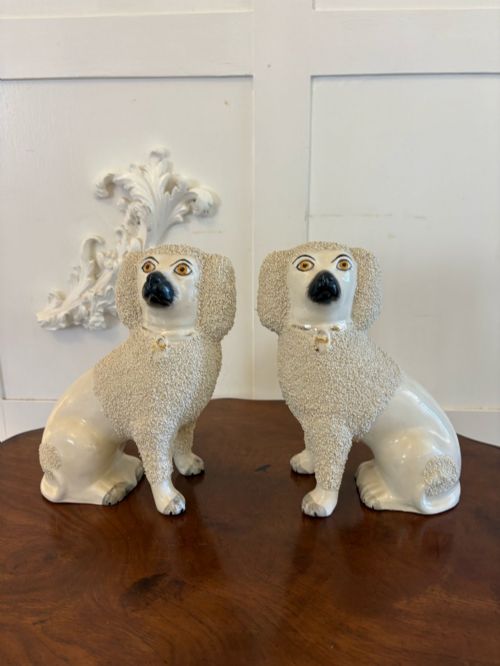
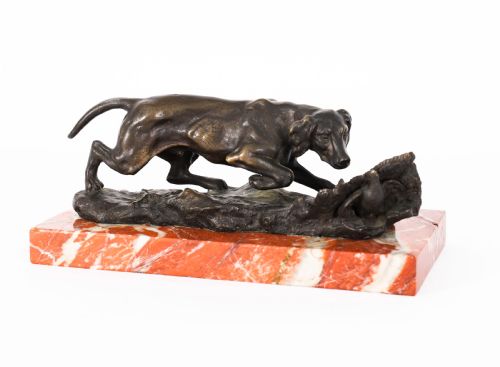
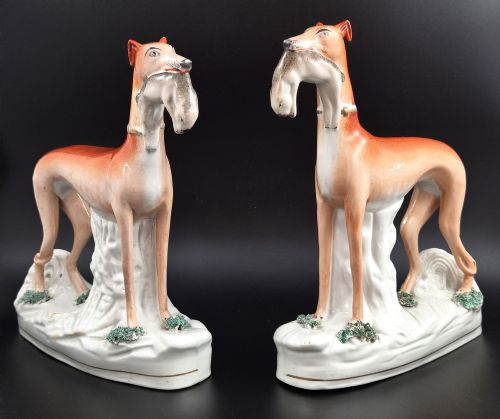
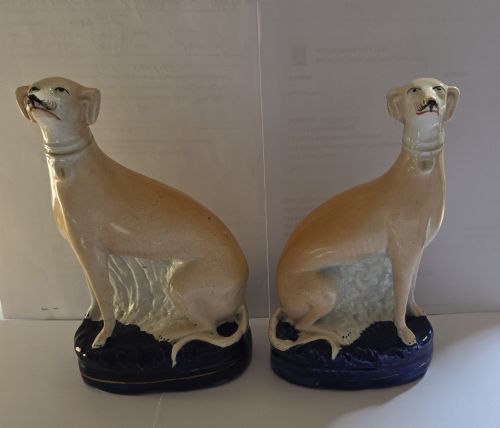
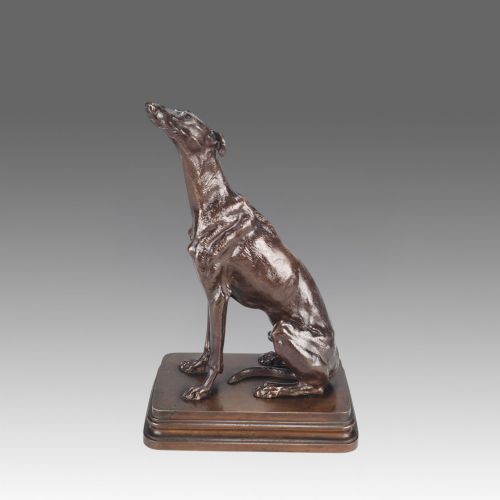
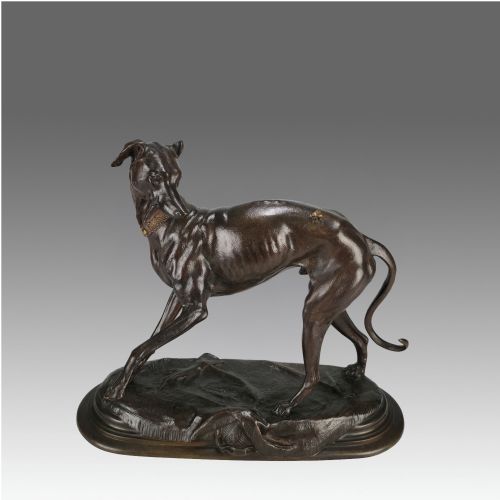
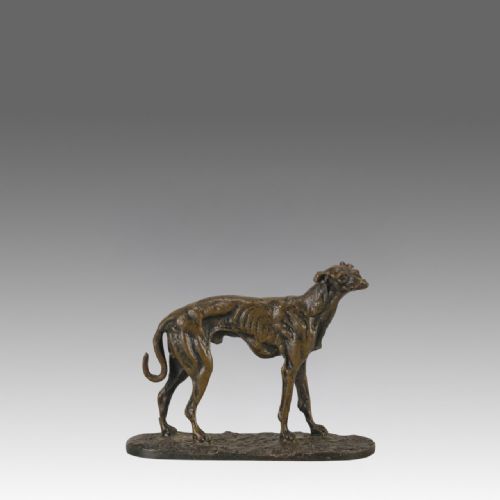
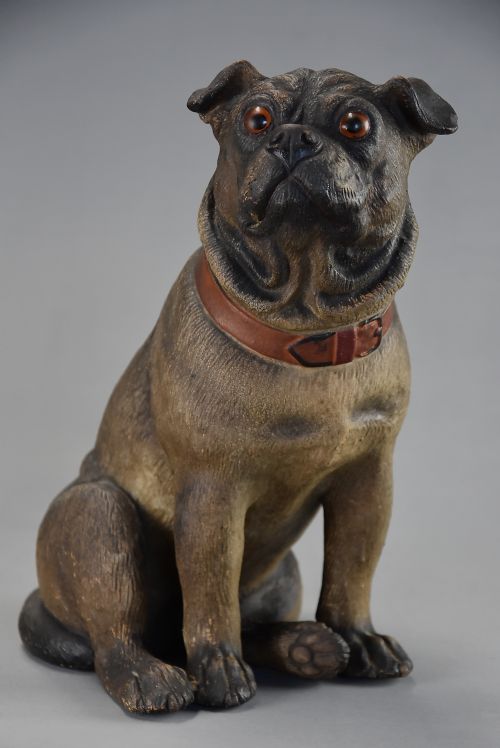
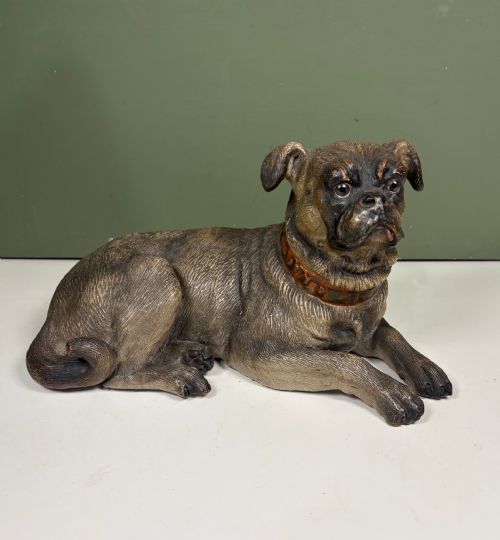
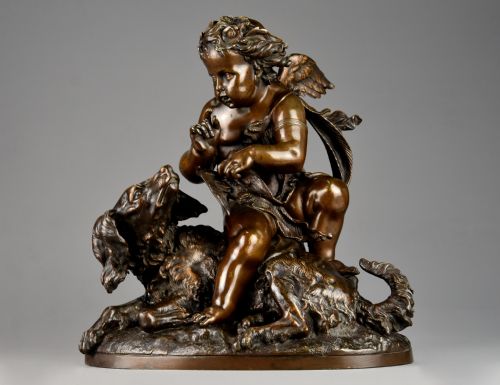
When you examine a 19th century dog statue, you encounter a diverse array of sculptural forms ranging from hearthside earthenware to refined continental bronzes. The pieces on this page span British pottery, European animalier foundry works, and Asian ceramic traditions, reflecting widespread sculptural interest in canine subjects during the period. Staffordshire pottery figures, notably spaniels, poodles, and greyhounds, represent the domestic earthenware group most commonly met in these listings. Alongside these ceramic pairs, French and Austrian founders produced dynamic bronze and terracotta models depicting setters, pugs, and hounds.
The materials vary significantly across regions and workshops, shifting from utilitarian glazed pottery to finely chased bronze mounted on marble bases. British examples often rely on moulded earthenware with hand-painted enamel details or textured woolly surfaces. Continental works favor lost-wax bronze casting, capturing muscular tension in sporting dogs and gundogs. Marble and alabaster carvings also appear, providing heavy, solid compositions for architectural and tabletop display. Each medium dictates the level of anatomical precision and textural finish visible on the surface.
Materials and methods
Foundries utilised the lost-wax casting technique for complex bronze sculptures, allowing artists to render intricate fur textures and musculature before finishing the metal with patination. Earthenware and porcelain pieces were slip-cast in moulds, then fired and glazed with coloured enamels or left as biscuit porcelain to mimic carved marble. Carved stone works utilised dense materials like Derbyshire alabaster and green serpentine marble, shaped through hand-chiseling and polishing.
Surface decoration required careful application, whether through hand-painted gilt accents on Staffordshire pottery or cold-painted finishes on Austrian terracotta. Many bronze casts received chemical patinas ranging from deep brown to golden tones, accentuating the contours modeled by prominent sculptors. Ceramic glazes varied from simple white tin enamels with black markings to rich polychrome sancai washes on Asian figures.
The selection includes both British ceramic mantel figures and French animalier bronze sculptures from the Victorian era.
Assessing quality and execution
Signatures and foundry marks provide a strong indicator of distinction, linking works to known sculptors or established potteries. Weight and base construction also differentiate pieces, with high-end bronzes securely fitted to heavy marble plinths and superior pottery displaying balanced, well-proportioned moulds without excessive distortion from the kiln.
Carl Kauba·Alfred Dubucand·Alfred Barye·P J Mêne·Prosper Lecourtier·Jules Moigniez·Antoine Louis Barye·Arthur Waagen
The 19th Century Dog Statue Glossary
- Animalier
- A 19th-century sculptural movement focused on realistic depictions of animals, particularly predators and sporting dogs. Practitioners of this style emphasised anatomical accuracy and dynamic movement.
- Parian
- A fine-grained, unglazed porcelain developed in the mid-19th century to imitate carved marble. It was frequently used for statuary and decorative figures.
- Lost-wax bronze
- A metal casting process where a wax model is melted from a mould and replaced with molten bronze. This method allows for exceptional detail in sculptural work.
- Staffordshire
- A generic term for pottery manufactured in the Staffordshire region of England. Figures from this area often include mantel dogs made in matched pairs.
- Patina
- The surface coloration and sheen developed on bronze through age or chemical treatment. Artists manipulated this finish to create tonal depth on animal sculptures.
19th Century Dog Statue: Frequently Asked Questions
Were Staffordshire dogs made as pairs?
Many Staffordshire pottery dog figures, particularly spaniels and greyhounds, were produced as symmetrical pairs designed to sit facing each other on a fireplace mantel. These pairs mirrored each other in posture and markings to balance a domestic hearth.
Single figures do occur, but matching pairs remain a defining characteristic of Victorian Staffordshire ceramic production.
What is an animalier bronze?
An animalier bronze is a 19th-century sculpture focused specifically on the realistic portrayal of animals. These works capture dogs in active sporting poses or resting postures with high anatomical precision.
Renowned European sculptors specialised in this genre, utilising lost-wax casting to render realistic fur and muscle structure.
How do I identify Parianware?
Parianware is a type of unglazed, fine-grained white porcelain that resembles carved marble. It was widely used during the Victorian era for statuary and portrait busts.
Unlike traditional earthenware, it has a dense, smooth finish that highlights sculptural contours without relying on colourful glazes.
What are Foo Dogs?
Foo dogs, or guardian lions, are traditional Chinese architectural ornaments representing protective mythical beasts. In 19th-century export and domestic pieces, they frequently appear in pairs guarding entrances or temples.
They are distinct from Western canine statues, incorporating stylized manes and fierce expressions rooted in East Asian iconography.