
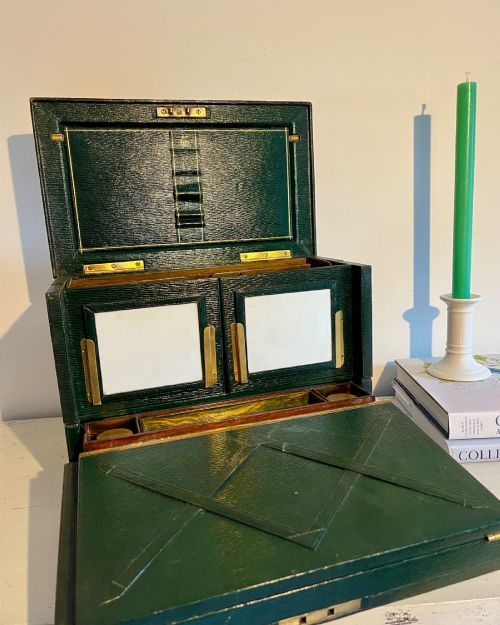
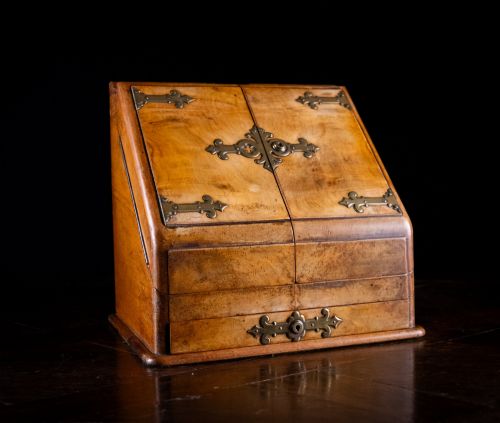
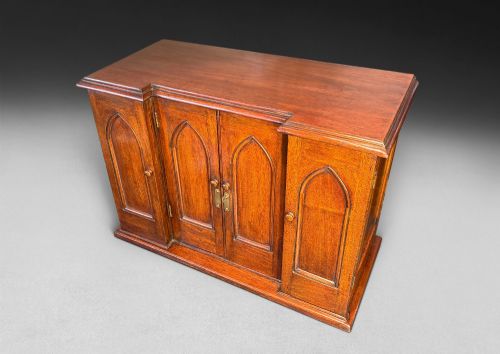
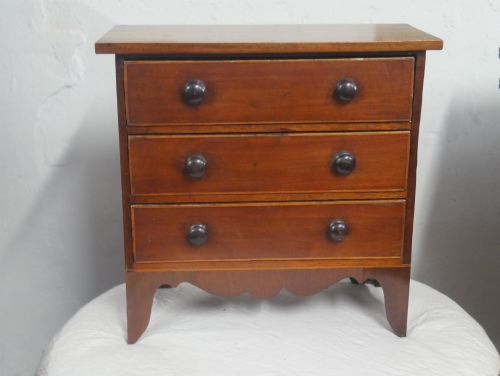
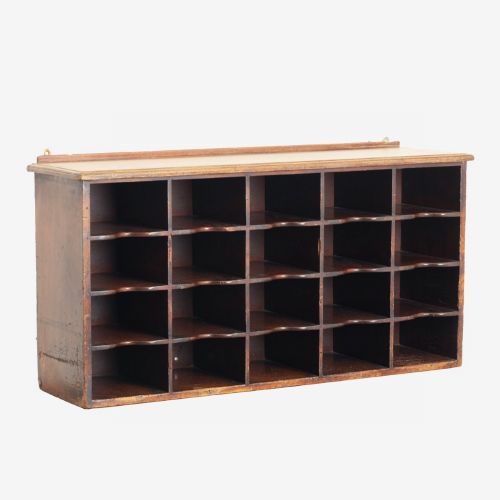
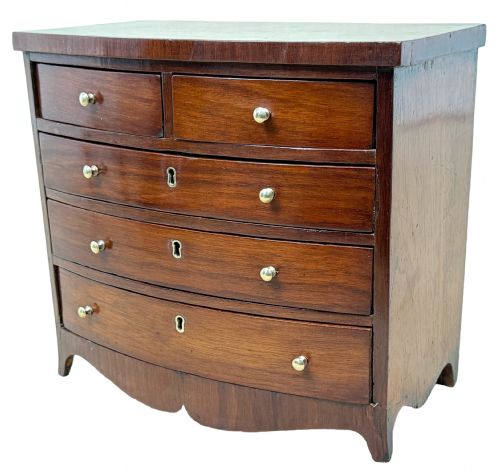


19th Century Desktop Cabinet
A 19th century desktop cabinet gathers papers, specimens, and small treasures in compact form, offering practical storage with exquisite cabinetwork.
19th Century Desktop Cabinet
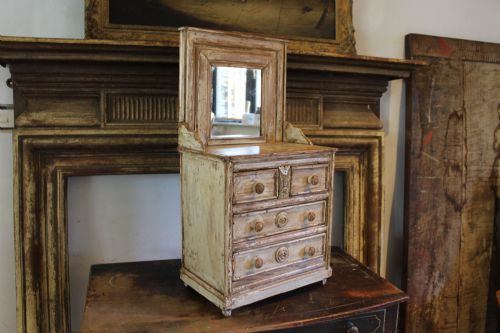
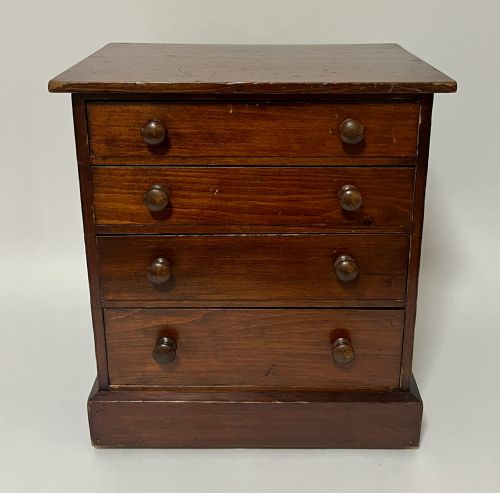
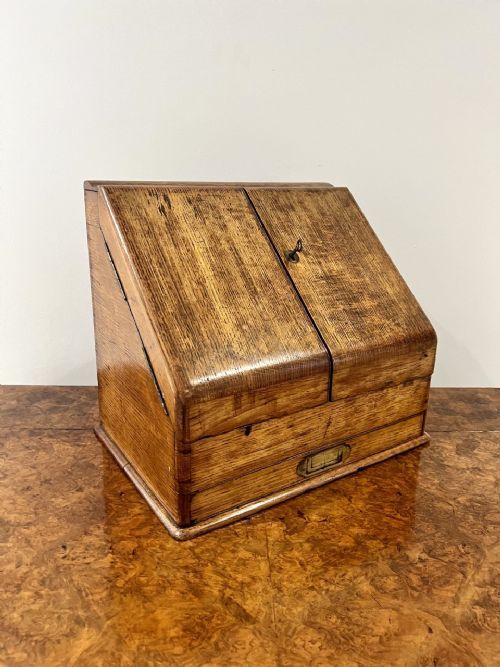
A 19th century desktop cabinet encompasses a varied group of miniature furniture, stationery boxes, and tabletop collector cases designed for professional or domestic studies. Most pieces encountered on this page date from the Victorian era, spanning decades from the eighteen-forties to the close of the nineteenth century.
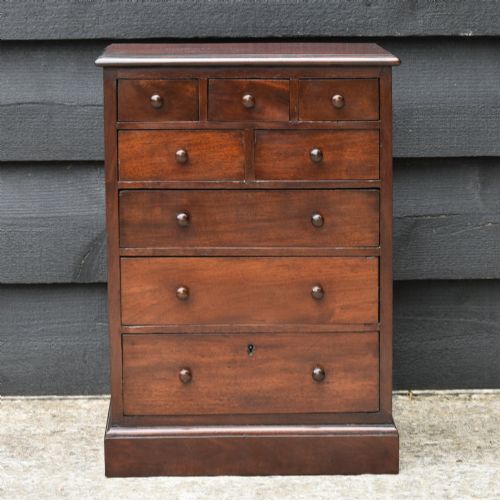
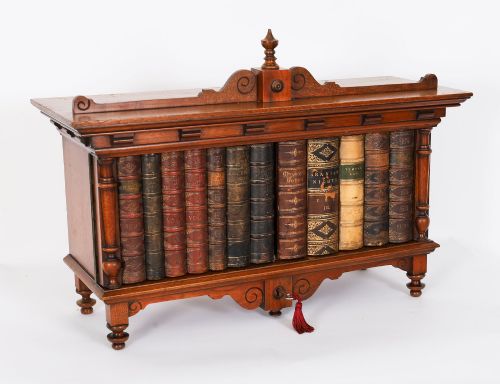
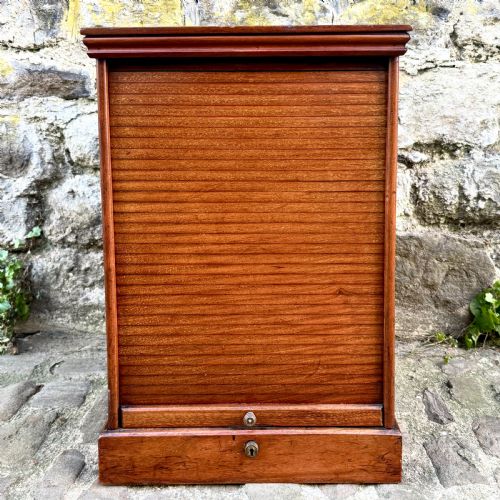
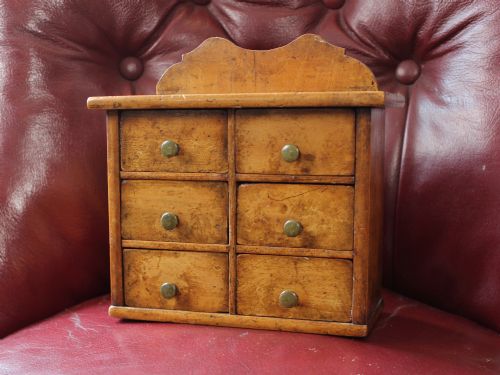
The assortment includes miniature chests of drawers, apprentice pieces, desktop pigeonholes, cigar humidors, and specimen cabinets. These portable receptacles sat upon larger desks, writing tables, or sideboards to organise correspondence and small valuables.
Makers utilised diverse regional styles, ranging from plain country pine and robust Gothic oak to refined Regency satinwood, French Provincial forms, and carved Anglo-Indian hardwoods. Each surviving format reflects the specific desk management needs of the nineteenth-century household or office.
Materials and construction
Cabinetmakers constructed these small receptacles from dense hardwoods such as mahogany, walnut, and oak, frequently applying burr walnut or rosewood veneers to primary exterior surfaces. Secondary timbers like pine appear on internal drawer linings and back panels.
Brass mounts, campaign handles, and lock escutcheons provide structural reinforcement and secure closure for sensitive contents like documents, cigars, and natural history specimens. Joinery methods prioritise tight dovetailing on miniature drawers to withstand frequent handling on the desktop.
Watchmakers and apothecaries required specialised desktop chests with tiny drawers to keep track of microscopic screws and powders.
Distinctions in quality
Quality rests upon the selection of timber figure, such as richly grained burr walnut or figured mahogany, paired with precise execution of internal fittings like pigeonholes and secret compartments. Superior examples maintain original brass hardware, working locks with keys, and balanced proportions.
Lesser pieces display simpler secondary woods, plain stained pine, or replacement handles that disrupt the historical integrity of the desktop cabinet. The refinement of dovetail joints and the smoothness of drawer movement signal the original maker's skill.
The 19th Century Desktop Cabinet Glossary
- Apprentice piece
- A miniature furniture item created by a tradesman to demonstrate mastery of skills before admission to a guild. These small chests often replicate full-scale case furniture with remarkable precision.
- Humidor
- A specialised box or cabinet designed to store cigars in a controlled environment. Nineteenth-century versions frequently feature tightly fitted wooden interiors and secure brass locks.
- Stationery box
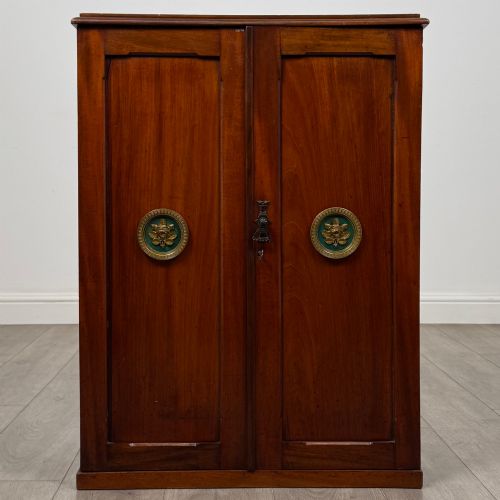
- A desktop container featuring tiered slots or vertical dividers intended for writing paper, envelopes, and ink bottles. They often open with a hinged sloping front or double doors.
- Specimen cabinet
- A small chest fitted with numerous shallow drawers for organising natural history collections, fossils, or small artefacts. The interior layout prioritizes protection for delicate objects.
- Wellington chest
- A tall, narrow chest of drawers secured by a hinged vertical locking strip on one side. Miniature nineteenth-century interpretations adapted this robust locking mechanism for desktop security.
19th Century Desktop Cabinet: Frequently Asked Questions
What is a 19th century desktop cabinet?
A 19th century desktop cabinet is a small portable storage piece designed to sit on a desk or table for organising letters, documents, and small valuables.
These compact items include stationery boxes, miniature chests of drawers, and collector cases created in various regional woods during the Victorian period.
How were desktop cabinets used historically?
Owners utilised these small chests to store personal correspondence, writing implements, cigars, or natural history specimens within the study or library.
The lockable doors and compartments provided security for confidential papers and treasured personal items away from communal areas.
Are these cabinets suitable for modern desks?
These compact chests fit easily onto contemporary work surfaces, providing functional storage for modern stationery, pens, and small electronics.
The period materials and craftsmanship add traditional character while serving practical organizational needs in a home office.
How do I identify the period of a desktop cabinet?
Dating relies upon observing the combination of primary timber, construction techniques, and hardware styles characteristic of the nineteenth century.
Victorian and Regency examples often display distinct design revivals, such as Gothic oak details or Anglo-Indian carved motifs, alongside hand-cut dovetails.