



19th Century Decanter Stands
These 19th century decanter stands organise your dining table with polished wood, gleaming silver plate and cut glass.
19th Century Decanter Stands
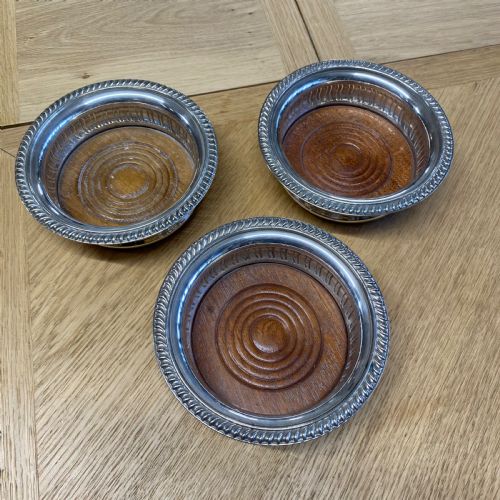
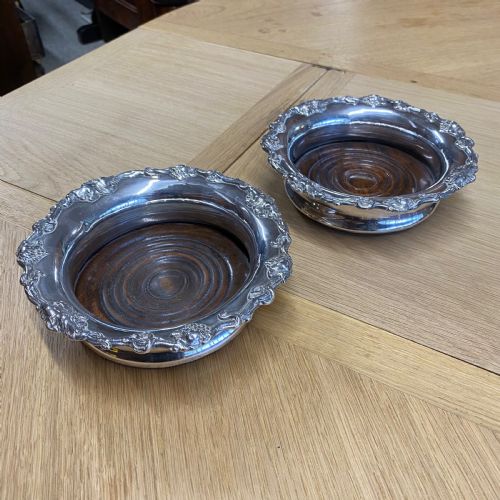
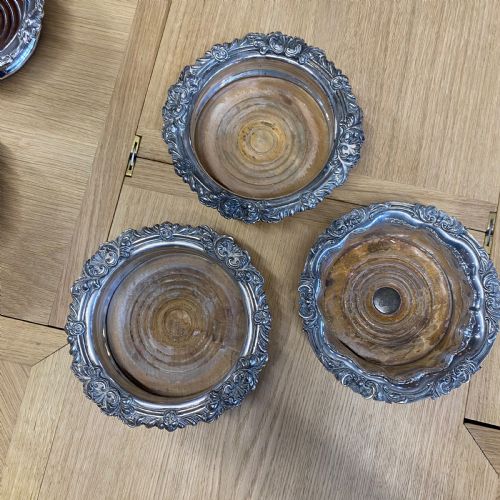
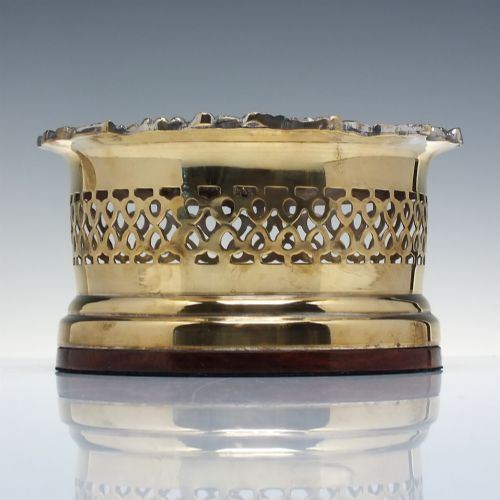
When you search for 19th century decanter stands, you encounter wine coasters, tantalus sets, cruet frames and bottle holders. These pieces served dining rooms and drawing rooms throughout the Regency and Victorian periods by holding bottles securely during service.
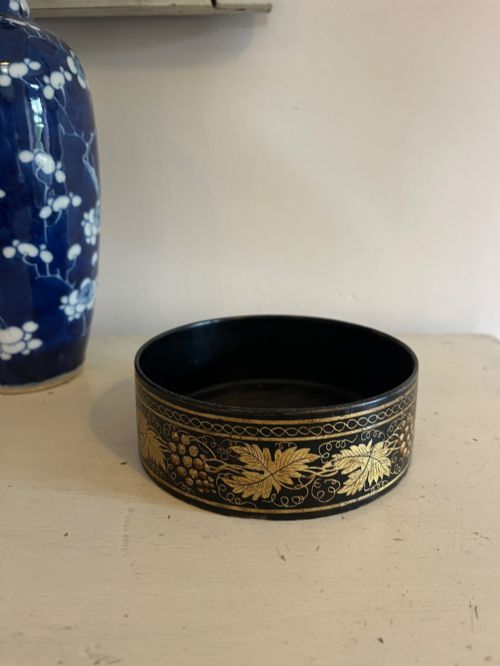
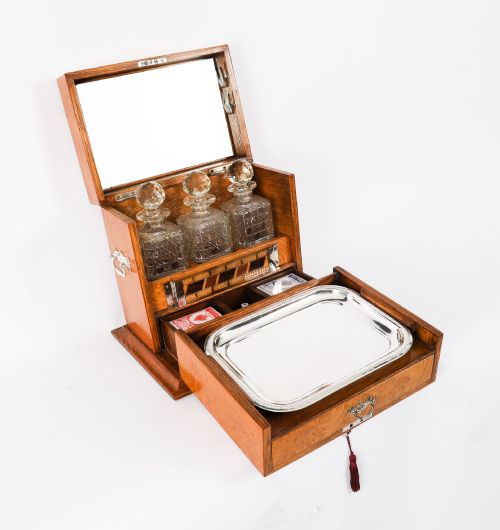
The selections available here range from early Regency wine coasters in papier-mâché and Sheffield plate to substantial oak and coromandel tantalus boxes from the 1870s. You will find single bottle holders alongside multi-bottle travelling bars and spirit barrels mounted in bronze.
How they were made
Craftsmen built these stands using robust timbers like oak, walnut and coromandel, often framing them in silver plate or old Sheffield plate. Papier-mâché versions received deep black lacquered finishes enriched with gold leaf and gilded decoration.
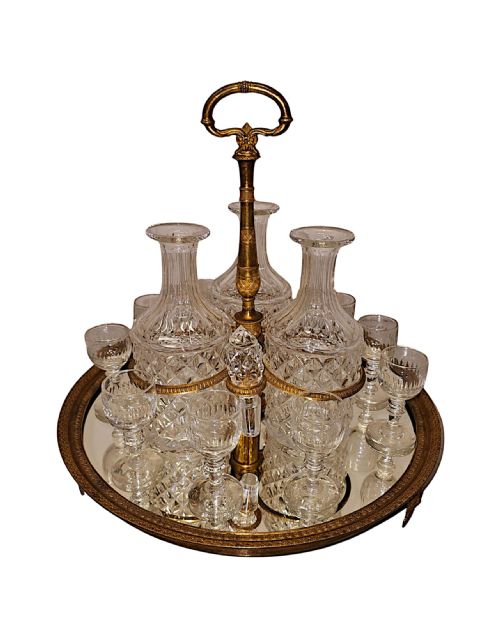
Glass components relied on heavy cutting to catch the light, paired with cast bronze mounts and silver hardware. Joinery and metal plating techniques ensured these frames endured heavy use on dining tables and travelling carriages.
19th Century Decanter Stands Retail Price Guide 2026
Typical asking prices for 19th century decanter stands among the pieces listed under this phrase on Sellingantiques today, from the lower quarter to the upper quarter. They describe what is for sale here now, not the wider market.
Periods represented range from Regency and Charles X pieces up to late Victorian travelling bars and tantalus boxes.
What varies in quality
Quality rests in the crispness of the metal casting, the depth of the hand-cut crystal and the integrity of the timber framing. Superior pieces display finely engraved armorial crests, secure locking mechanisms on tantalus boxes and well-preserved gilding on papier-mâché.
Simpler iterations rely on basic silver plating and unadorned wood, whereas finer examples incorporate multi-bottle configurations with matching cut crystal decanters and substantial bronze or silver mounts.
John and Thomas Settle·The Goldsmith Co.·Wade Wingfield Wilkins·Philip Ashberry·Mappin Brothers
The 19th Century Decanter Stands Glossary
- Tantalus
- A locking drink cabinet that holds decanters securely in a metal frame, displaying the contents while preventing access without a key.
- Wine coaster
- A small, flat-bottomed tray with raised sides designed to slide smoothly across a mahogany dining table between guests.
- Old Sheffield plate
- An early form of composite metal made by fusing a thin sheet of silver to a thicker copper base before shaping.
- Coromandel
- A dense, heavily figured tropical hardwood imported from Asia, valued for its rich dark brown colour and contrasting light streaks.
- Cruet set
- A matched collection of small glass bottles mounted in a metal frame for holding condiments, oils or vinegars at the table.
19th Century Decanter Stands: Frequently Asked Questions
What is a decanter tantalus?
A decanter tantalus is a secure wooden or metal frame fitted with a locking mechanism that traps the stoppers of the decanters inside. This kept expensive spirits safe from household staff while remaining visible on a sideboard.
Most examples house two or three cut crystal decanters and date from the Victorian era. They often feature carrying handles and fitted compartments for glasses.
How do I use a wine coaster?
Wine coasters sit on the dining table to protect polished wood surfaces from moisture rings and drips left by wine bottles. Their felt-lined or wooden bases allow them to slide easily from guest to guest.
In the nineteenth century, hosts used them to pass port or claret around the table after dinner. Today they function equally well for holding modern wine bottles or serving as display trays.
What is Old Sheffield plate?
Old Sheffield plate is a precursor to modern electroplating created by fusing silver and copper together through heat and pressure. Makers then worked the fused sheet into wine coasters and cruet frames.
Pieces made this way often reveal a thin line of copper along the edges where the base metal shows through. This distinctive trait helps verify the age of early nineteenth-century items.
How do I care for papier-mâché coasters?
Papier-mâché pieces require gentle treatment to protect their lacquered surfaces and gold leaf decoration from moisture and abrasion. You should dust them with a soft, dry cloth and keep them away from direct heat sources.
Because the material is compressed paper pulp treated with oil and varnish, standing water will damage the finish. Proper care preserves the original painted and gilded details.