




19th Century Colour Lithograph
A 19th century colour lithograph brings vibrant historical imagery and natural history into interiors through detailed hand-coloured printing on paper.
19th Century Colour Lithograph
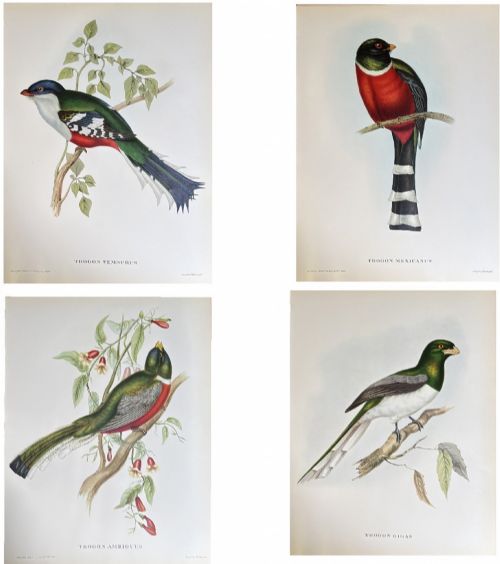
When you examine a 19th century colour lithograph on this page, you encounter framed prints, wall art, and book plates depicting birds, animals, portraits, and scenes of daily life. The selection spans natural history subjects, sporting prints, and theatrical moments printed across the Victorian era.
Most examples originate from the nineteenth century, including specific dates such as 1821, 1844, 1850, 1877, 1885, and 1886. These works appear as single sheets or sets, often mounted behind glass in wood frames.
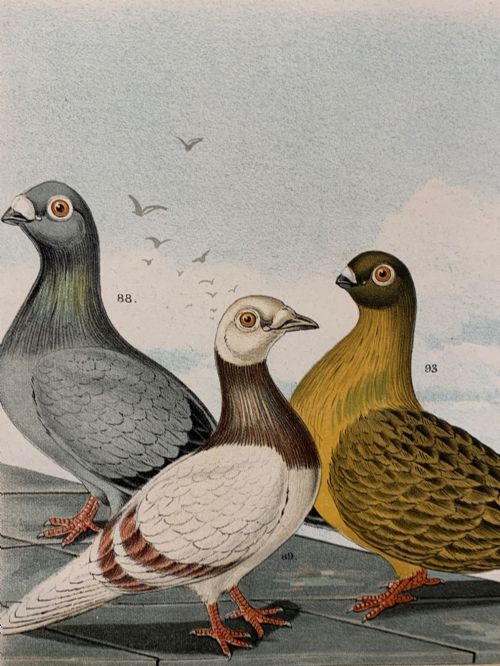
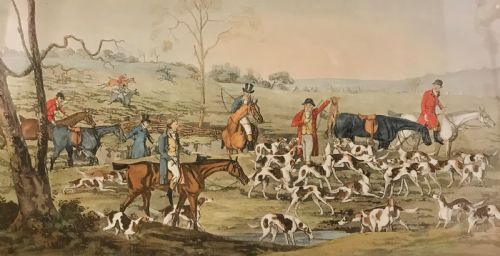
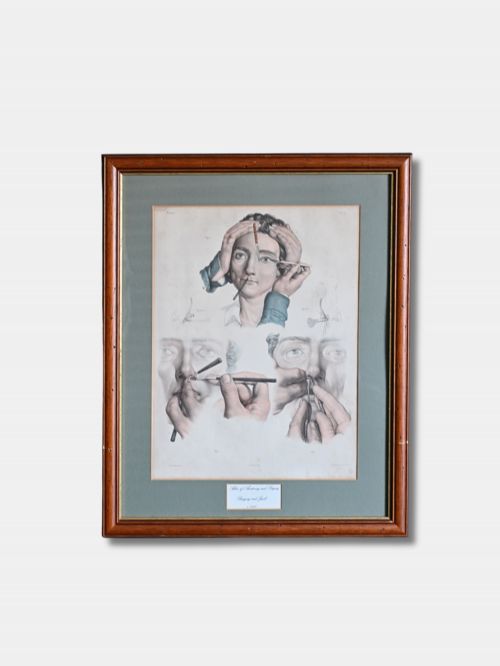
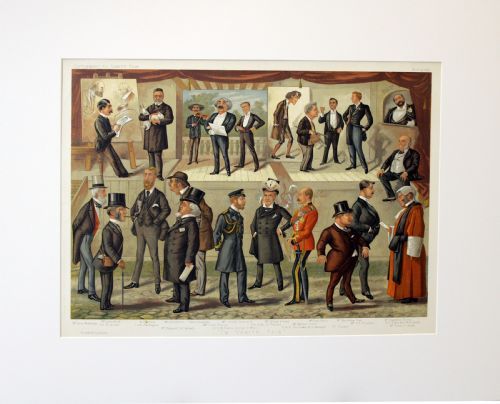
Subjects range from tropical birds and pigeons to medical procedures, political satire, and coaching scenes. Buyers select these works to display period illustration styles within domestic or office spaces.
How they were made
The primary material is paper, frequently supported by mount board and framed in wood with gilt or gold leaf finishes. Ink provides the foundational image, which is then enhanced through hand-colouring with watercolour.
Lithography relies on the repulsion of oil and water on a flat stone or metal plate surface. Printers applied successive stones or hand-applied washes to achieve the multicolour and chromolithograph effects seen in these prints.
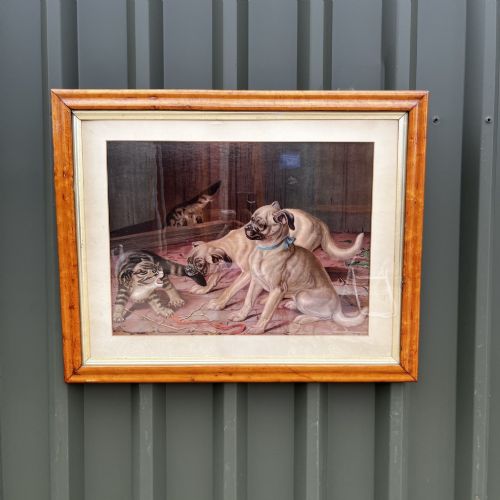
Pugs, cats, and racing pigeons share the print space with political figures and theatrical melodrama.
What varies in quality
Quality rests upon the crispness of the original impression and the precision of the hand-applied colour washes. Stronger works retain vibrant pigments without fading or excessive discolouration of the paper support.
The significance of the publisher, artist, and subject matter dictates distinction within the medium. Well-documented natural history plates and named artistic collaborations command greater attention than anonymous commercial printing.
Horatio Henry Couldrey·Thomas Worth·David Roberts·Arthur F. Tait·John Horner·Vincent Brooks Day & Son·TG Dutton·Joseph Wolf·J Smit
The 19th Century Colour Lithograph Glossary
- Lithography
- A planographic printing process utilising a flat stone or metal plate treated so that ink adheres only to the designed areas. This technique allowed for mass production of detailed illustrations during the nineteenth century.
- Chromolithography
- A colour lithographic technique employing multiple stones, with each stone applying a different tinted ink to build up a rich polychrome image. It produced vibrant poster art and book plates.
- Hand-coloured
- A print finished with applied watercolour washes by hand after the initial ink impression was pulled. This method added individual nuance and life to botanical and zoological plates.
- Mount board
- Heavy paperboard used to frame and support works on paper securely within a wooden surround. It prevents direct contact between the glass and the print surface.
19th Century Colour Lithograph: Frequently Asked Questions
How do I care for a colour lithograph?
Keep prints away from direct sunlight to prevent the watercolour and ink pigments from fading over time. Ensure they are mounted with acid-free materials behind glass to protect the paper from ambient moisture.
Avoid hanging them in damp environments such as kitchens or bathrooms. Gentle dusting of the wooden frame is sufficient for routine maintenance.
Were all these prints hand coloured?
Many examples utilise hand-applied watercolour washes over a printed ink base, while others rely entirely on multiple colour lithographic stones. Chromolithographs built colour through successive printing steps rather than brushwork.
Close inspection under magnification reveals whether pigment was laid down by a lithographic stone or applied by a painter's brush.
How are periods identified on these prints?
Dates often appear within the printed margin alongside publisher details, artist signatures, or publication years. Stylistic indicators like Victorian typography and costume styles further anchor the production era.
Paper characteristics, watermark evidence, and framing methods also help establish the approximate decade of creation.
What subjects are most common?
Natural history illustrations, particularly birds such as tropical species, parrots, and pigeons, form a substantial portion of the available subjects. Sporting scenes, architectural views, political caricatures, and theatrical moments also appear frequently.
These varied themes reflect the diverse publishing output of nineteenth-century periodicals and illustrated books.