


19th Century Cider Jug
These coopered oak, earthenware and stoneware 19th century cider jug pieces bring rustic service to the table, and a buyer wants one for authentic country character.
19th Century Cider Jug
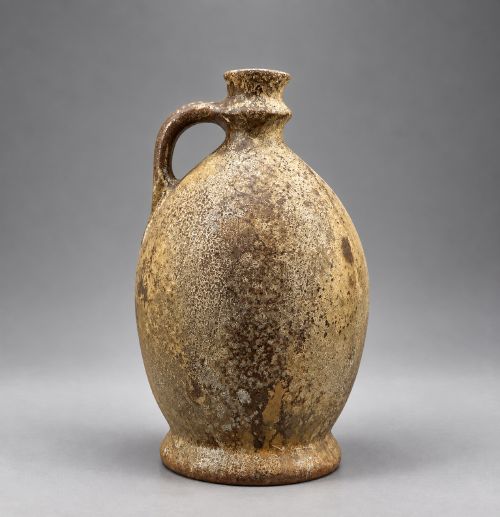
A 19th century cider jug encompasses large coopered oak vessels alongside earthenware, creamware, stoneware and copper flagons designed for substantial service. These pieces frequently appear with generous capacities ranging from one to two gallons, reflecting their original tavern and domestic functions.
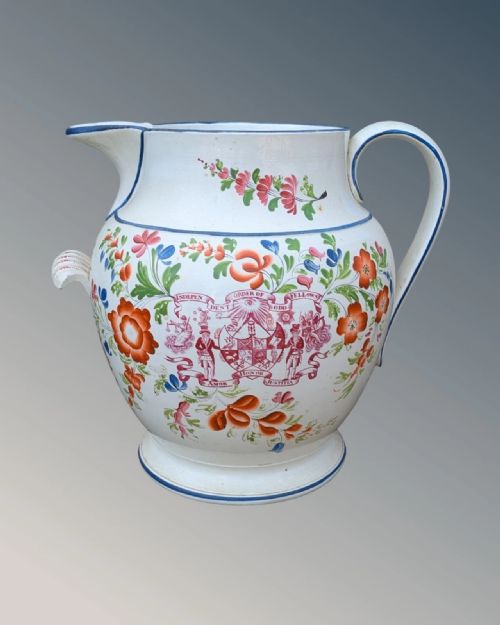
The versions most likely to be met on this page include coopered oak examples bound with metal hoops, salt-glazed stoneware bodies, and creamware or pottery jugs bearing sprigged decoration. Origins span the Georgian and Victorian eras, encompassing rustic country workshops as well as Staffordshire potteries.
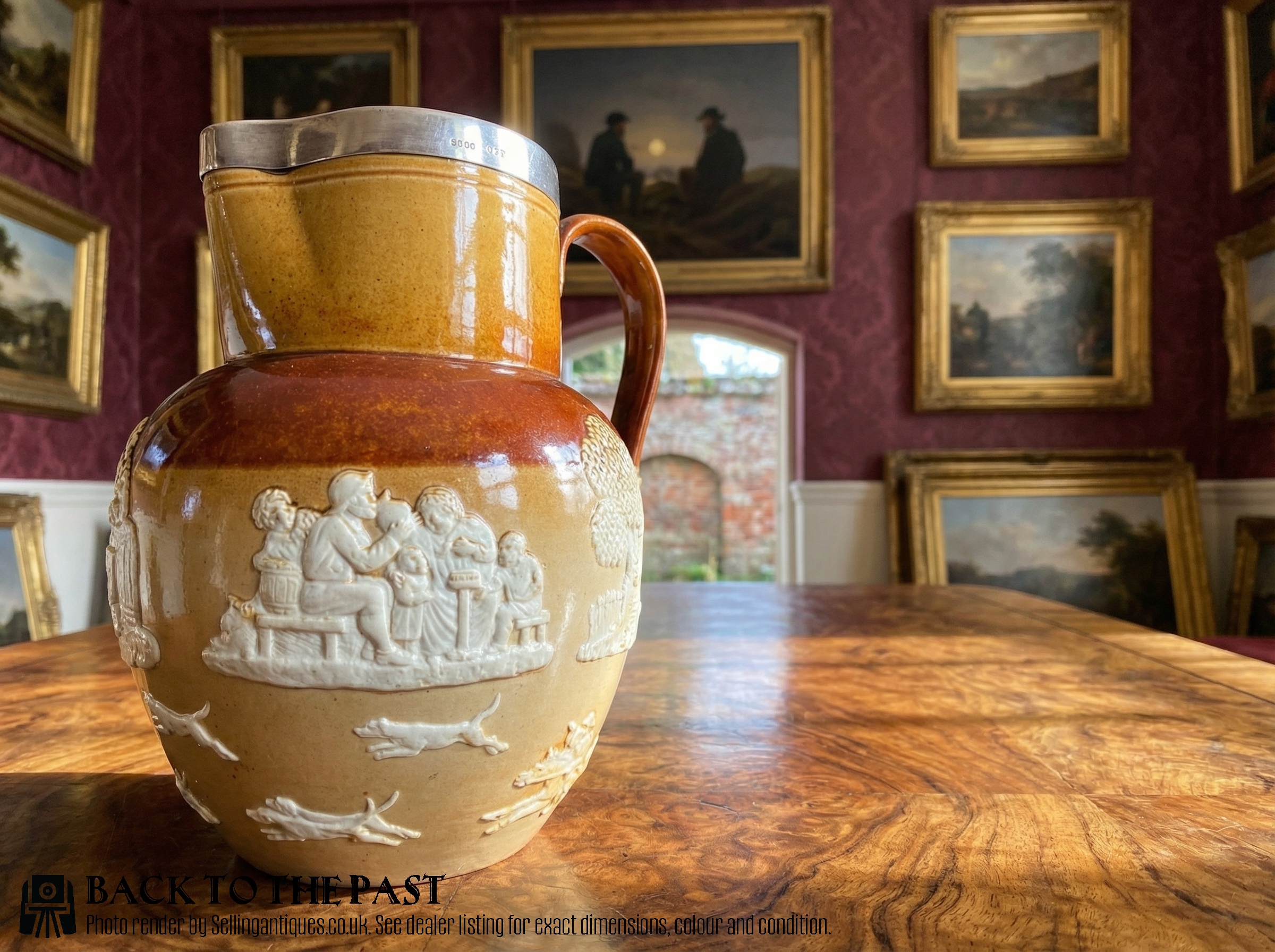
Forms vary from traditional jugs and pitchers to flagons and measure vessels, some enhanced with silver rims or Old Sheffield plating. Collectors encounter specific commemorative pieces such as marriage jugs alongside tavern and harvest vessels.
How these pieces were constructed
Coopered oak cider jugs were built from wooden staves tightly bound together with metal bands, echoing traditional barrel-making techniques. This method provided the structural strength required to hold large volumes of liquid safely.
Earthenware and stoneware bodies were shaped on a potter's wheel or in moulds before receiving lead or salt glazes. Salt glazing created a distinctive pebbled texture on the stoneware surface during the high-temperature firing process.
Decoration often involved cream sprigging, where moulded clay reliefs were applied to the wet body before firing, or the addition of metal rims in silver and Old Sheffield plate.
Listings feature vessels in materials including earthenware, stoneware, copper, creamware, silver and coopered oak across Georgian and Victorian periods.
Distinctions in quality
Quality rests upon the crispness of applied sprigged decoration and the integrity of the original materials, whether the tight fit of wooden staves in coopered oak or the evenness of a salt glaze on stoneware. Superior examples display clean modelling and balanced proportions despite their large scale.
The presence of original mounts, such as silver rims or securely fitted metal hoops and handles, distinguishes finer tavern and harvest vessels from simpler utilitarian output. Maker attribution, visible on marked Staffordshire pieces or inscribed copper flagons, elevates the standing of an individual jug.
Mountford Staffordshire·S Hancock
The 19th Century Cider Jug Glossary
- Coopered
- Constructed from curved wooden staves bound with metal hoops by a cooper. This technique was essential for large liquid-holding vessels.
- Creamware
- A refined earthenware developed in Yorkshire and Staffordshire during the eighteenth century with a pale yellowish-cream glaze. It offered a lighter alternative to traditional salt-glazed pottery.
- Sprigged
- Decorated with small moulded clay motifs applied to the surface of a vessel before firing. These reliefs frequently depict pastoral or heraldic scenes.
- Flagon
- A large vessel with a handle and spout or lid used for holding beverages. Many seventeenth and nineteenth-century examples held multiple gallons for communal drinking.
19th Century Cider Jug: Frequently Asked Questions
What were 19th century cider jugs used for?
These large vessels served to transport, store and pour cider during communal meals, harvest gatherings and tavern service. Their generous capacities allowed them to supply multiple drinkers at once.
In domestic settings, particularly on farms, they remained central to daily hospitality and seasonal celebrations.
How do I identify a coopered oak cider jug?
A coopered oak jug is constructed from vertical wooden staves fitted together and held securely by metal bands or hoops. This stave construction mimics miniature barrel-making.
They often feature wooden or metal handles attached to the side for pouring.
How should I display a large cider jug at home?
Due to their substantial volume and weight, these jugs sit best on sturdy sideboards, low tables or open kitchen shelving where their scale can be appreciated. Placing them away from direct heat sources protects wooden staves and historic glazes.
They function well as standalone decorative objects or holding dried stems.