

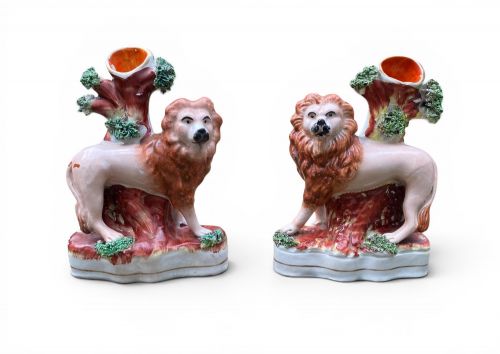


19th Century Ceramic Lions
Nineteenth century ceramic lions are mantelpiece figures and sculptural vessels carrying centuries of animal symbolism into Victorian parlours and East Asian display rooms.
19th Century Ceramic Lions
Nineteenth century ceramic lions encompass figures, spill vases, and vessels modelled after regal beasts, with pairs of Staffordshire earthenware examples dominating domestic groupings. These pieces range from Staffordshire pottery spill vases and glazed figures to terracotta guardians and East Asian representations.
The English Staffordshire tradition supplies the familiar mantelpiece pairs with distinct period glazes, while Chinese Shiwan Buddhistic lion dogs and Japanese Kutani and Imari wares bring alternative sculptural forms to the search. Buyers encounter everything from utilitarian sugar bowls with lion mask handles to large terracotta garden figures.
Originating across the nineteenth century, particularly around the mid-Victorian decades, these objects reflect both British domestic output and imported Asian aesthetics. Each piece demonstrates how makers translated the king of beasts into ceramic form for nineteenth century interiors.
What varies in quality
The depth and richness of the glaze, whether a treacle finish or a polychrome Imari palette, dictates the visual impact of the piece. Scale and presence also separate standard mantel ornaments from large pairs of terracotta lions or monumental vases.
Ceramic lions appear alongside related forms including spill vases, Imari vases, sugar bowls with mask handles, and majolica jardinières.
Minton
The 19th Century Ceramic Lions Glossary
- Staffordshire pottery
- Earthenware produced in the industrial potteries of Staffordshire, famous for mantelpiece figures and spill vases. These domestic ornaments usually appeared in pairs to flank a fireplace.
- Spill vase
- A hollow ceramic cylinder attached to a figure, designed to hold taper spills for lighting fires or pipes. They combined practical utility with decorative animal sculpture.
- Majolica
- A colourful lead-glazed earthenware popular in the Victorian period, known for vibrant tones and relief moulding. Minton and other potteries utilised this technique for large jardinières and decorative objects.
- Imari
- A style of Japanese export porcelain characterised by underglaze blue and iron red, often highlighted with gold. These pieces arrived in European homes during the nineteenth century as chargers, vases, and lidded koros.
- Buddhistic lion dog
- Also known as a Foo Dog, this mythical guardian lion appears in Chinese and Japanese art to protect sacred spaces. Ceramic versions adopt traditional sancai or Shiwan glazes.
19th Century Ceramic Lions: Frequently Asked Questions
Where did people display nineteenth century ceramic lions?
Pairs of Staffordshire lions traditionally stood on mantelpieces above the fireplace, where their regal posture suited the formal sitting room.
Larger terracotta examples and garden figures found places in hallways or conservatories, while smaller vessels functioned on side tables.
What is the difference between Staffordshire lions and Foo dogs?
Staffordshire lions emerge from the British earthenware tradition, typically modelled as domestic mantel ornaments with yellow glazes or treacle surfaces.
Chinese and Japanese lion dogs, or Foo dogs, derive from Buddhist temple guardian iconography and utilise distinctive sancai or Shiwan glazes.
How do spill vases differ from standard ceramic figures?
Spill vases incorporate an open cylinder beside or behind the animal figure, serving the practical purpose of holding wooden spills for lighting hearth fires.
Standard figures remain purely sculptural, focusing entirely on the representation of the beast without the functional tube.
What materials were used for these decorative figures?
Potters shaped these objects from earthenware, porcelain, and heavy terracotta, depending on the scale and intended placement of the piece.
Surfaces received lead glaze, treacle coatings, enamels, or majolica finishes to add colour and protect the clay body.