




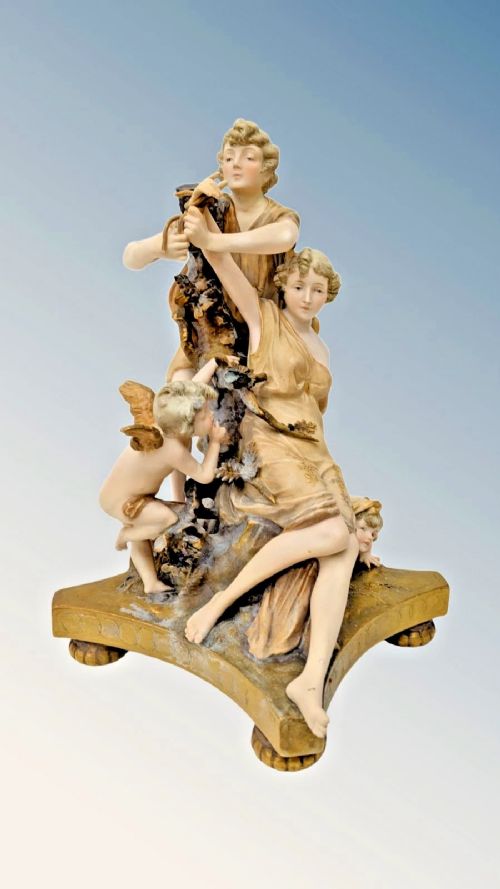

19th Century Ceramic Group
A 19th century ceramic group brings narrative, colour, and personality to a room through modelled figures and sculptural tableaus.
19th Century Ceramic Group
A 19th century ceramic group encompasses multi-figure sculptural compositions, portrait groups, and spill vases produced across European potteries and porcelain manufactories. Buyers encounter subjects ranging from literary scenes and royal portraits to pastoral animal groups and mythological tableaus.
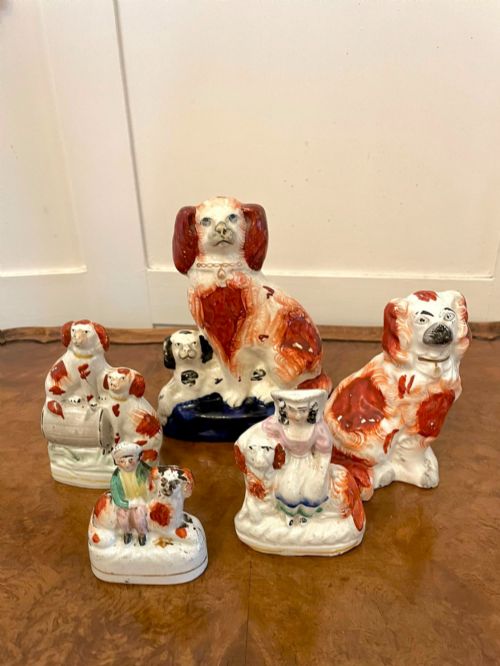
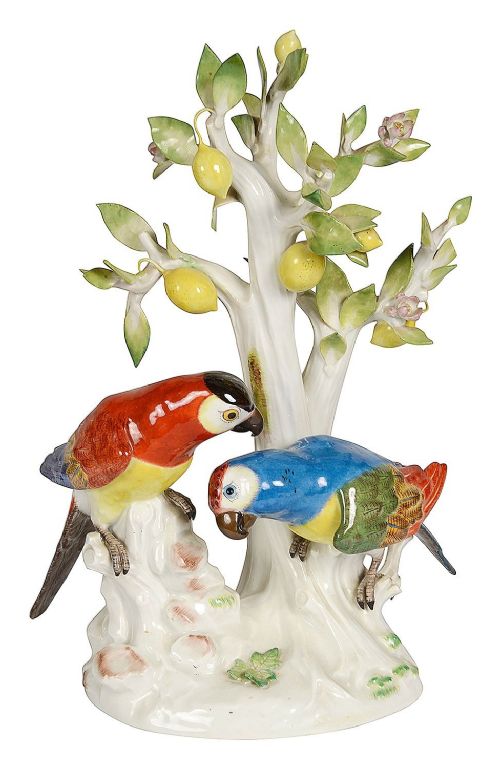
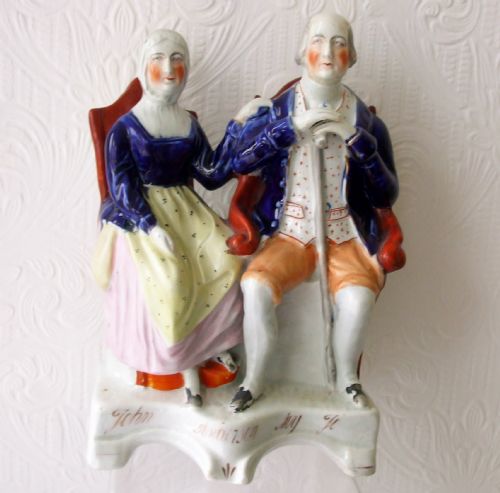
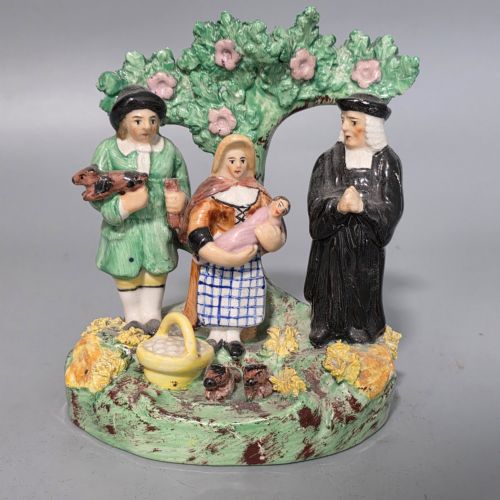
The most common examples on this page are Victorian Staffordshire earthenware figures and continental porcelain groups from continental centres like Meissen and Paris. These pieces capture the Victorian appetite for moral narrative, domestic sentiment, and historical commemoration in glazed ceramic form.
Materials and production methods
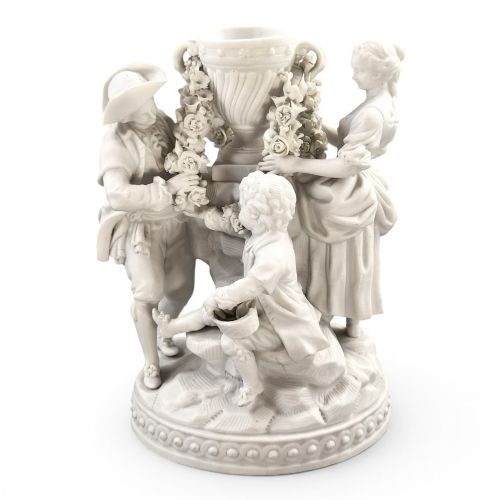
Potters and modellers utilised earthenware, hard-paste porcelain, and soft biscuit porcelain, often shaping the clay through press moulding or slip casting. Figures were built in sections, carefully luted together before receiving underglaze or overglaze enamel paint.
Surface finish depended on the kiln firing and glaze application, ranging from glossy lead glazes on Staffordshire earthenware to delicate gold leaf accents and polychrome enamel paint on fine porcelain groups.
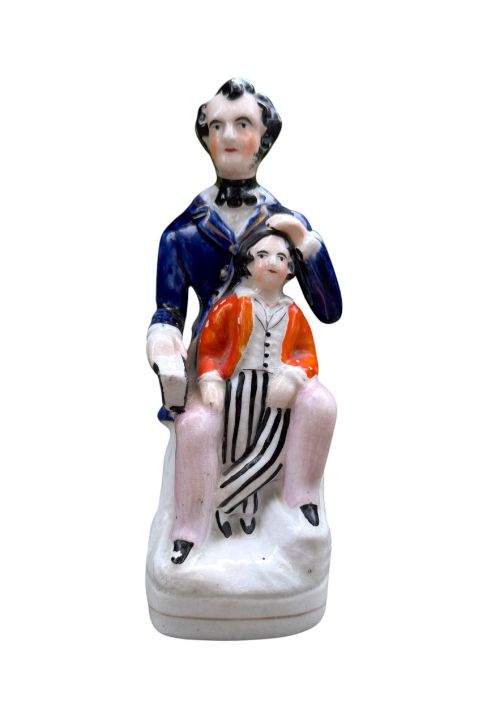
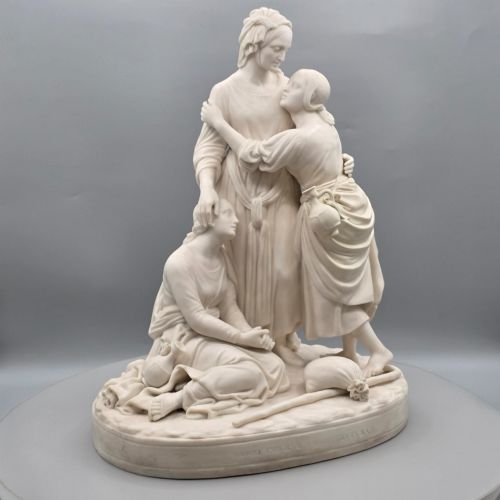
Even earnest Victorian moral groups like the Band of Hope must share shelf space with defiant Staffordshire poodles.
Distinctions in craftsmanship
The sophistication of the original design and the reputation of the manufactory, from local English potteries to premier continental porcelain houses, dictate the overall artistic standing of the sculptural group.
Minton·Bourdois & Bloch·Samson Paris·Luca Madrassi·Ernst Wallace·Niderviller·Meissen·Eugene Clauss·Vion et Baury·Derby
The 19th Century Ceramic Group Glossary
- Biscuit porcelain
- Unglazed porcelain fired once to produce a matte, white surface resembling marble. It was favoured for neoclassical and Victorian sculptural groups.
- Staffordshire flatback
- An earthenware figure modelled in the round at the front with a flat, unpainted back intended for display on a mantelpiece.
- Spill vase
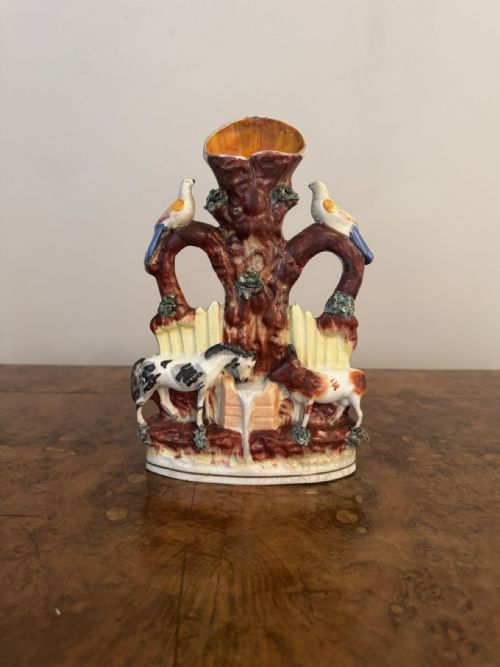
- A hollow ceramic figure or group incorporating an attached cylindrical holder designed to store wooden spills for lighting candles or fires.
- Parian
- A fine-grained, unglazed hard-paste porcelain developed to imitate marble, often utilised for Victorian portrait busts and literary figure groups.
- Hard-paste porcelain
- A durable ceramic composed of kaolin and petuntse fired at high temperatures, producing a dense body and a glassy, vitrified finish.
19th Century Ceramic Group: Frequently Asked Questions
What subjects do these ceramic groups typically depict?
These groups portray a wide array of subjects, including historical events, literary characters, romantic couples, and domestic animals.
Potters frequently drew inspiration from contemporary theatre, royal pageantry, and classical mythology to engage the Victorian buyer.
Where were most Staffordshire ceramic figures made?
They were produced primarily by numerous commercial potteries operating in the Stoke-on-Trent region of Staffordshire, England.
This industrial area became the global centre for mass-produced earthenware figures tailored for working and middle-class homes.
How do you distinguish earthenware from porcelain groups?
Earthenware figures, common in English Staffordshire production, have a porous, opaque clay body covered in a glossy lead glaze.
Porcelain groups utilise refined white clay fired at higher temperatures to achieve a vitreous, translucent body often finished with delicate enamel painting.
How were spill vases used in the nineteenth century?
Spill vases combined decorative figural sculpture with a functional receptacle designed to hold thin wooden tapers.
Households used these tapers to transfer flames from the hearth to lamps and candles before the invention of safety matches.
How should I care for antique ceramic figures?
Keep ceramic groups out of direct sunlight to prevent the fading of delicate overglaze enamel paints and gold leaf accents.
Dust them gently with a soft, dry brush and avoid submerging pieces with old repairs or unglazed biscuit surfaces in water.