
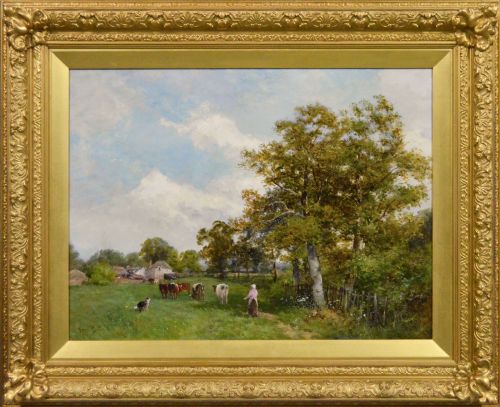
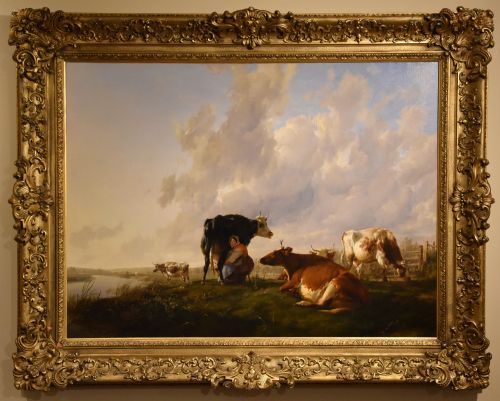
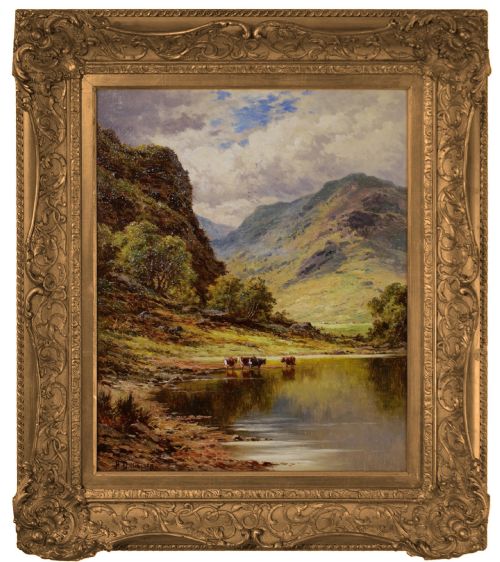
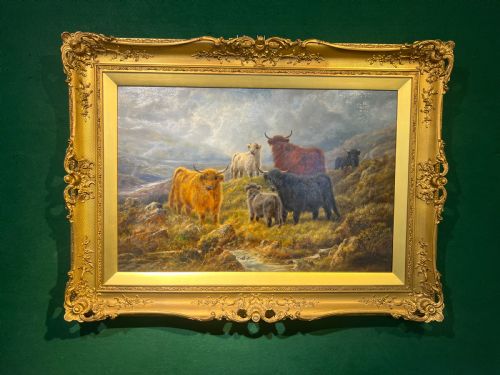
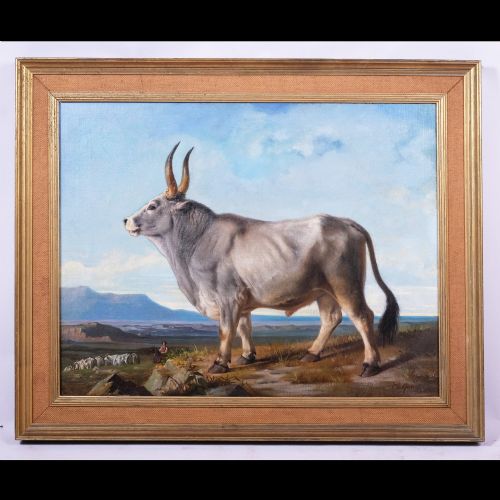
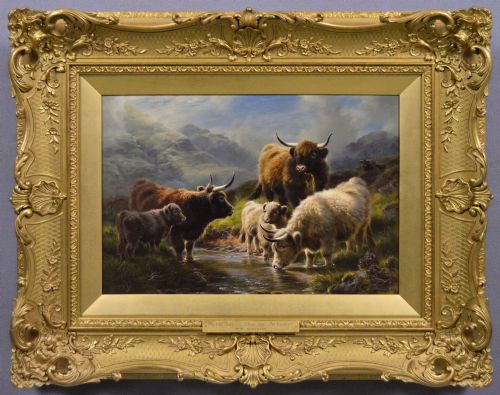
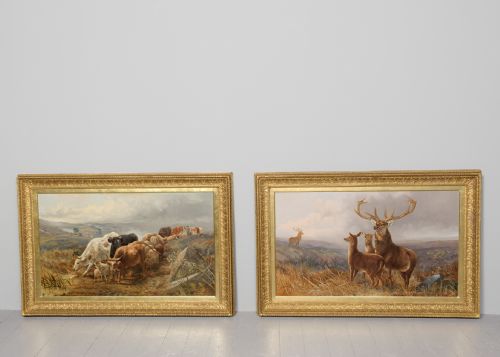
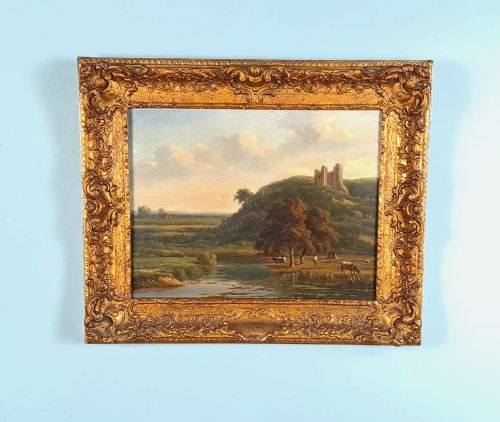
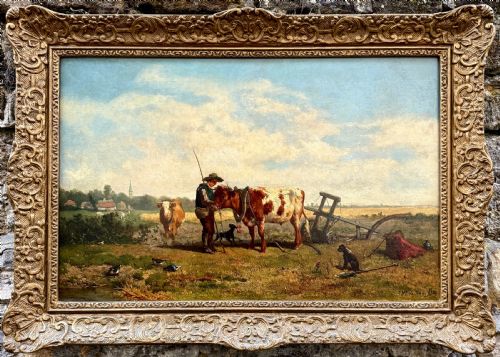


19th Century Cattle Landscape
A 19th century cattle landscape brings the quiet rhythm of rural pastoral life straight into a room through oil and watercolour.
19th Century Cattle Landscape
A 19th century cattle landscape captures the deep connection between rural British and European farming life and the natural environment. These artworks range from intimate watercolours of riverbanks to large oil paintings of Highland cattle standing beside misty lochs.
Buyers will encounter framed canvas works, wood panels, and works on paper created by both named Victorian masters and regional continental schools. The subject matter typically centres on herds resting by water, milkmaids tending livestock, or drovers navigating rural tracks.
The style spans from detailed realism to looser British impressionist interpretations. Works frequently depict specific regional environments such as the Scottish Highlands, Welsh valleys, and English river meadows.
How They Were Made
Artists relied primarily on oil paint applied to stretched canvas, wooden panels, or milk glass, building up rich textures with layered brushwork. Watercolours on paper also capture rural scenes, often utilising mixed media and delicate washes to render atmospheric skies and open water.
Finished paintings were typically housed in ornate frames constructed from wood and gesso, often embellished with gold leaf and elaborate gilding. These traditional frames were designed to complement the warm earth tones and pastoral lighting characteristic of the period.
Surviving works employ support materials ranging from stretched canvas and wooden panels to milk glass and heavy paper.
What Varies in Quality
The anatomical rendering of the animals and the handling of natural light distinguish superior works from simpler student pieces. Master painters capture the weight and posture of cattle with convincing anatomical precision, whereas lesser examples show stiff or disproportionate forms.
Depth of perspective and atmospheric harmony define the higher tiers of these landscapes. Skilled compositions integrate the livestock naturally into the surrounding topography rather than placing them as isolated figures against a static backdrop.
David Bates·Thomas Sidney Cooper·Henry H. Parker·Robert Watson·William Watson Jnr·Robert Cleminson·T C Hofland·Johannes de Haas·A M Gauci·Henry Robinson Hall·Ernest Pile Bucknall·Samuel Joseph Clark·William Sydney Cooper·Thomas Hunn·George Vicat Cole·Frederick James Knowles·Robert Thorne Waite·Heinrich Harder·James de Rijk·Eugene Verboeckhoven·Pierre Emmanuel Dielmans·Harold Lawes·George Cole·Thomas Baker of Leamington·Bernard Walter Evans
The 19th Century Cattle Landscape Glossary
- Oil on Canvas
- Pigment mixed with drying oil applied to a woven fabric support. This was the primary medium for substantial gallery paintings throughout the period.
- Gesso
- A plaster-like mixture applied to wooden frames as a smooth base before gilding. It provides a solid foundation for intricate surface moulding.
- Watercolour
- Pigment suspended in a water-soluble vehicle applied to paper. Artists used this medium for swift field sketches as well as finished exhibition pieces.
- Gold Leaf
- Gold beaten into extremely thin sheets used to gild picture frames. It adds a warm metallic sheen that enhances the framed artwork.
- Pastoral
- A genre of art depicting rural life and domesticated animals in idealized natural settings. These scenes emphasise peace and agricultural harmony.
19th Century Cattle Landscape: Frequently Asked Questions
How do I identify a Victorian cattle painting?
Look closely at the clothing styles of any figures, the type of frame, and traditional signatures or dates recorded on the reverse. Most works from this era also rely on realistic oil techniques or traditional watercolour paper.
Compare the composition against known regional schools from Britain and continental Europe to narrow down the decade of production.
Where should I hang a cattle landscape?
These traditional artworks suit dining rooms, libraries, or living spaces with natural wood furniture and neutral wall colours. Position the painting away from direct sunlight to protect organic canvas fibres and watercolours.
Ensure the hanging height allows comfortable eye-level viewing of the painted horizon.
Are watercolours as durable as oils?
Waterworks on paper require protective glazing and framing to prevent fading from ambient light and moisture damage. Oil paintings on canvas or panel possess a more robust surface layer that withstands standard room environments.
Both mediums benefit from stable indoor humidity and careful handling during cleaning.