

19th Century Carved Sideboard
When you search for a 19th century carved sideboard, you uncover substantial dining room furniture built to store tableware and display silver.
19th Century Carved Sideboard
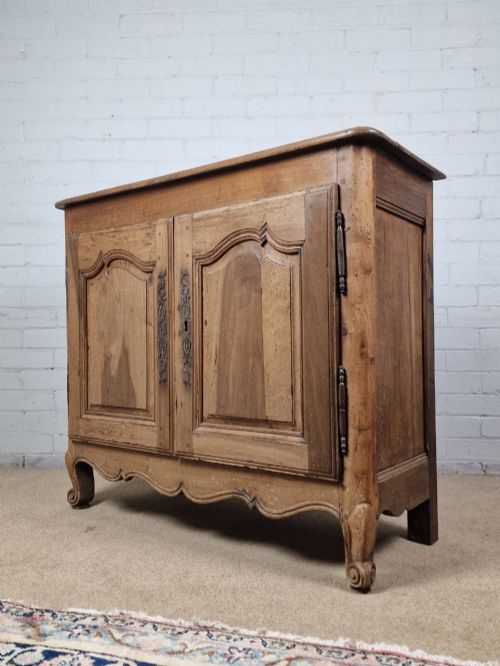
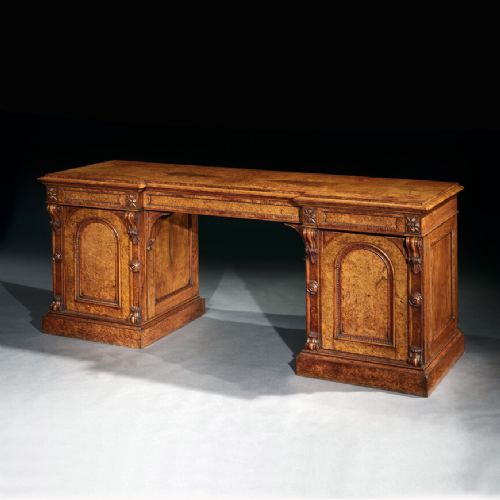
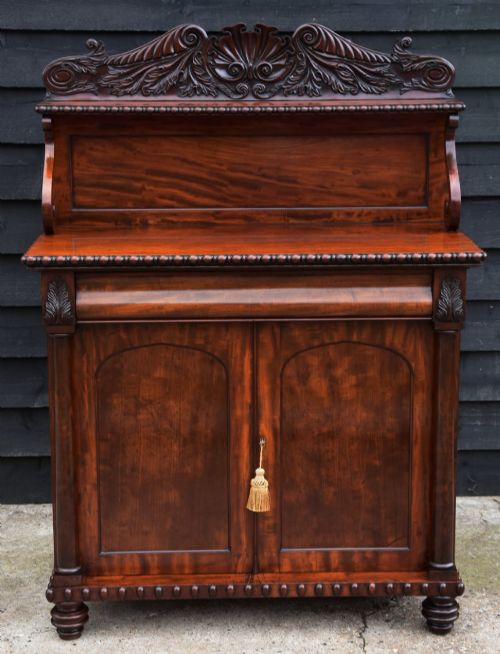
A 19th century carved sideboard encompasses heavy timber serving tables, cabinets, and chiffoniers originating across British, French, and regional workshops. These pieces served dining rooms and halls for storage and display, appearing frequently in robust oak, mahogany, and walnut.
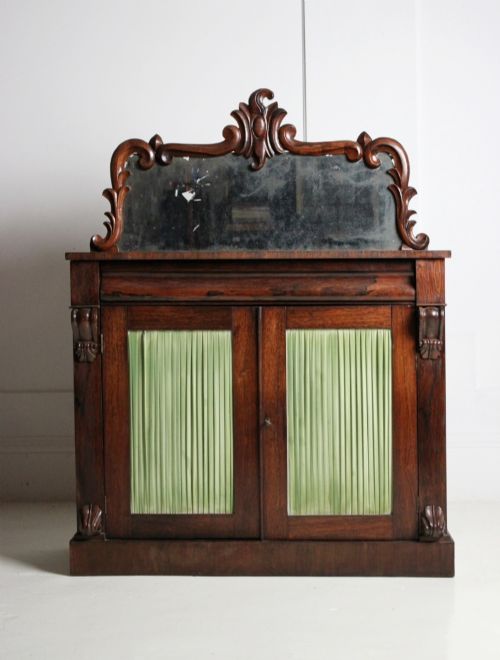
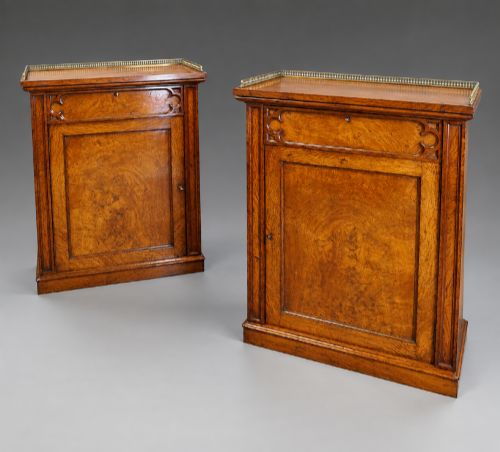
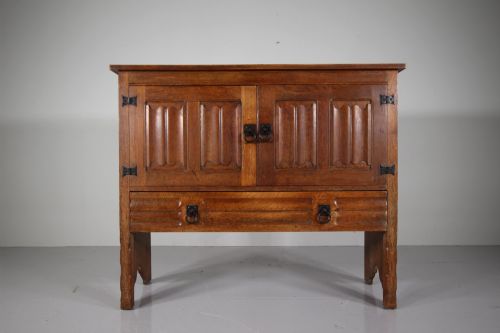
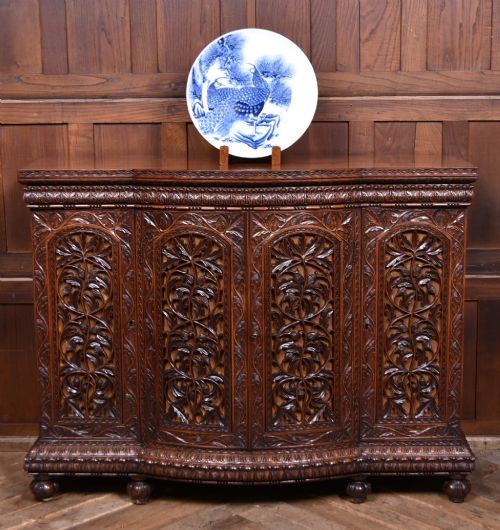
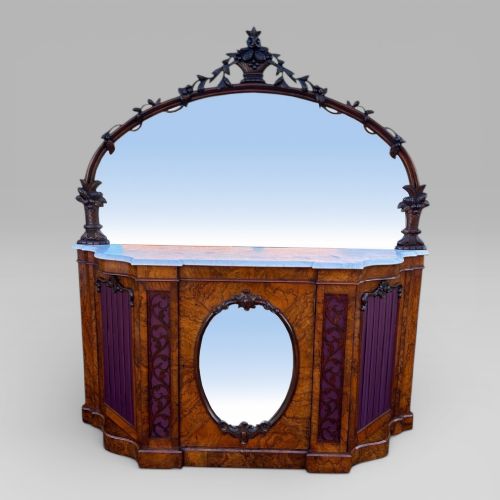
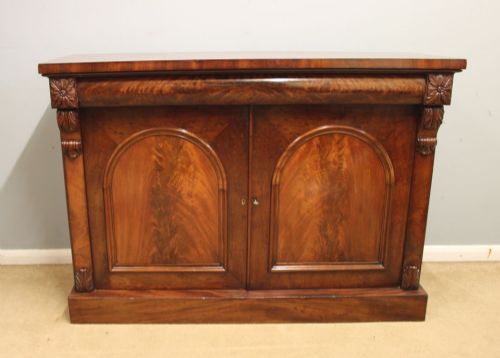
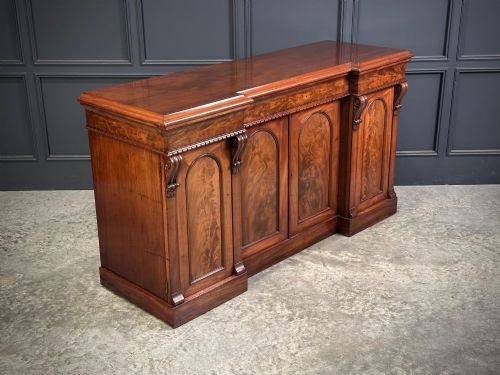
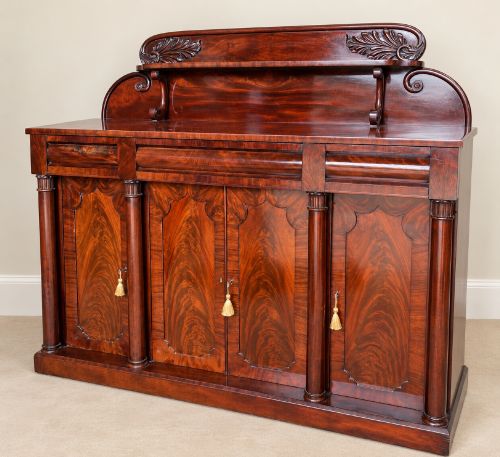
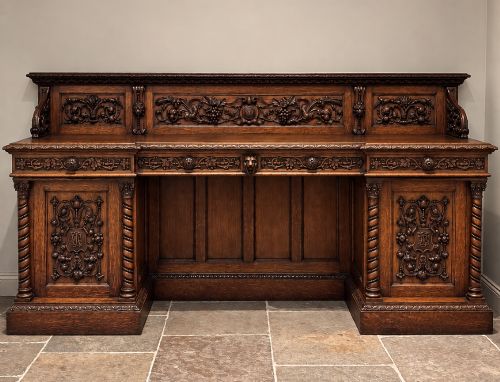
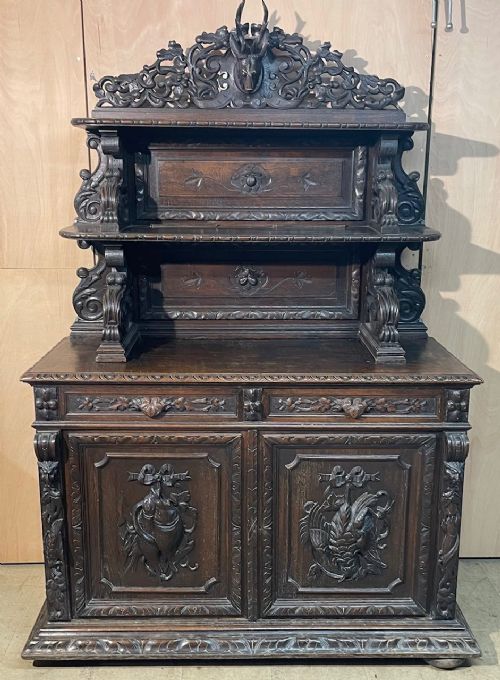
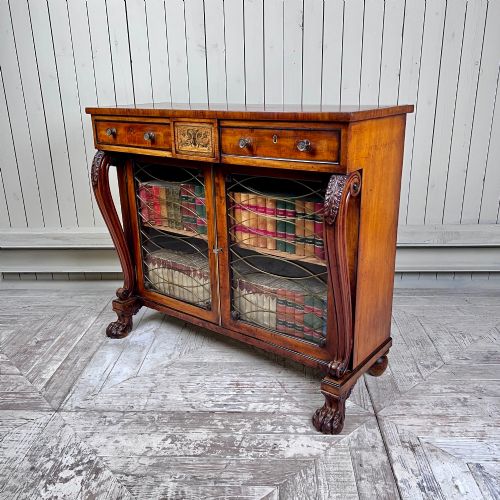
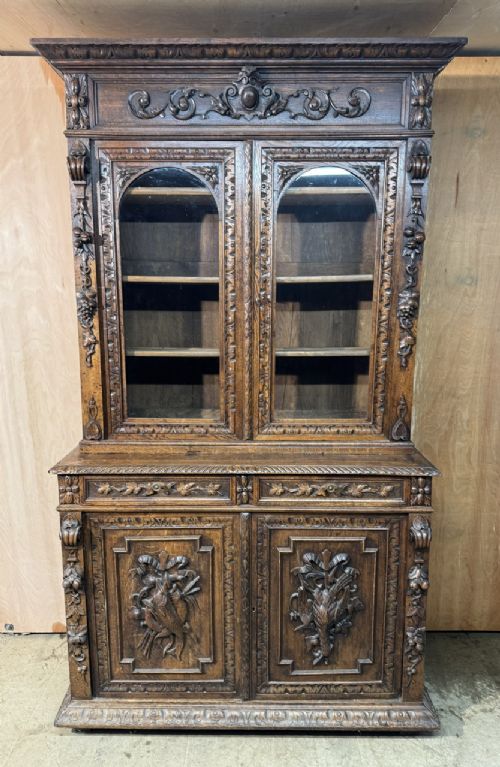
The most common examples on this page are Victorian and Regency variations, spanning pedestal sideboards, mirror-backed credenzas, and French hunting buffets. Heavily carved oak surfaces depicting regional motifs frequently appear alongside cleaner mahogany and rosewood designs from earlier decades.
How they were made
Cabinetmakers constructed these sideboards using solid hardwoods like oak, mahogany, and walnut, often applying flame or burr veneers to drawer fronts and door panels. Brass inlay, glass panels, and marble tops supplemented the timber structure on refined urban pieces.
Carving was executed entirely by hand, ranging from deep relief panels featuring foliage and heraldic masks on Gothic Revival and French hunting furniture to subtle linear mouldings on Regency examples. Joinery relied on traditional mortise and tenon frames designed to support heavy stone or timber upper tiers.
Period styles range from Regency restraint through Victorian Gothic Revival and French provincial hunting designs.
What varies in quality
Quality rests in the crispness and depth of the hand carving, where sharply defined foliage and figures distinguish superior work from shallow, mechanical execution. The choice of timber grain, such as heavily figured flame mahogany or selected pollard oak, dictates the visual impact of the piece.
Construction integrity separates master cabinet work from standard production, visible in the snug fit of dovetailed drawer linings and the original stability of heavy mirror frames. Original brass hardware, locks, and intact marble surfaces elevate the standing of any sideboard.
Gillows·James Simpson and Sons
The 19th Century Carved Sideboard Glossary
- Chiffonier
- A low cabinet or sideboard featuring shelving or a mirror superstructure, popular during the Regency and Victorian periods for holding dining silver.
- Credenza
- A sideboard or buffet cabinet, often mirrored and carved, used extensively in Victorian dining spaces for display and serving.
- Pedestal sideboard
- A central table flanked by two heavy cupboards or pedestals, typical of Regency dining room design.
- Gothic Revival
- A 19th-century style incorporating medieval architectural motifs such as pointed arches, tracery, and heavily carved panels.
- Flame mahogany
- Mahogany timber cut to reveal a flamelike pattern in the grain, prized for high-status cabinet doors.
19th Century Carved Sideboard: Frequently Asked Questions
What is a 19th century carved sideboard used for?
These large cabinets provided essential storage for dining china, cutlery, and glassware while offering a wide surface for serving food during meals.
They also functioned as display furniture where families could arrange silver platters, decorative ceramics, and family portraits.
How do I identify a Victorian sideboard?
Victorian examples typically feature heavier proportions, dark oak or mahogany timbers, and deep relief carving depicting leaves, fruit, or animal masks.
Many incorporate large superstructure elements such as tall mirrored backs or heavily carved wooden shelves above the main serving counter.
Are Regency sideboards different?
Regency pieces lean towards architectural restraint, utilising straight lines, figured mahogany veneers, and subtle brass inlay rather than heavy carving.
They often take the pedestal form, featuring separate cupboards flanking a central serving board rather than one continuous low cabinet.
How do I fit one into a modern home?
A large wooden sideboard anchors a dining room or spacious hallway, providing deep cupboards that swallow modern clutter while serving as a drinks station.
Ensure you measure the depth and height carefully, as carved mirror-backs add significant vertical scale to heavy oak bases.