






19th Century Carved Bedstead
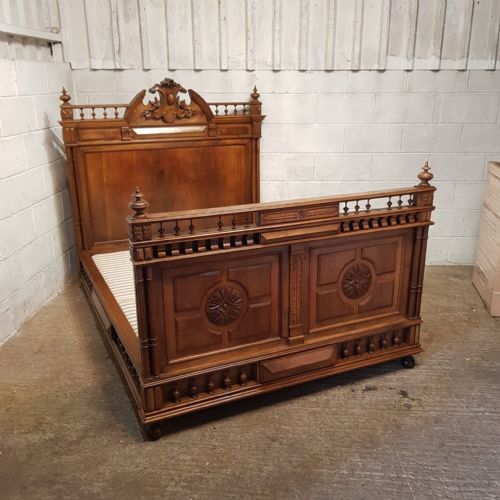
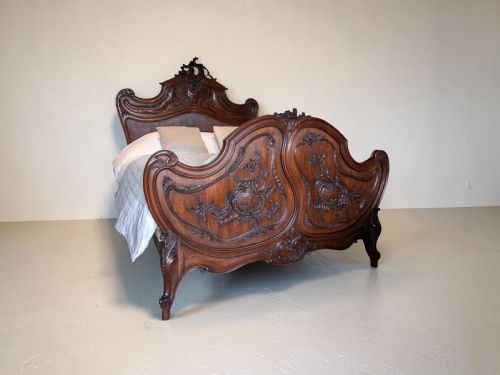
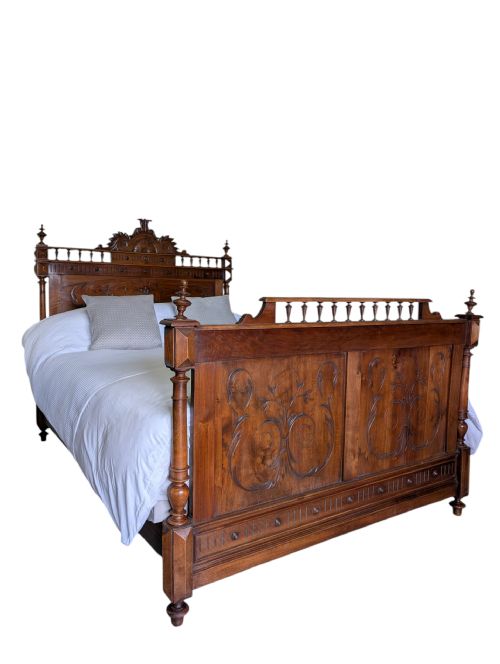
A 19th century carved bedstead grounds a bedroom with deep historical presence, substantial timber framing and ornate continental detailing.
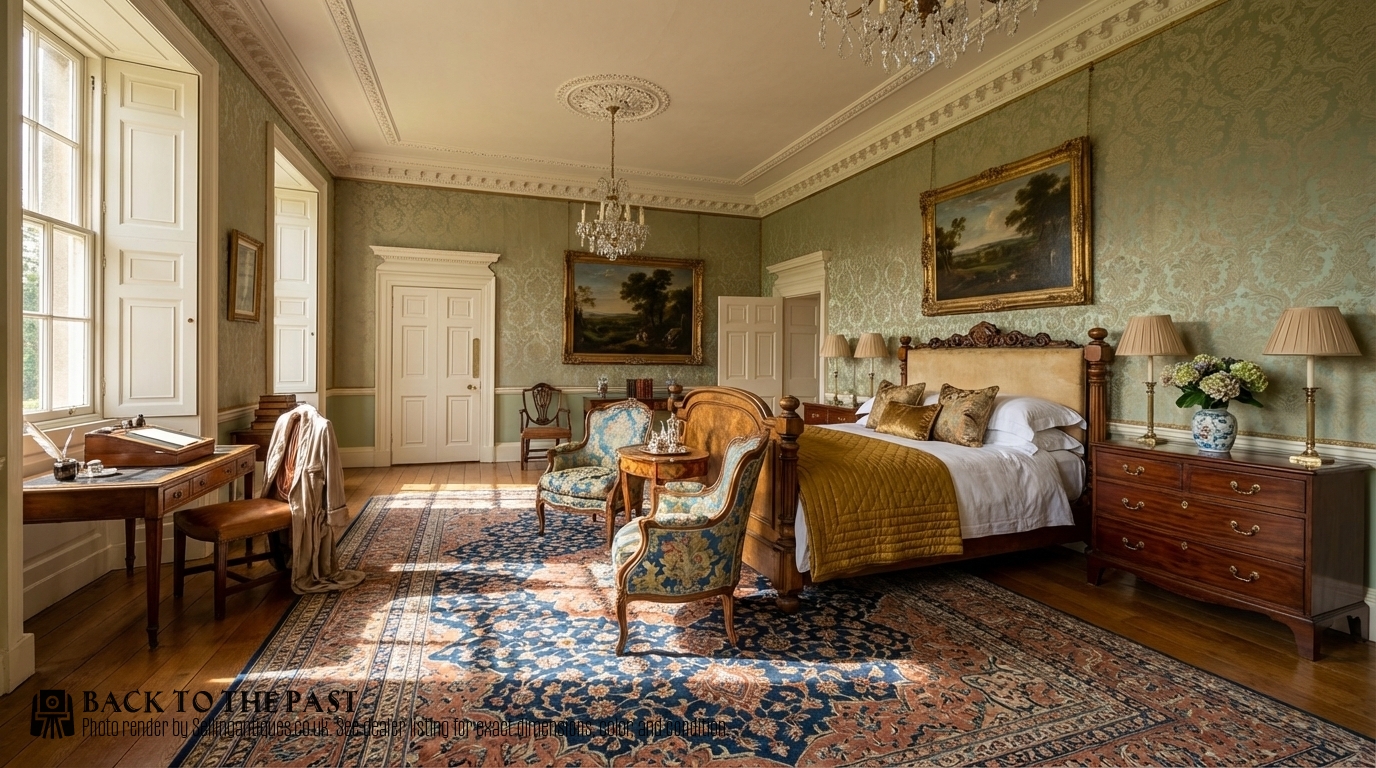
19th Century Carved Bedstead
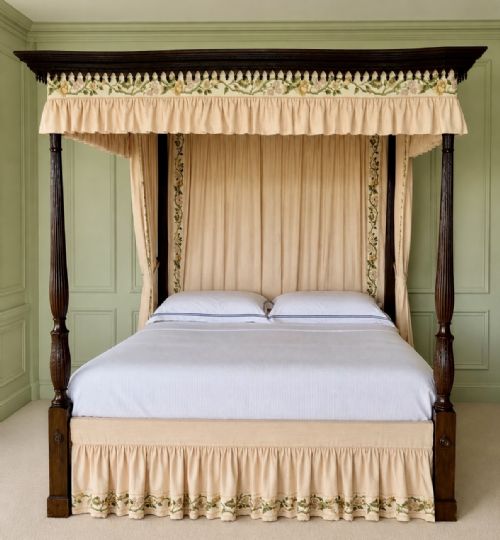
A 19th century carved bedstead encompasses a diverse range of monumental sleeping furniture originating across Britain, France, Italy, Portugal, China and India. Buyers searching for a 19th century carved bedstead will frequently encounter French walnut double and king size frames alongside grand mahogany four poster beds and tester beds.
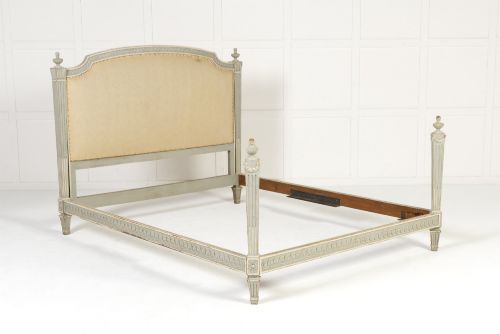
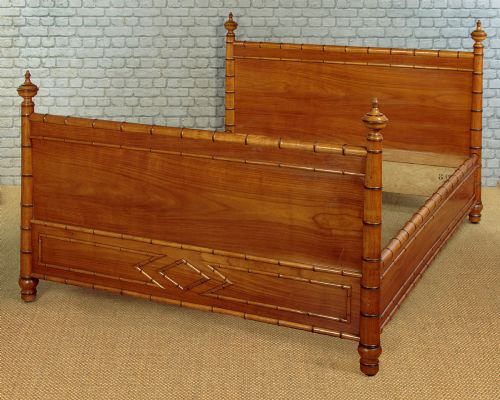
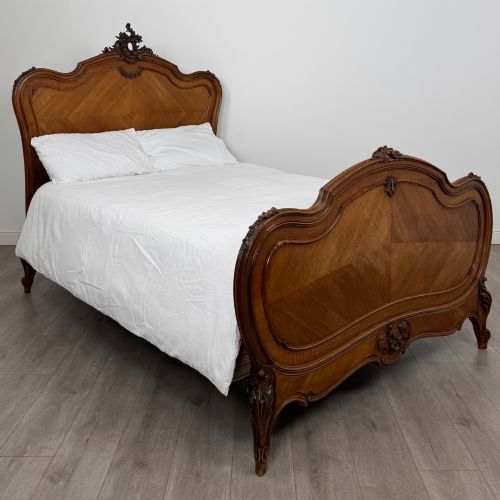
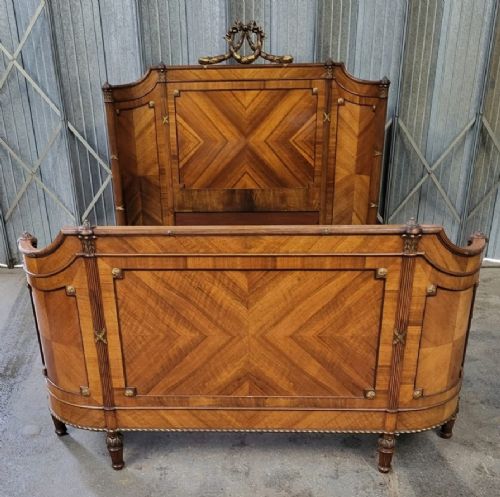
The selection ranges from Victorian mahogany and burr walnut designs to regional European pieces finished in paint, faux bamboo or quarter veneered woods. Distinct stylistic lineages appear throughout the inventory, spanning Louis XVI style, French Renaissance Revival, Regency and Italian Rococo expressions.
Materials and Construction
Cabinetmakers constructed these bedsteads using dense hardwoods including walnut, mahogany, rosewood, oak and pine, frequently pairing structural timber with decorative veneers. Surface ornamentation relies on hand carving, applied mouldings, porcelain details and painted finishes, supported by brass hardware and structural ironwork.
Four poster and half tester configurations utilise turned and spiral carved posts to support overhead cornices and canopies. Panel construction and joinery techniques allow large double, king and emperor size frames to be dismantled and assembled securely.
Several pieces feature faux bamboo turnings, proving the Victorians loved botanical mimicry just as much as we do.
Evaluating the Craft
Depth and crispness of hand carving distinguish superior examples from standard production, particularly on headboards and footboards where relief work defines the silhouette. The choice of timber grain, such as quarter veneered walnut or plum pudding mahogany, dictates visual richness.
Integrity of original construction methods, including authentic timber patination and retained brass or porcelain components, elevates the standing of a piece. Cohesion of stylistic details, whether following Louis XVI or French Empire idioms, governs overall execution.
The 19th Century Carved Bedstead Glossary
- Bedstead
- The framework of a bed consisting of headboard, footboard and side rails, designed to hold mattress supports without the integral box springs of modern beds.
- Four poster bed
- A bed with four vertical posts supporting an upper canopy or tester frame above the sleeping platform.
- Half tester bed
- A bed featuring a shorter canopy that projects from the wall or headboard to cover only the upper portion of the bed.
- Quarter veneered
- A method of arranging four matching veneer slices cut from the same log to create a symmetrical, radiating grain pattern on a panel.
- Faux bamboo
- Wood that has been turned, carved or painted to imitate the segmented stalks of natural bamboo, popular in nineteenth-century decorative arts.
19th Century Carved Bedstead: Frequently Asked Questions
Will a 19th century bed fit modern mattresses?
Many nineteenth-century bedframes were built to nineteenth-century sizing conventions, which often differ from contemporary standard dimensions.
Buyers should verify internal rail lengths and widths against current mattress sizes, as custom mattress ordering or minor rail adjustments may be required for a proper fit.
How are these large beds transported?
These pieces typically dismantle into separate components including headboards, footboards, side rails and canopies where applicable.
Specialist antique couriers are recommended for delivery and professional assembly to protect historic joinery and timber finishes.
Can these beds be used daily?
Solid hardwood construction provides robust structural integrity suited to regular domestic use when properly assembled and maintained.
Modern slatted bases or supportive platforms can be integrated within the antique side rails to accommodate contemporary bedding weights.
How do I identify French regional styles?
French beds from this era frequently exhibit distinct regional characteristics, such as the curved motifs of Louis XVI style or the heavy carved panels of Breton oak furniture.
Comparing moulding profiles, wood selections and decorative hardware helps differentiate provincial workshops from Parisian cabinetmakers.