
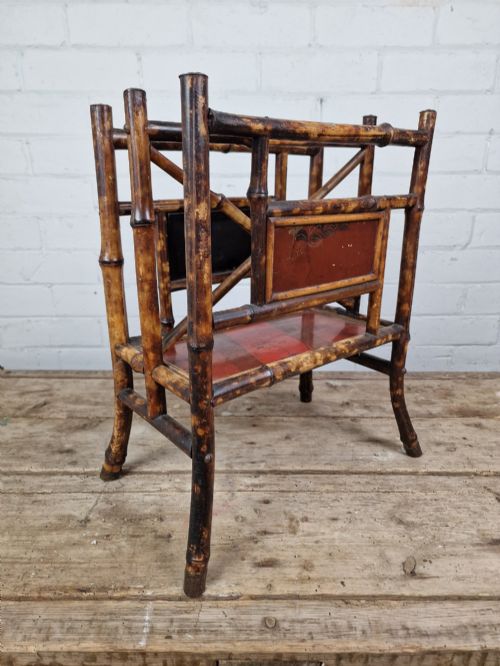
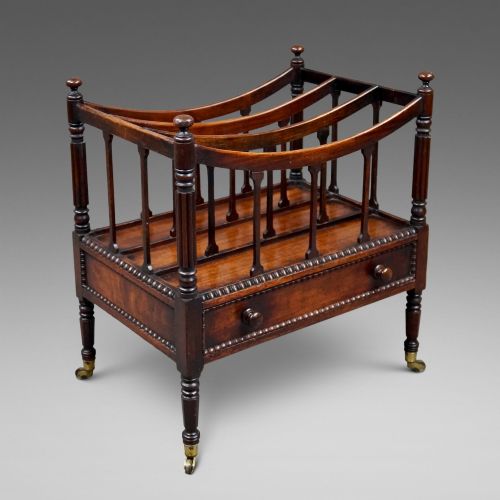


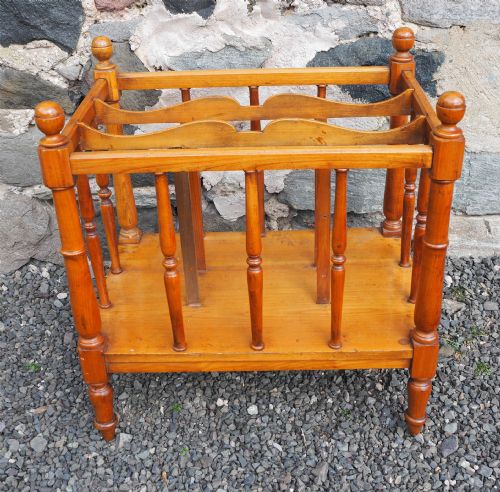


19th Century Canterbury Rack
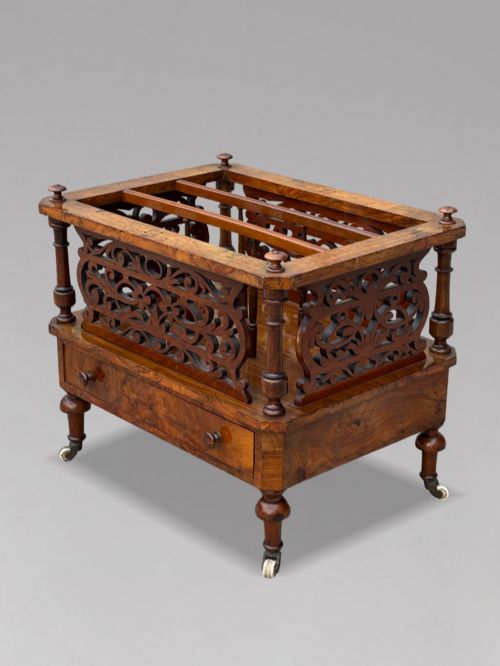
A 19th century canterbury rack organises sheet music and periodicals with low slung partitions.
19th Century Canterbury Rack
A 19th century canterbury rack functions as a low stand fitted with vertical divisions for holding portfolios, newspapers, and sheets of music. Buyers encounter many variations originating from the Victorian, Regency, and Georgian periods.
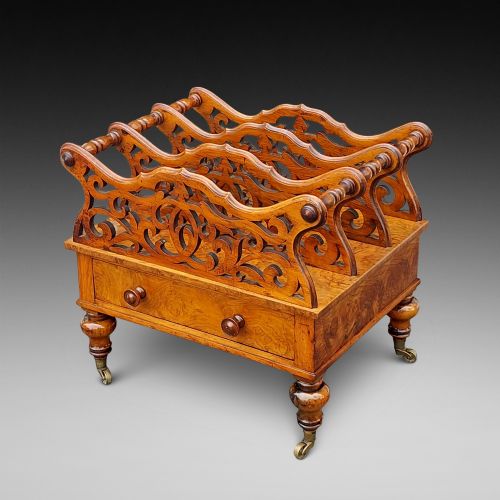
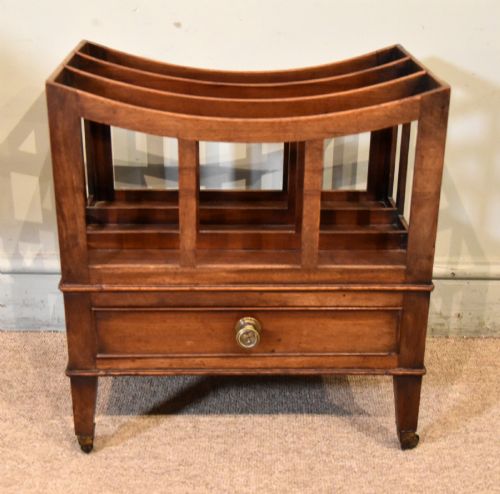
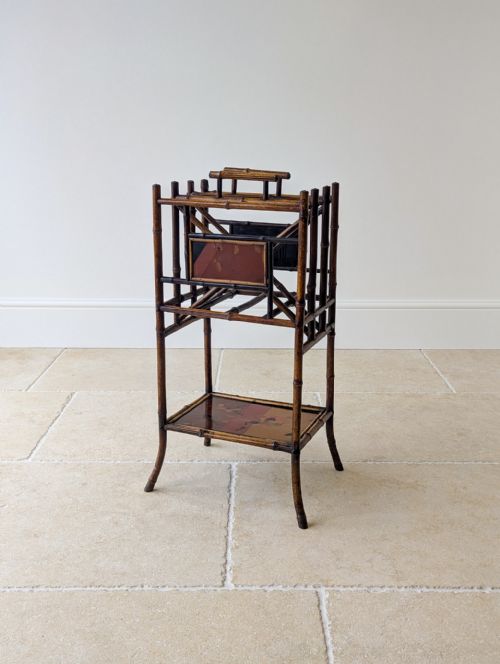
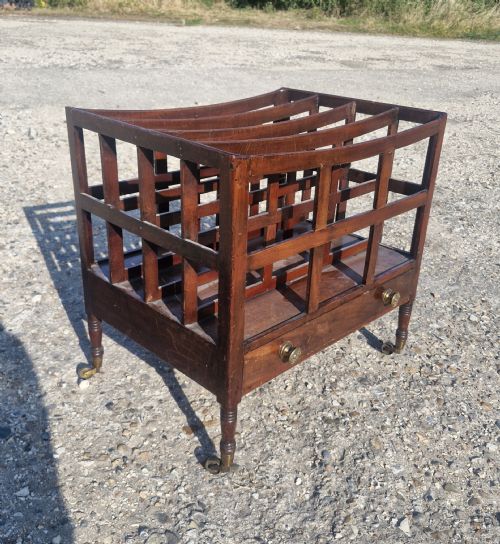
The standard form rests on short legs or castors, often combining compartmented tiers with a small drawer below or an upper shelf supported by turned pillars. Rosewood and mahogany dominate the earlier examples, whilst walnut and bamboo appear frequently in later decades.
How they were made
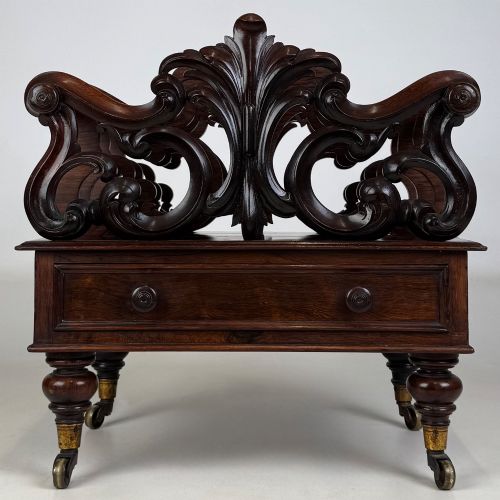
Cabinet makers utilised dense timbers such as rosewood, mahogany, and burr walnut, frequently shaping the divisions with pierced slats or delicate spindle work. Metal details like brass castors and occasional ormolu mounts provide structural support and movement.
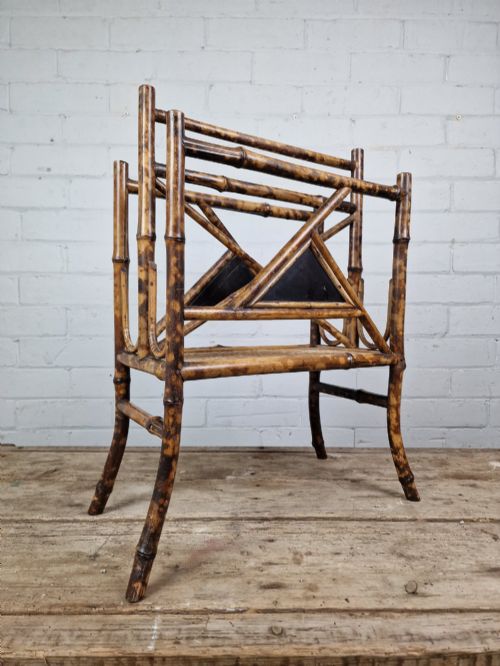
Alternative aesthetics introduced tiger bamboo frames paired with lacquer panels or hand painted surfaces during the late Victorian period. Joinery methods relied on traditional dowels and mortise and tenon joints to secure the upright partitions to the base tray.
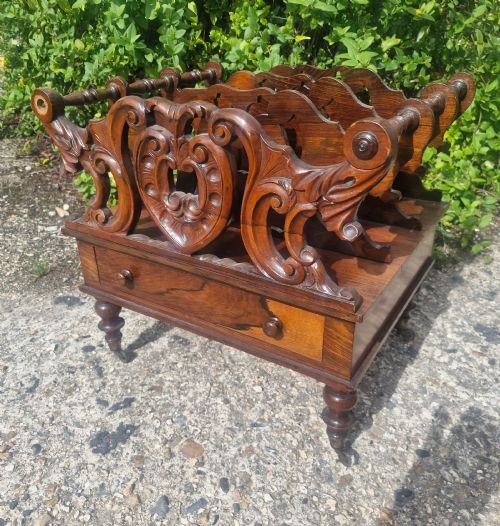
Some models feature feathers carved from solid wood to hold your sheet music.
What varies in quality
The distinction between standard pieces and finer examples rests on timber selection, such as figured walnut or deeply grained rosewood, and the crispness of carved details like Prince of Wales feathers. Robust joinery in the slatted partitions determines how well the structure withstands weight without loosening.
The 19th Century Canterbury Rack Glossary
- Canterbury
- A low stand with partitions for holding music sheets or papers. Originating in the eighteenth century, the form evolved through the Regency and Victorian eras.
- Whatnot
- A set of open shelves supported by pillars used for displaying objects or books. When combined with a lower rack, it serves multiple storage purposes.
- Folio
- A large volume or case for unbound papers and sheet music. Regency iterations often accommodated these large formats.
- Castor
- A small wheel fitted to the legs for ease of movement. Most nineteenth century versions utilise brass fixings.
19th Century Canterbury Rack: Frequently Asked Questions
What is a 19th century canterbury rack used for?
These stands originally held sheet music, scores, and unbound newspapers near a piano or seating area. Today they serve as decorative magazine racks in living spaces.
The vertical partitions keep periodicals upright and sorted, preventing papers from cluttering tabletops while remaining within easy reach.
How do I identify a Regency period piece?
Regency designs typically feature dark mahogany or rosewood, clean architectural lines, and boat shaped or rectangular frames with restrained brass detailing.
Cabinet makers during this period often incorporated turned uprights and robust feet without the heavy ornamentation found in later Victorian versions.
Where should I place a canterbury in a room?
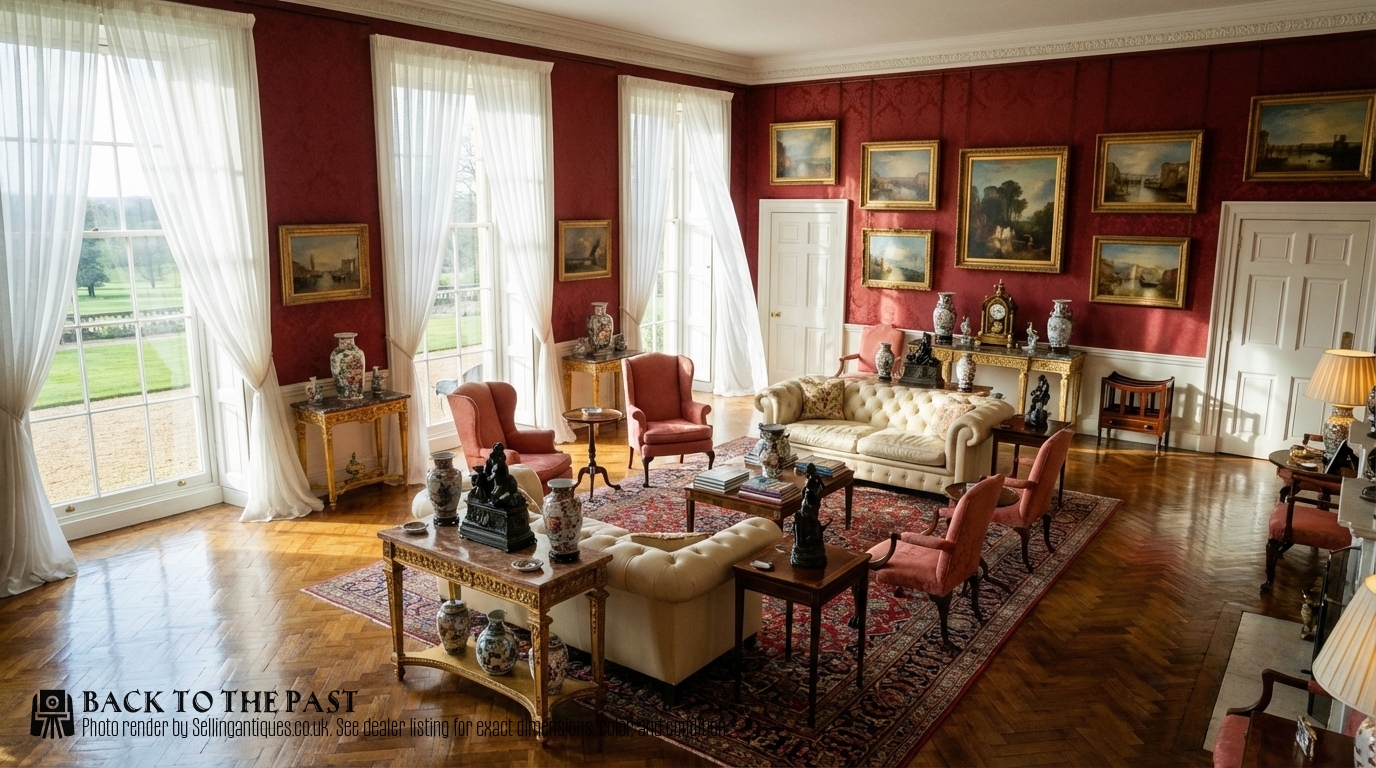
Their low profile allows them to sit beside sofas, armchairs, or against plain wall spaces without obstructing sightlines. Avoid damp spots and direct sunlight to protect polished rosewood or walnut veneers.
Many examples feature castors, making them simple to reposition across wooden flooring or low pile rugs.
What is the difference between bamboo and wood models?
Bamboo versions reflect the late nineteenth century Aesthetic Movement, introducing lighter materials, lacquered surfaces, and sometimes hand painted panels.
Traditional timber versions rely on heavy mahogany, walnut, or rosewood construction favoured by Georgian and early Victorian cabinet makers.