



19th Century Bronze Inkwell
A 19th century bronze inkwell brings tactile weight and classical design to a desk, offering an enduring piece of period craftsmanship.
19th Century Bronze Inkwell
A 19th century bronze inkwell takes many physical forms, appearing as grand tour architectural models, figural animals, or heavy marble desk stands. These pieces originate predominantly from French and English workshops, spanning styles from Neoclassical and Empire to Victorian and Napoleon III.
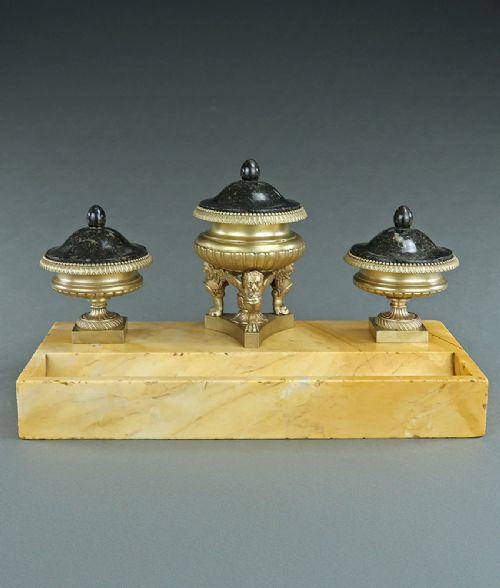
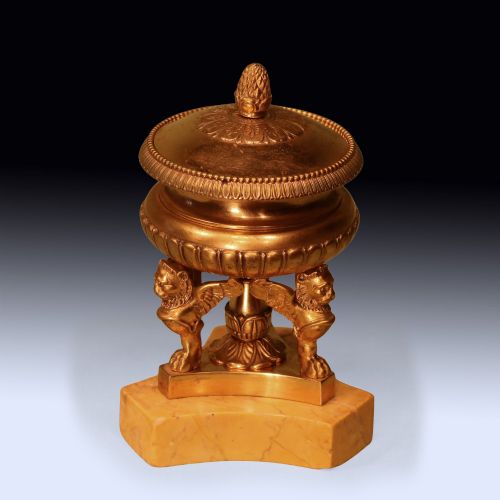
The version most commonly met on this page is the French bronze and ormolu inkstand mounted on a marble base, frequently housing glass inserts for the ink. Such items combine utility with ornamental display, reflecting the writing habits and interior aesthetics of the period.
Materials and technique
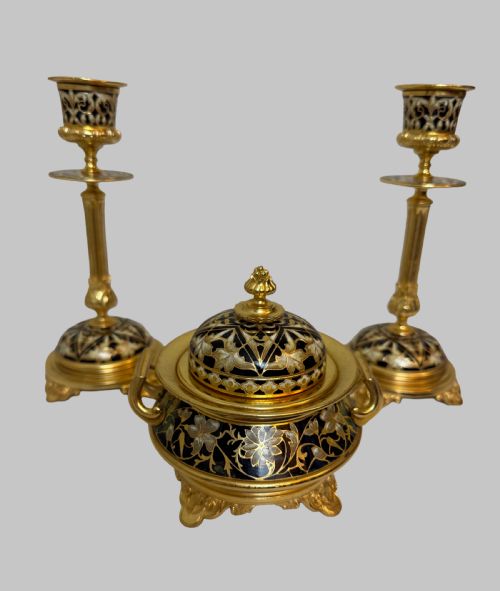
Maker utilise cast bronze, patinated bronze, and gilded ormolu, often combining these metals with contrasting materials like Sienna marble, onyx, or mahogany. Surface enrichment includes champlevé enamel work and fine chasing on the metal components.
Construction relies on assembly of separate cast elements, securing the metalwork to heavy stone bases using threaded pins or bolts. Glass or ceramic liners sit within the bronze wells to hold the fluid safely.
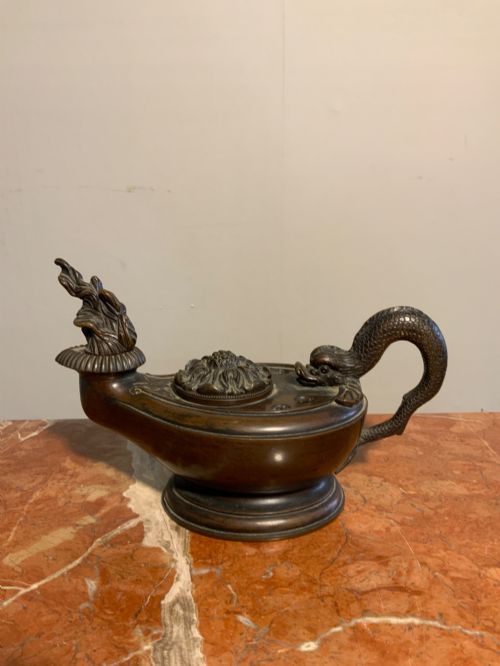
Mr Fox appears in his nightgown on one bronze inkwell, bringing domestic humour to nineteenth-century desk accessories.
Craftsmanship and distinction
The distinction between ordinary production and superior work rests on the crispness of the bronze chasing and the quality of the original gilding. Finer pieces exhibit deeply detailed figural modelling and heavy, unblemished marble or onyx plinths.
Signatures by recorded makers or bronze-founders elevate an object, as does the survival of original components such as glass inserts, pounce pots, and matching candlestands.
Lefebvre of Belgium·Jules Dalou
The 19th Century Bronze Inkwell Glossary
- Ormolu
- Gilded brass or bronze applied to furniture and decorative objects. This finish gives a bright gold appearance that contrasts with dark patinated bronze.
- Encrier
- A French term for an inkstand or inkwell set. These objects often include compartments for pens and stamps alongside the central ink reservoir.
- Grand Tour
- A cultural journey undertaken by nineteenth-century elites. Souvenirs from these travels included bronze architectural models of classical ruins.
- Pounce pot
- A small container with a perforated lid used to sprinkle resin powder over parchment. This prepared rough paper surfaces for ink.
- Champlevé
- An enamelling technique where troughs are dug into the metal surface and filled with vitreous enamel. The piece is then fired and polished flat.
19th Century Bronze Inkwell: Frequently Asked Questions
What is a pounce pot?
A pounce pot holds fine powder used by writers to dry ink or smooth rough paper surfaces before writing. It sits alongside the ink reservoir on desk stands.
These small containers share the metalwork style and materials of the main inkwell, completing a matched writing set.
How do I clean bronze?
Bronze requires gentle dusting with a soft brush rather than aggressive polishing. Chemical cleaners strip the historic patina that accumulates over generations.
Marble bases benefit from dry wiping to prevent moisture seeping into the stone pores.
Are inkwells missing their glass inserts?
Original glass liners often break or vanish during centuries of use. Many surviving pieces retain their fitted glass reservoirs, while others require replacement liners.
Checking for the original liner helps determine the completeness of the desk accessory.
What is Grand Tour bronze?
Grand tour bronzes are miniature architectural models or classical sculptures purchased by travellers in Italy during the nineteenth century. They replicate famous ruins like the Temple of Hercules.
These bronzes were often adapted into functional desk inkwells upon the owner's return home.