







19th Century Bronze Inkstand
A 19th century bronze inkstand brings desktop organisation into focus with heavy cast metal and polished stone bases.
19th Century Bronze Inkstand
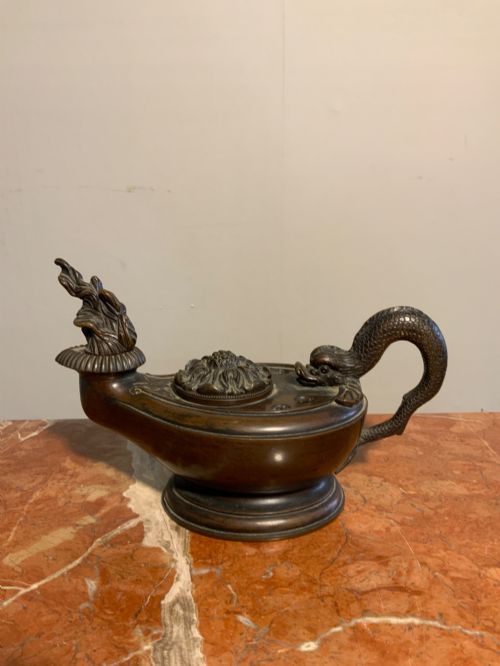
A 19th century bronze inkstand is a heavy desk accessory designed to hold one or more glass ink inserts alongside pen trays and candle holders. The pieces gathered under this phrase span French Empire, Neoclassical, Victorian, and Napoleon III styles, alongside Grand Tour souvenirs and figural studies.
Most examples combine patinated or gilded bronze with solid marble or onyx bases, creating a substantial weight suitable for a writing desk. You will frequently encounter French workshops producing architectural or figural designs featuring animals, lions, and classical motifs.
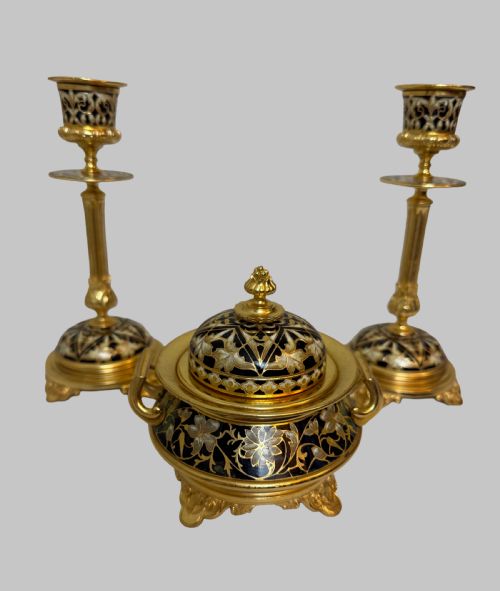
Desk stands range from simple single inkwells mounted on shaped stone plinths to elaborate sets including candlestands, caskets, and champleve enamel decoration. Pieces stretch chronologically from early 19th century Empire models through to later Victorian productions.
Materials and construction
Foundry workers cast bronze and ormolu into intricate figural or architectural shapes, employing patination to darken the metal or fire-gilding to produce a bright gold finish. These metal components were then screwed or pinned onto heavy bases carved from Sienna marble, onyx, or mahogany.
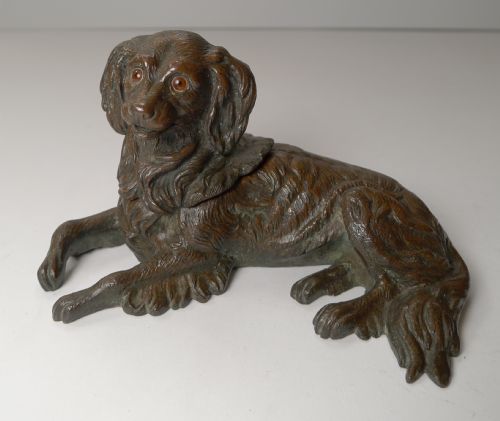
Fitted glass inserts sat within the metal collars to hold liquid ink safely away from the stone and wooden surfaces. Many pieces incorporated additional materials such as champleve enamel panels, coromandel-wood, and glass eyes in figural animal models.
19th Century Bronze Inkstand Retail Price Guide 2026
Typical asking prices for 19th century bronze inkstand among the pieces listed under this phrase on Sellingantiques today, from the lower quarter to the upper quarter. They describe what is for sale here now, not the wider market.
Cats, dogs, stags, and lions guard the ink, turning everyday Victorian letter-writing into a miniature menagerie.
Distinctions in craftsmanship
Quality rests in the crispness of the bronze chasing and the depth of the hand-finishing after casting. Superior examples show sharp detail in fur, feathers, and acanthus leaves, whereas lesser pieces exhibit softened edges and shallow surface work.
The choice and preparation of the mounting materials also divide the range. Dense, well-figured Sienna marble and heavy fire-gilded ormolu mark out the more ambitious desk sets from simpler brass and standard stone combinations.
Lefebvre of Belgium·Jules Dalou
The 19th Century Bronze Inkstand Glossary
- Ormolu
- Gilded bronze produced by applying a mercury and gold amalgam to the metal surface and heating it until the mercury vaporised. This technique creates a durable golden lustre seen on many French desk stands.
- Encrier
- The French term for an inkstand or inkwell. You will often see this word used interchangeably with desk stand in continental pieces.
- Champleve
- An enamelling technique where troughs are dug into the surface of the bronze and filled with coloured vitreous paste before firing. It decorates several of the more ornate 19th century sets.
- Grand Tour
- Souvenirs collected by affluent travellers visiting classical sites in Italy and Europe. These often took the form of patinated bronze architectural models or desk accessories.
- Patinated bronze
- Metal treated with chemical solutions to produce a darkened or antiqued surface finish. This treatment highlights the modelled relief of figures and animals.
19th Century Bronze Inkstand: Frequently Asked Questions
How do I clean a bronze inkstand?
Dust gently with a soft dry brush to protect the patination and gilding. Avoid using metal polishes or liquid cleaners, which can strip historic surface finishes.
Marble bases benefit from an occasional wipe with a damp cloth followed by immediate drying. Ensure all moisture is kept away from any exposed wooden elements or fabric lining.
Are the glass inserts usually original?
Original glass ink inserts often show minor nibbles or irregularities from hand-blowing. Replacements are common due to the fragile nature of small glass vessels.
Collectors generally accept period-appropriate replacements when the original liner is missing. The fit within the bronze collar matters more than absolute originality of the glass.
What is the difference between an inkstand and an inkwell?
An inkwell is a single vessel designed solely to hold ink. It often forms part of a larger desk set.
An inkstand or desk stand is a broader base that incorporates one or more inkwells alongside pen trays, stamp boxes, or candlestands.
How do I date a 19th century piece?
Stylistic cues point toward specific decades, such as the strict symmetry of early Empire pieces versus the elaborate ornamentation of Napoleon III champleve work. Material choices like Sienna marble and cast ormolu reflect prevailing tastes of particular manufacturing periods.
Foundry marks or signatures stamped into the bronze can sometimes narrow down the origin further. Comparing the casting quality with dated examples helps confirm the era of production.