




19th Century Beach Scene
A 19th century beach scene captures coastal life and maritime views on canvas or paper, offering an atmospheric window into Victorian shores.
19th Century Beach Scene
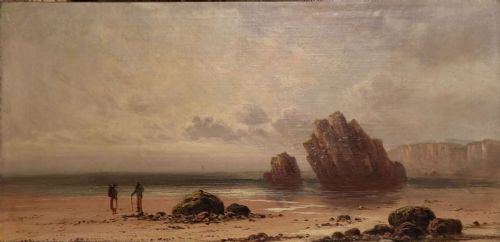
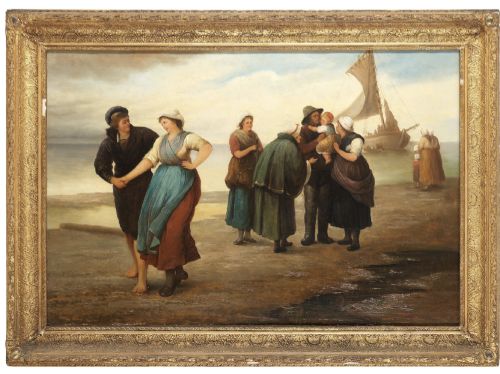
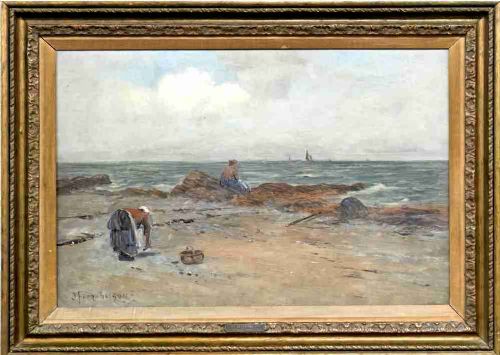
When you search for a 19th century beach scene, you find paintings depicting coastal landscapes, fishing boats, and figures gathering kelp or spreading nets along the shore. These works record maritime activity and seaside views from the Victorian era and adjacent periods.
The most common formats on this page are oil paintings on canvas and board alongside watercolour paintings on paper. These range from detailed depictions of English and Scottish coasts to French and Dutch marine scenes.
How they were made
Artists painted these scenes using oil on canvas or board, and watercolour on paper, often housed within wood and gesso frames decorated with gold leaf. Some watercolours also feature hand enamelled polychrome mounts.
The application of paint varies from fine brushwork capturing distant sea stacks and figures to looser applications seen in impressionist and Hague School coastal views.
Materials recorded across these listings include oil on canvas, wood, paper, watercolour, gesso, gold leaf, and glass.
What varies in quality
Quality rests in the handling of light, atmosphere, and human figures, where skilled artists render sea spray and damp sand with conviction. Lesser works rely on formulaic compositions and stiff, generic figures.
The preservation of the original canvas, paper, and frame contributes significantly to the standing of a piece. Intricate gesso and gold leaf frames that retain their original gilding elevate the presentation.
James Orrock·William Banks Fortescue·Joseph Farquharson·James Webb·Kate E Booth·Sir David Murray·William Shayer·Robert Macaulay Stevenson·Madeline Hughes·William Edward Webb·George Smith·GM de LAubiniere·Thomas Bush Hardy
The 19th Century Beach Scene Glossary
- Watercolour painting
- A work executed with water-soluble pigments on paper. This medium allows for translucent washes that suit bright coastal light.
- Oil on canvas
- Pigment suspended in a drying oil applied to stretched canvas. It provides rich colour depth and durable texture.
- Gesso
- A plaster-like mixture applied to wood frames as a base for gilding. It creates a smooth surface for gold leaf application.
- Seascape
- A type of artwork depicting the sea, coastal views, and marine activity. These often include fishing boats, beach workers, and dramatic tides.
19th Century Beach Scene: Frequently Asked Questions
What subjects appear in these paintings?
These works depict coastal views, fishing boats, and beach activities such as gathering kelp or spreading nets. Figures on rocky shores and harbour entrances frequently anchor the composition.
Scenes range from calm tidal flats at sunset to dramatic sea stacks beaten by waves. Artists recorded both British coastal spots like St Ives and Hastings alongside continental shores.
How do I care for these watercolours?
Watercolour paintings on paper require protection from direct sunlight to prevent the pigments and paper from fading. Framing behind glass shields the delicate surface from dust and atmospheric moisture.
Keep these pieces in rooms with stable humidity levels to avoid warping the paper or damaging the surrounding wood and gold leaf frames.
Are these works signed by artists?
Many of the paintings on this page bear the signatures of known 19th century and Victorian artists. Signatures appear in corners of the canvas or watercolour paper.
Some pieces are attributed to the circle or style of prominent painters when a direct signature is absent. Dealer listings note whether a work is signed by hand.
What frames accompany these paintings?
Many works retain their period wood and gesso frames, often embellished with gold leaf. Some watercolour paintings feature detailed hand enamelled polychrome borders.
These frames complement the artistic style of the Victorian era and protect the edges of the canvas or paper.