

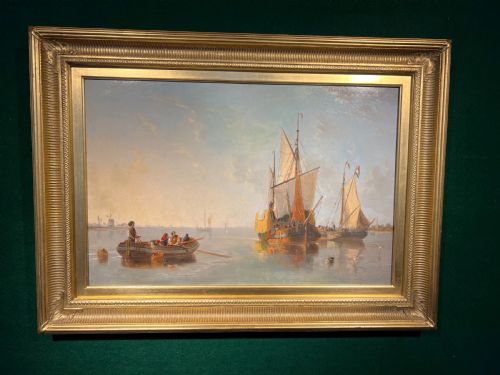
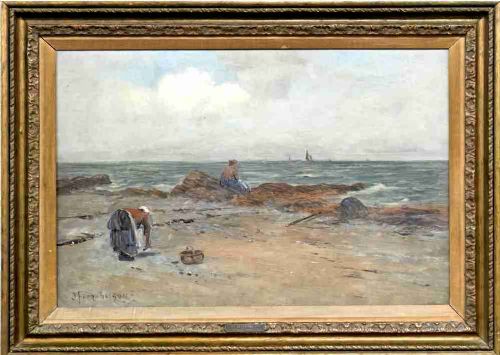


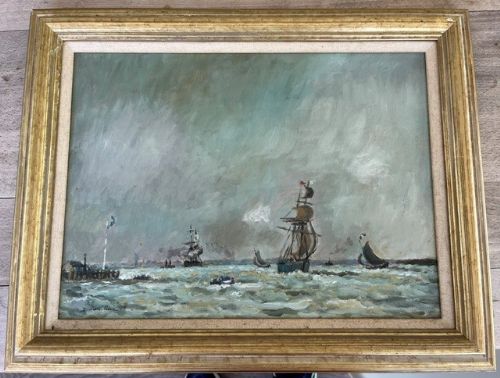
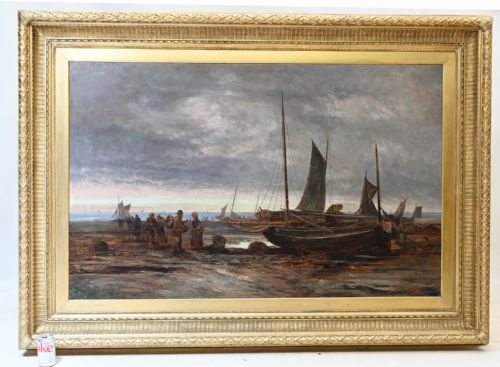


Framed Oil Coastal Picture
A framed oil coastal picture brings the movement of the sea and the weight of salt air directly into a room.
Framed Oil Coastal Picture
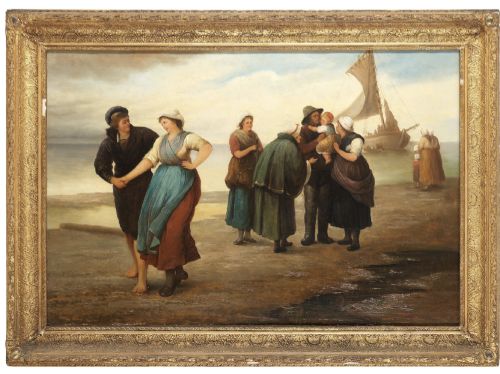
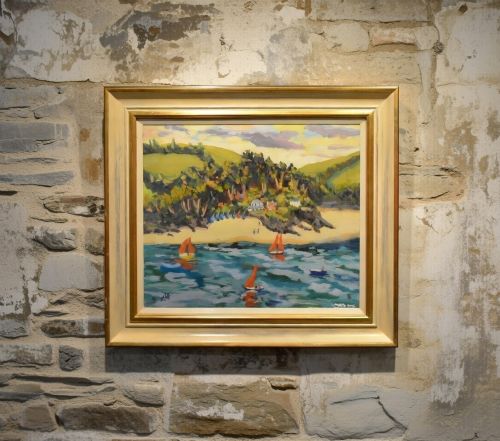
A framed oil coastal picture spans centuries of maritime observation, capturing harbours, shipping lanes, and tidal shores through the medium of oil paint. These works range from tightly rendered Victorian realism to looser mid-century impressionism, reflecting changing attitudes towards light and water.
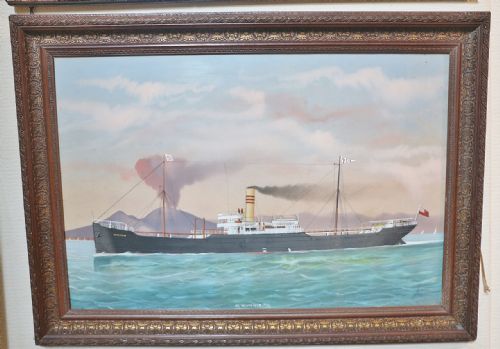
The most common examples on this page date from the nineteenth and twentieth centuries, produced by British, French, and European schools. They typically depict domestic fishing ports, dramatic headlands, or quiet estuaries rendered on canvas or board.
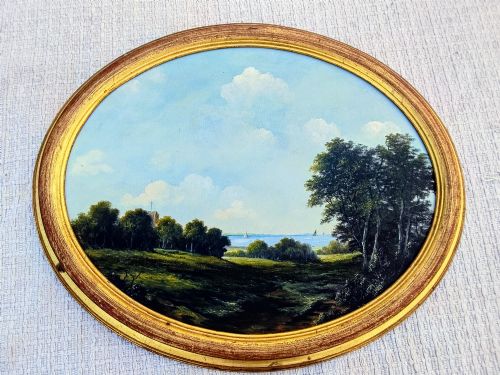
Subjects stretch from calm Mediterranean bays to stormy North Sea passages, often framed in period wood and gesso. Buyers encounter everything from large gallery-scale canvases to intimate oval panels designed for domestic interiors.
Materials and Technique
Pigments bound in oil are applied to stretched canvas or wooden board, a method that allows for rich blending and textured impasto. Artists built up these layers to describe the froth of breaking waves or the solid mass of stone harbour walls.
Frames are integral to the survival of these pieces, constructed from carved wood and moulded gesso, frequently finished with gold leaf or gilt paint. These surrounds protect the perimeters of the canvas and provide a visual boundary that focuses the eye on the painted horizon.
Listings span the nineteenth and twentieth centuries, featuring wood, canvas, and giltwood frames.
Quality and Execution
The strength of a coastal oil painting lies in its handling of natural light and atmospheric perspective. Superior works capture the specific weight of maritime air and the movement of water with economy and confidence, whereas lesser pieces rely on formulaic repetition.
Original frames matching the age of the canvas elevate the integrity of a piece, while later replacements alter the historical balance. The security of the canvas tension and the stability of the paint layer also dictate the long-term merit of the work.
Edward Mills·John Wilson Carmichael·Joseph Farquharson·Erich Mercker·Charles Napier Hemy·Gyrth Russell·Gustave De Bréanski·Eugene Joseph Verboeckhoven·James Webb·John Douglas Perrett·William Raymond Dommersen·Alfred Henry Vickers·George Henry Knight·Thomas Rose Miles·Gudrun Sibbons·Jeffrey Pratt·Owen Bowen·Edward Henry Holder
The Framed Oil Coastal Picture Glossary
- Impasto
- Paint applied thickly to a canvas, standing proud of the surface to catch the light and suggest texture. This technique is often utilised in coastal works to render churning water or rough stonework.
- Gesso
- A plaster-like mixture applied to wood frames as a base for gilding or painting. It provides a smooth surface that takes intricate moulding and detail.
- Seascape
- A work of fine art depicting the sea, coastlines, or marine vessels. These subjects demand specific attention to the interaction between sky, water, and shoreline.
- School
- A group of artists working in a similar style or region during a specific period. This term helps identify shared regional approaches to maritime subjects.
Framed Oil Coastal Picture: Frequently Asked Questions
Are these frames original?
Many retain their period giltwood or gesso frames, which show appropriate signs of age and wear. Some pieces have been reframed over the decades to suit changing tastes.
Examining the rebate at the back often reveals clues about how long the canvas has inhabited its current surround.
Where should I hang a coastal picture?
These works benefit from stable wall spaces away from direct sunlight, high humidity, and radical temperature shifts. Natural indirect light serves oil paintings best, allowing the varnish to reflect without glare.
Kitchens and damp rooms should be avoided to protect both the wooden stretcher and the canvas support.
How do I date a maritime oil painting?
Dating relies on stylistic evidence, artist signatures, stretcher construction, and the profile of the frame. Costume details on figures or the type of shipping depicted often narrow down the decade.
Comparative examples by the same school or region provide further context for establishing an era.