




19th Century Baluch Carpet
A 19th century baluch carpet brings deep tribal character and rich wool texture into a room, offering authentic nomadic artistry from the borders of Persia and Afghanistan.
19th Century Baluch Carpet
A 19th century baluch carpet embodies the weaving traditions of nomadic and semi-nomadic tribes inhabiting the borderlands of Persia, Afghanistan, and parts of Central Asia. These floor coverings and smaller tribal textiles served practical domestic purposes while displaying distinct regional iconography.
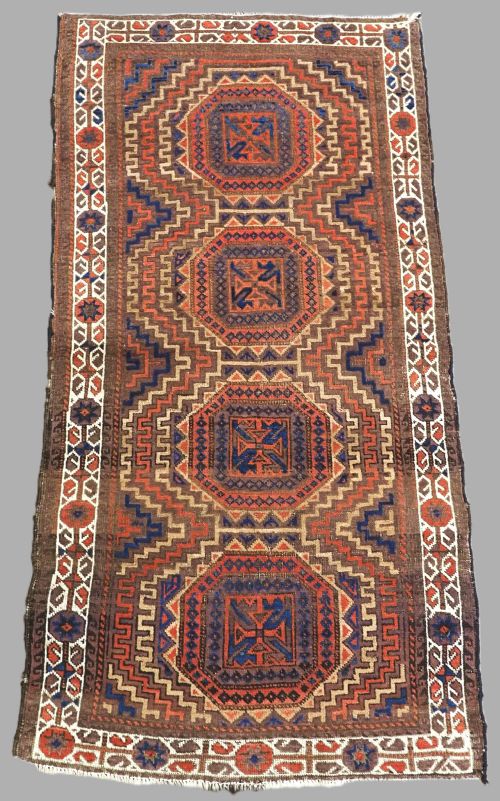
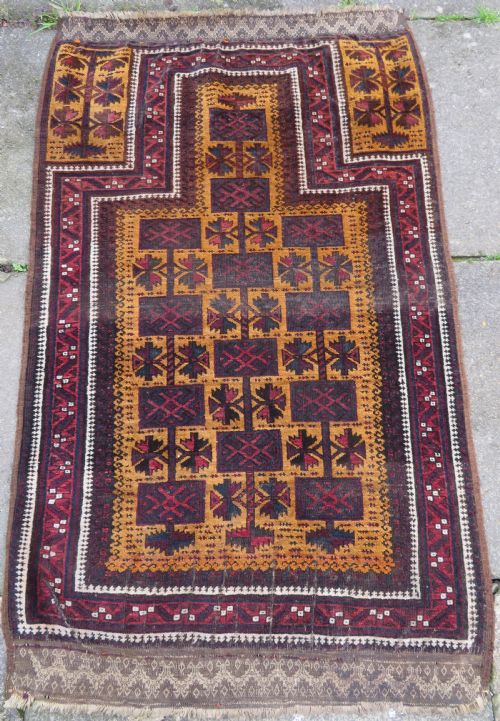
The selections available here range from smaller prayer rugs and format pieces featuring shrub or tree-of-life motifs to larger main carpets displaying traditional guls and lattice patterns. Most examples originate from the latter half of the nineteenth century, including specific regional subgroups such as the Timuri and Mahdad Khani.
Buyers encounter various formats including area rugs, prayer rugs, and birdbags, showcasing designs influenced by neighbouring Turkmen and Persian styles. Each textile reflects the specific tribal identity and weaving vocabulary of its maker.
Materials and construction methods
Weavers utilised hand-spun wool for the pile, often combining it with goat hair and camel hair to provide natural contrast, durability, and textural variation across the field. Cotton foundations appear frequently in these nineteenth-century pieces, lending structural stability to the finer formats.
Natural dyes produced deep, rich colour palettes, including dark blues, camel grounds, and earthy red tones that developed rich patinas over time. The structural integrity relies on traditional tribal knotting techniques executed on vertical or horizontal loom setups.
Listings feature wool, camel hair, and natural dyes applied across nineteenth-century tribal formats from Western Afghanistan and Persia.
Factors determining quality
Quality in these tribal textiles depends upon the handle of the wool, the depth and clarity of the natural dye palette, and the precision of the tribal design execution. Finer knot density and well-balanced proportions elevate certain examples above standard utilitarian pieces.
The preservation of original borders, structural balance, and the crispness of secondary motifs such as stars, calyx lattices, and guls separate standard items from more exceptional collector pieces.
The 19th Century Baluch Carpet Glossary
- Gul
- A primary medallion or repeating octagonal motif frequently found in tribal carpets. These motifs often denote specific tribal lineages.
- Prayer rug
- A format featuring a mihrab or arch design at one end, traditionally utilised for individual prayer. These rugs often incorporate tree of life or shrub motifs.
- Timuri
- A tribal group associated with Western Afghanistan and eastern Iran whose weavers produced distinctive rugs with rich natural dyes. Their work forms a major component of nineteenth-century tribal weaving.
- Camel hair
- Undyed fibre derived from camels, utilised in the pile or grounds of rugs to provide a warm, golden-brown tone. It naturally resists wear and ages with a soft lustre.
- Natural dye
- Colouring agents extracted from plants, roots, and insects before the introduction of synthetic dyes. These substances yield complex, harmonious hues that mature gracefully.
19th Century Baluch Carpet: Frequently Asked Questions
What is a Baluch carpet?
A Baluch carpet is a hand-knotted tribal textile produced by nomadic groups in the borderlands of Persia and Afghanistan during the nineteenth century. These pieces are characterised by deep rich colours, sturdy wool construction, and distinctive geometric or medallion motifs.
Weavers utilised natural dyes and local materials such as camel hair and hand-spun wool to create durable floor coverings and prayer rugs suited for nomadic life.
How do I identify a Timuri piece?
Timuri pieces share close stylistic ties with broader Baluch weaving traditions, often originating from Western Afghanistan. They typically feature refined tribal patterns, including shrub designs and prayer formats.
Look for specific wool qualities and colour palettes involving deep blues and camel grounds, which distinguish these regional examples from other nineteenth-century tribal work.
Where were these rugs made?
These textiles were woven by nomadic and village tribes across the border regions of eastern Persia, western Afghanistan, and Baluchistan. Tribal groups such as the Mahdad Khani and Timuri operated across these territories.
The specific regional conditions and local dye plants heavily influenced the appearance and handle of the resulting carpets.
How should I care for a tribal rug?
Protect your carpet by placing it in a low-traffic area out of direct sunlight to preserve the natural dyes and delicate wool fibres. Regular gentle vacuuming without a beater bar prevents dust accumulation in the pile.
Professional cleaning tailored to antique vegetable-dyed wool ensures the textile remains stable and maintains its structural integrity over time.