


19th Century Architectural Print
A 19th century architectural print brings classical facades and historic interiors to the wall, offering paper studies of grand monuments and townscapes.
19th Century Architectural Print
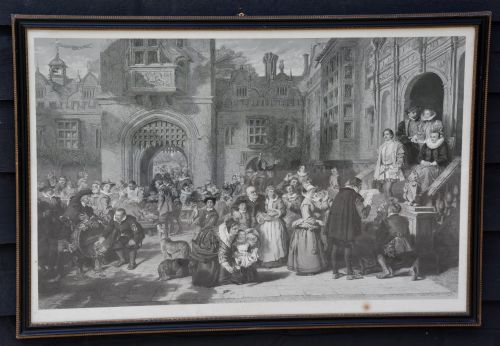
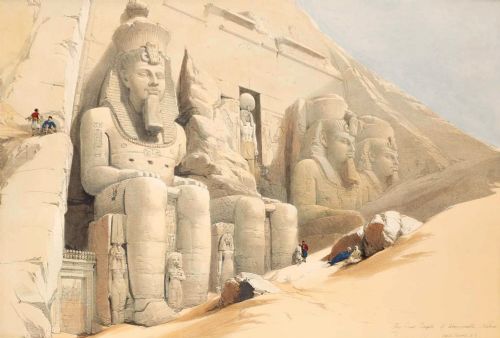
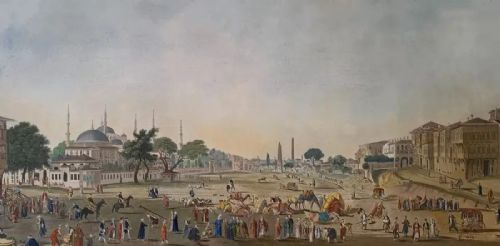
A 19th century architectural print encompasses engraved elevations, lithographic views of public buildings, and ink drawings of historic churches. These works document European landmarks, grand hotels, and royal palaces as recorded by contemporary draughtsmen.
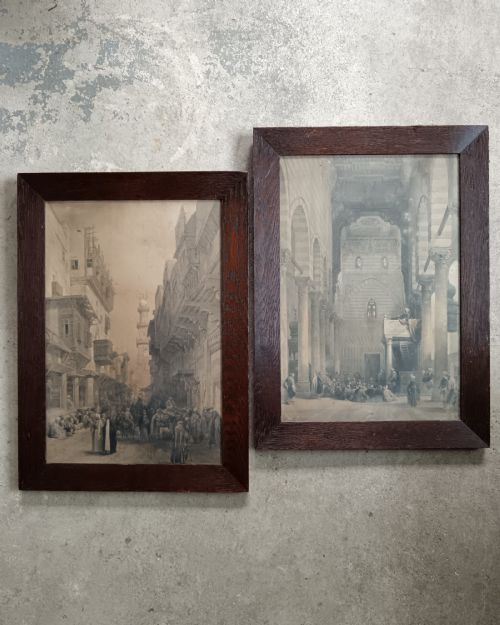
Framed prints and wall art dominate the selection, often preserved in original Hogarth or giltwood frames. Pieces range from large folio plates to intimate watercolours of continental street scenes and domestic country houses.
Materials and Methods
Execution relies primarily on paper sheets marked with ink, copper engraving, or lithography, occasionally enhanced with watercolour washes. Monochrome impressions sit alongside hand-coloured plates produced during the Victorian and Georgian periods.
Framing utilises wood, glass, and gold leaf, with many works retaining their period giltwood or maple surrounds. Protective glazing guards the delicate paper supports from environmental damage while maintaining visibility.
One school drawing records the earnest efforts of H.H. Wyatt, who meticulously rendered a royal palace at the tender age of seventeen.
Distinctions in Execution
Quality rests upon the precision of the draughtsmanship and the clarity of the printed line, whether in an intricate copper engraving or a detailed lithographic plan. Original hand-colouring executed with subtlety elevates the visual depth of a plate.
The preservation of the original paper support and the authenticity of the period frame contribute significantly to the standing of an individual work. Contemporary signatures and precise topographical documentation add historical weight to the sheet.
David Roberts·Louis Haghe·Alessandro Mocchetti·John Scott Russell·Joseph Hansom
The 19th Century Architectural Print Glossary
- Engraving
- A printmaking technique where an artist cuts lines directly into a metal plate using a sharp tool. This method produces crisp, highly detailed lines suited to architectural precision.
- Lithography
- A planographic printing process based on the repulsion of oil and water on a flat stone or metal plate. It allows for tonal gradations ideal for rendering masonry and wash drawings.
- Giltwood
- Wood carved and coated with a thin layer of gold leaf or metallic powder. Frames finished in this manner frequently accompany nineteenth-century works on paper.
- Hogarth frame
- A dark, inverted ogee-profile wooden frame often lined with a thin gilt slip. These frames are traditional for housing Georgian and Victorian prints and mirrors.
- Folio
- A large sheet of paper folded once to form two leaves, or a volume assembled from such sheets. Many large nineteenth-century plates originate from unbound architectural folios.
19th Century Architectural Print: Frequently Asked Questions
How should I hang a framed architectural print safely?
Keep works away from direct sunlight to prevent the ink and watercolour from fading over time. Ensure the wall supports the weight of the traditional wooden frame securely.
Use picture wire attached firmly to the frame structure rather than relying solely on the backing boards. Maintain stable room humidity to protect both the antique paper and the wood joinery.
Are these works original nineteenth-century printings?
The selection includes period engravings, lithographs, and hand-drawn studies dating from the nineteenth century. Each piece relies on the paper stocks and printing techniques characteristic of that era.
Examine the plate marks and paper textures closely to confirm period production. Many items retain contemporary framing that supports their historical context.
How do I identify the subject of an architectural print?
Many plates feature printed captions, publisher details, or handwritten inscriptions along the lower margin identifying the building or town. Landmarks such as cathedrals, palaces, and specific city views often appear in contemporary records.
Compare the architectural styles, such as Gothic Revival or Neoclassical elements, with known structures of the period. Signatures from the draughtsman or publisher offer further clues to the origin.
What is the difference between an engraving and a lithograph?
An engraving involves cutting lines into a hard plate to hold ink, resulting in sharp, defined edges. Lithography uses a chemical process on a flat surface to capture softer tonal variations and washes.
Engravings often present a distinct indented plate mark around the image area. Lithographs provide a grainier texture that mimics the appearance of original ink or pencil drawings.