




19th Century Apothecary Cabinet
A 19th century apothecary cabinet holds decades of practical utility and dense multi-drawer form, offering structured storage collectors prize.
19th Century Apothecary Cabinet
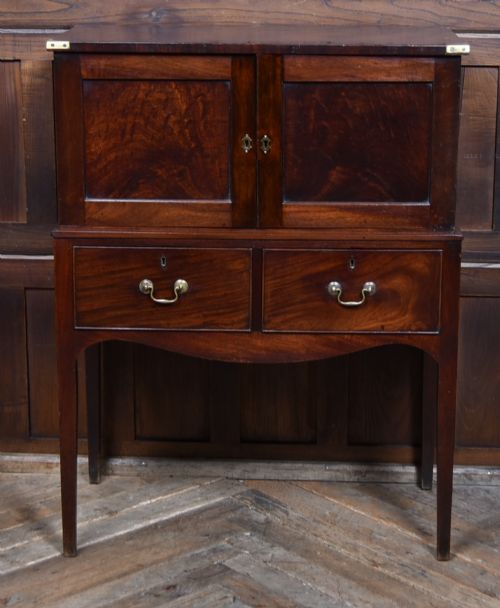
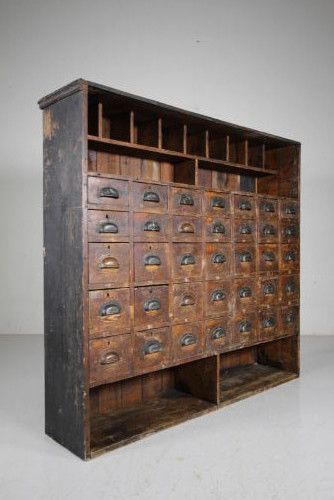
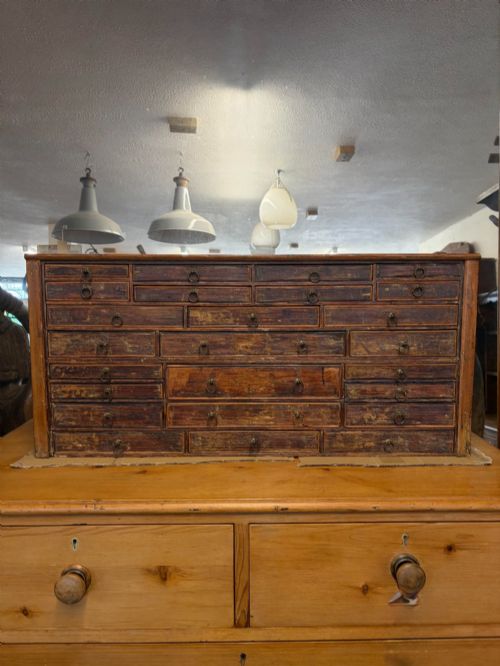
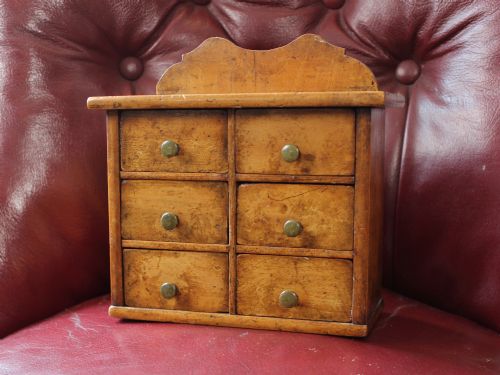
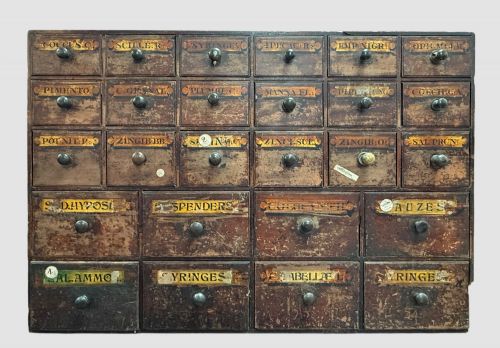
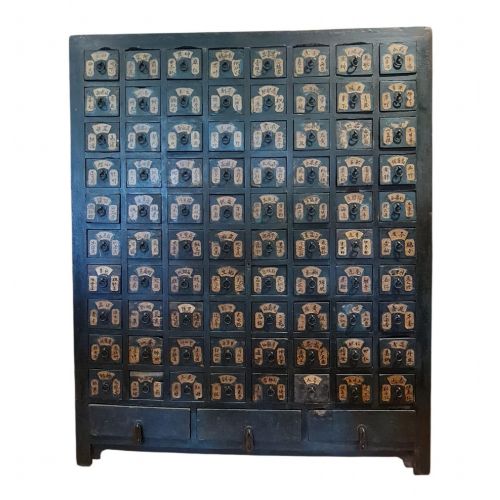
A 19th century apothecary cabinet serves as a functional container for medical ingredients, powders, and instruments, structured around numerous small drawers or compartments. These pieces range from tabletop mahogany travelling boxes to large multi-drawer banks and wall-hanging cupboards.
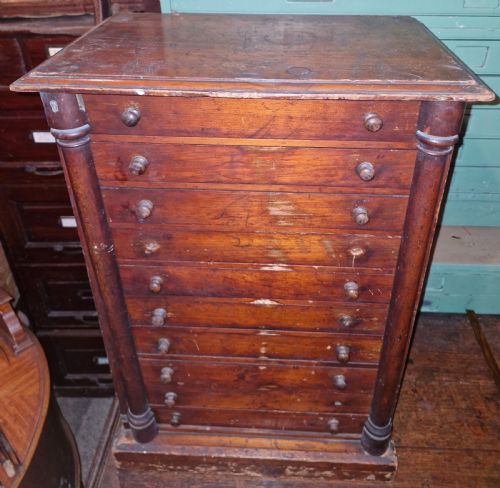
The version most commonly met on this page is the multi-drawer bank of drawers or chest in mahogany, pine, or walnut, originating from Victorian contexts or earlier Regency periods. Many examples derive from chemist, pharmacy, or collector traditions, often featuring fitted interiors and original glass bottles.
How They Were Made
Cabinetmakers utilised dense timbers such as mahogany, walnut, fruitwood, teak, and pine, constructing carcases with tight joinery to support heavy banks of small drawers. Surfaces frequently received polished or stained finishes, while internal compartments incorporated velvet linings to protect delicate glassware.
Hardware played a central structural and decorative role, with brass pulls, campaign handles, and lock plates fitted to secure contents during travel or daily dispensary use. Glazed doors on wall cabinets allowed visibility of contents, while fitted apothecary boxes relied on precision slotting for bottles and scales.
19th Century Apothecary Cabinet Retail Price Guide 2026
Typical asking prices for 19th century apothecary cabinet among the pieces listed under this phrase on Sellingantiques today, from the lower quarter to the upper quarter. They describe what is for sale here now, not the wider market.
Some tiny drawers still retain lingering traces of powdered rhubarb and dried chamomile from Victorian dispensaries.
What Varies in Quality
Quality rests on the integrity of the timber selection and the precision of the drawer construction, where tight tolerances and well-fitted internal dividers separate utilitarian storage from finer workshop output. Cabinets retaining original brass hardware, fitted glass bottles, and working locks command greater appreciation.
The scale and complexity of the internal arrangement also drive distinction, moving from simple pine boxes to multi-drawer mahogany collectors chests with provenance or specialised veterinary and dentist fittings. Surface patination and the survival of original finishes without excessive restoration preserve the integrity of the piece.
Luxmore's of Ilfracombe·Godfrey & Cooke
The 19th Century Apothecary Cabinet Glossary
- Apothecary cabinet
- A small chest or box fitted with numerous drawers and compartments designed to store medicinal bottles, herbs, and scales. These pieces originate from chemist and domestic dispensary use.
- Bank of drawers
- A chest configuration featuring many small, uniform drawers stacked in rows, commonly found in pharmacy and multi-drawer storage contexts. This form provides organised sorting for small items.
- Specimen chest
- A cabinet constructed to house natural history collections such as insects, minerals, or botanical samples. These share similar multi-drawer dimensions with apothecary storage.
- Mahogany
- A durable tropical hardwood utilised extensively in 19th century cabinetmaking for its rich grain and structural stability. It takes a high polish and resists warping.
- Campaign handle
- A flush-fitting brass pull inset into the timber surface to prevent snagging during transport. This hardware is typical of portable boxes and travelling chests.
19th Century Apothecary Cabinet: Frequently Asked Questions
What were apothecary cabinets used for?
These cabinets stored medicinal herbs, chemical powders, liquid remedies, and dispensing scales for chemists, doctors, and households. The numerous small drawers kept ingredients organised and protected from light.
Portable versions travelled with practitioners or armies, while larger wall-mounted or freestanding banks remained stationary in pharmacies and shops.
How do I date a 19th century cabinet?
Dating relies on timber choices, construction techniques, and hardware styles across the 19th century. Regency and early pieces often feature fine mahogany with flush brass handles, while later Victorian examples introduce varied woods like walnut and pine.
Internal fittings, dovetailing methods, and the presence of original glass bottles or paper labels help narrow the manufacturing decade.
Are all these cabinets from pharmacies?
Many originate from commercial chemists and dispensaries, but a significant portion served domestic needs in country houses or acted as collectors chests for specimens. Dentist and veterinary cabinets also share the multi-drawer apothecary form.
Internal layout and fitted glass bottles usually indicate whether a piece held medical supplies or general natural history collections.
How do I care for polished wood surfaces?
Maintain timber surfaces by applying quality wax periodically and avoiding direct sunlight or damp environments that affect old polish. Gentle dusting with a soft cloth preserves the original patina without stripping historic finishes.
Brass hardware benefits from minimal intervention to retain its aged appearance, avoiding harsh chemical cleaners.