
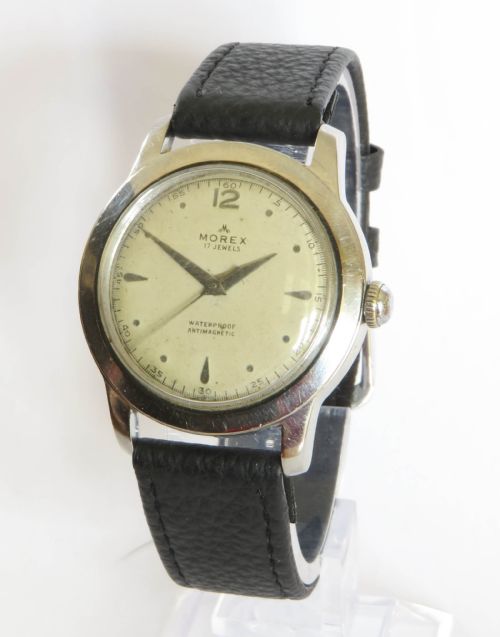
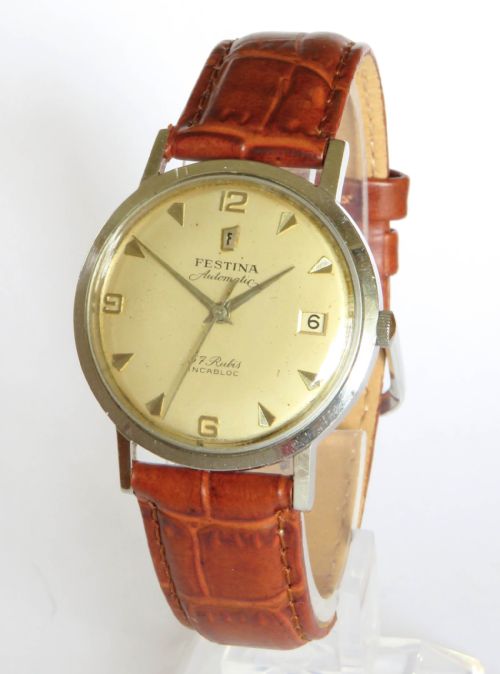
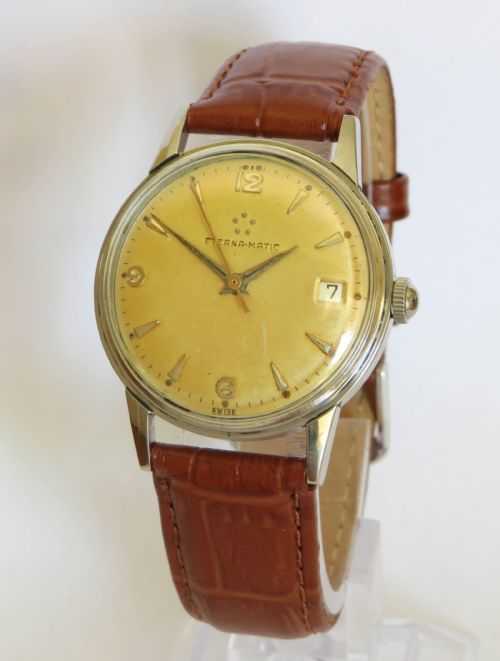
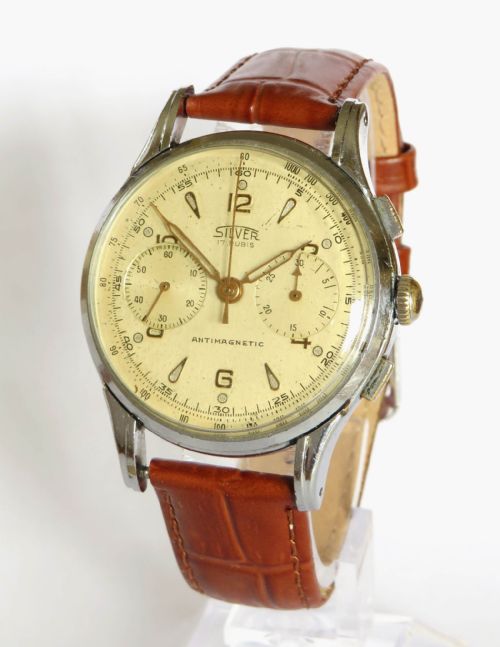
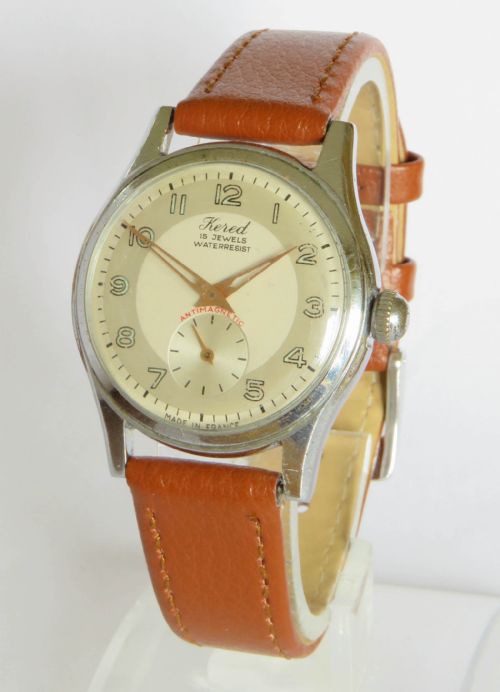

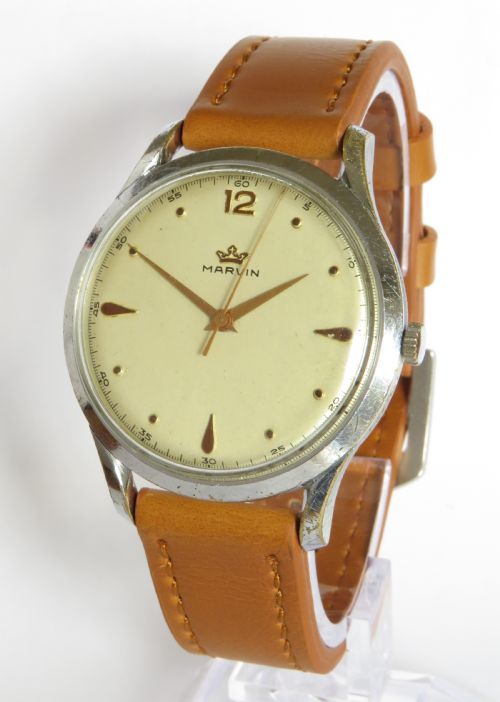


1950s Stainless Steel Watch
These 1950s stainless steel watch pieces offer robust mid-century engineering paired with clean dial aesthetics that collectors prize for daily wear.
1950s Stainless Steel Watch
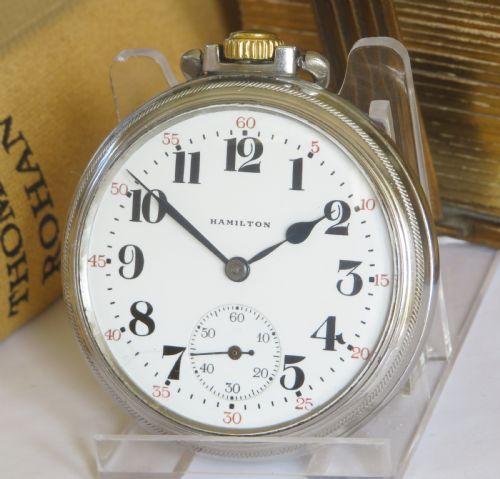
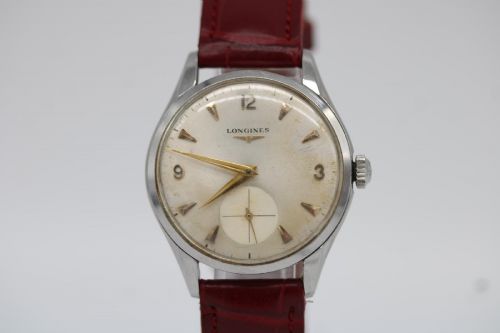
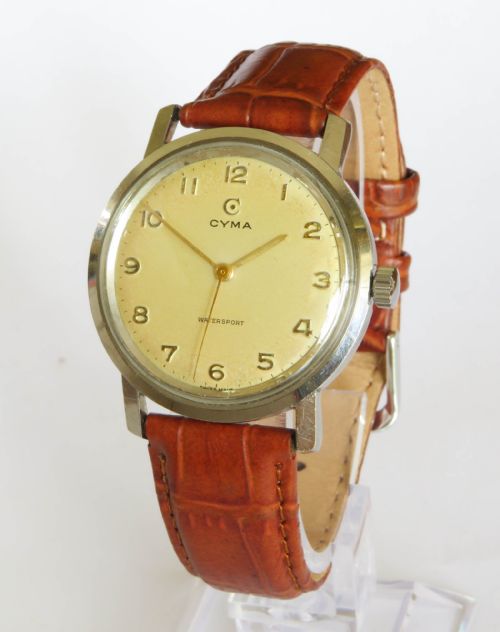
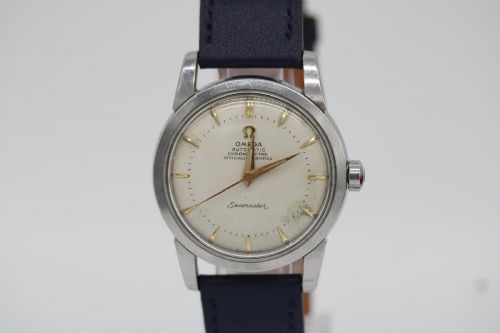
A 1950s stainless steel watch represents the post-war shift toward durable, water-resistant metal cases built for active daily use. Buyers searching this phrase encounter wristwatches and pocket watches spanning mid-century modern, art deco, and aviation styles.
The most common formats on this page are gents wristwatches featuring manual wind or automatic movements housed in robust metal shells. Swiss manufacturers dominate the selection, offering everything from simple three-hand displays to complex chronographs.
Materials and construction
Cases utilise stainless steel alongside supplementary elements like gold plate, chrome, and acrylic glass crystals to protect the dial. Straps typically pair the metal case with leather or enamel finishes.
Mechanical movements inside rely on precise gear trains, manual winding systems, or automatic rotors. Makers applied shock-resistant technology like Super Shock Resist to protect delicate internal components from impact.
Listings feature wristwatches and pocket watches spanning mid-century modern, art deco, and aviation styles.
Assessing quality and grade
Quality separates through movement sophistication, such as automatic winding mechanisms and certified chronometer status. Superior examples feature signed calibres from established houses alongside well-preserved original dials.
Case geometry and finish integrity distinguish standard production models from high-grade pieces. Crisp case edges and original signed crowns indicate a higher tier of preservation.
Montilier·Festina·Eterna Matic·Antoremi·Hamilton·Longines·Cyma·Omega·Kered·Prisma·Marvin·Rolex·Ebana·Benrus·Verity
The 1950s Stainless Steel Watch Glossary
- Automatic
- A self-winding mechanical movement that uses a weighted rotor to wind the mainspring through natural wrist motion.
- Chronograph
- A watch with a stopwatch function alongside the standard time-displaying hands.
- Calibre
- The specific internal movement design and model created by the watch manufacturer.
- Manual wind
- A mechanical movement that requires the wearer to manually turn the crown to tension the mainspring.
- New Old Stock
- Unused vintage inventory found preserved in original condition from its period of production.
1950s Stainless Steel Watch: Frequently Asked Questions
Are these watches suitable for daily wear?
Most of these vintage pieces function reliably for regular use when handled with care around water and impacts.
Their robust stainless steel construction makes them well-suited for rotation in a modern wardrobe.
How do manual wind and automatic movements differ?
Manual wind pieces require daily hand-cranking of the crown to build power in the mainspring.
Automatic models include an internal rotor that winds the watch automatically as the wearer moves their arm.
What size are mid-century wristwatches typically?
The listings show case diameters frequently sitting around thirty-five millimetres alongside larger jumbo formats.
This proportion reflects the classic dress and utility sizing standards popular during the decade.
What is a chronograph watch used for?
A chronograph incorporates independent sweep seconds hands to measure elapsed time intervals on demand.
Examples like aviation chronographs were originally built for pilots to calculate speed and navigation data.