
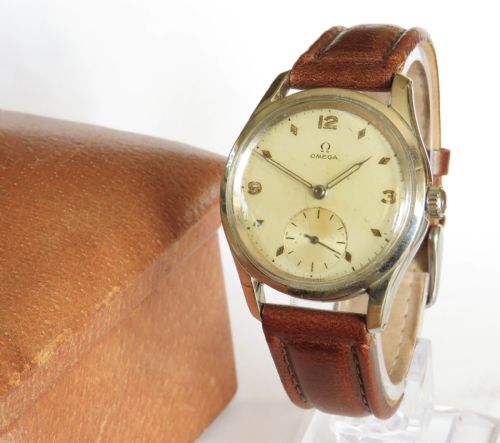
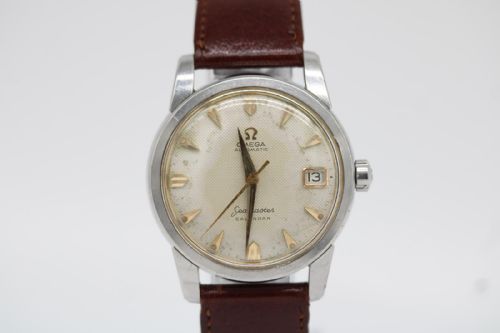


1950s Omega Wristwatch
A 1950s Omega wristwatch delivers mid-century precision and clean modern design in a compact package.
1950s Omega Wristwatch
A 1950s Omega wristwatch represents a period of significant mechanical and aesthetic development in Swiss horology. Buyers look for these pieces to secure a reliable mid-century timepiece with distinct vintage character.
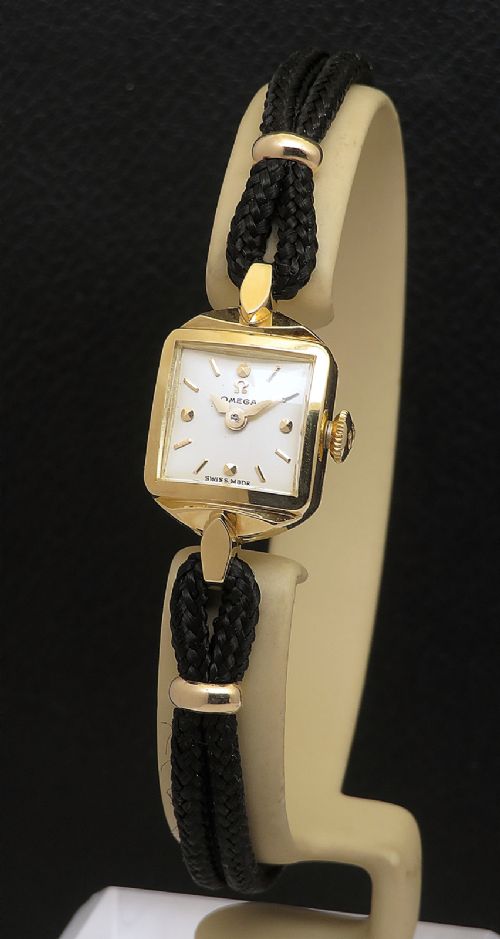
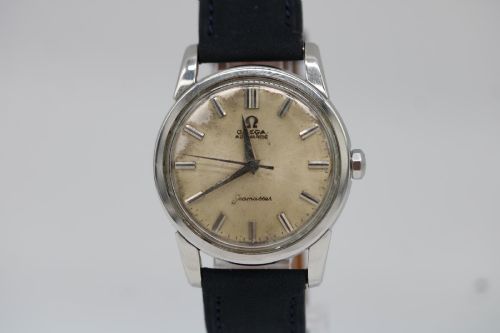
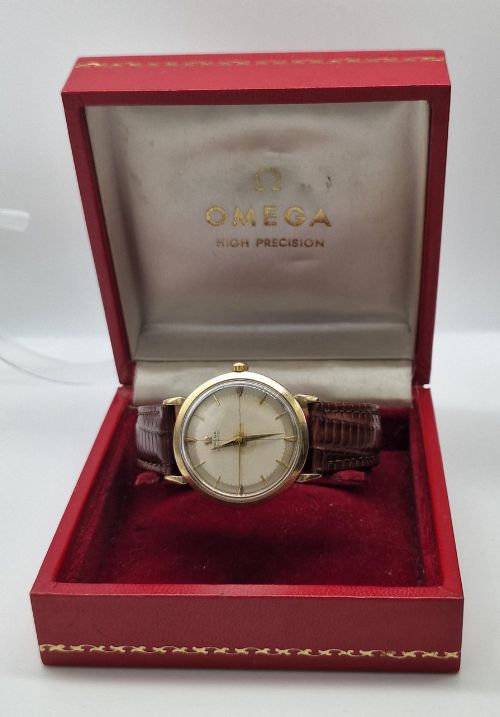
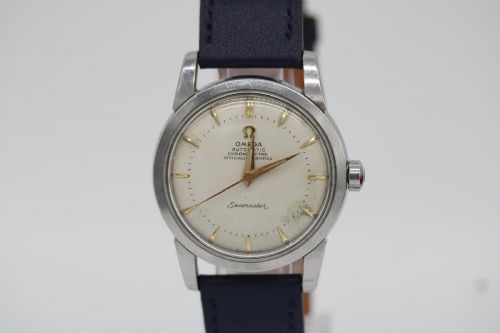
The selections available here range from robust Seamaster models to elegant ladies' cocktail watches and classic dress pieces. Most examples originate from the middle years of the decade, showcasing the definitive mid-century modern design language.
Standard forms include both gents' utility watches with subsidiary or sweep seconds hands and refined gold dress watches. Buyers encounter pieces equipped with bumper automatic movements, manual wind calibres, and occasionally original boxes.
Materials and Construction
Cases in this category utilise stainless steel, gold-filled metals, solid 9-carat gold, and 18-carat white or yellow gold. Movement components and dials are housed beneath acrylic glass or acrylic crystals.
Strap materials consist primarily of leather and fabric, pairing with metal cases to complete the vintage assembly. Movements rely on mechanical engineering, utilising hand-wound and early automatic calibres like bumper mechanisms.
Listings for this phrase include stainless steel, 9K gold, and 18K gold cases alongside acrylic glass crystals.
Quality and Distinction
The calibre of a 1950s Omega wristwatch depends significantly on the complexity of its movement and the preciousness of its case materials. Solid gold cases and specialised chronometer movements command greater interest than standard steel models.
Preservation of the dial and case plays a central role in distinguishing everyday examples from exceptional survivors. Original details such as honeycomb textures and untouched finishes separate standard utility pieces from collector-grade items.
The 1950s Omega Wristwatch Glossary
- Bumper automatic
- An early self-winding movement where a weighted rotor oscillates back and forth against springs rather than spinning in a full circle. This mechanism produces a distinct physical tap on the wrist as the watch winds.
- Calibre
- The specific manufacturer's designation for a particular watch movement design. Collectors use this number to identify the exact mechanical generation inside the case.
- Gold-filled
- A method where a layer of solid gold is mechanically bonded to a base metal core. This layer is substantially thicker than standard gold plating.
- Seamaster
- Omega's long-running line of water-resistant sports and utility watches introduced in the late 1940s. These models combine robust case construction with reliable mechanical movements.
- Honeycomb dial
- A textured dial face featuring a raised grid pattern resembling a beehive. This decorative treatment is typical of mid-century watchmaking.
1950s Omega Wristwatch: Frequently Asked Questions
How do I wind a manual Omega from the 1950s?
Gently rotate the crown clockwise between your thumb and forefinger until you feel gentle resistance. Stop immediately to avoid damaging the mainspring.
Wind the watch at approximately the same time each day to maintain consistent tension and timekeeping accuracy.
Are 1950s Omega watches waterproof?
Original water resistance seals degrade significantly over several decades. Modern condensation and moisture will easily penetrate vintage gaskets.
Keep these watches away from water, swimming pools, and heavy rain unless a professional watchmaker has recently tested and serviced the seals.
What is a bumper automatic movement?
A bumper automatic uses a semi-circular weighted rotor that swings back and forth against internal buffer springs. You can feel a gentle thud on your wrist as the mechanism winds.
This technology represents an early step in self-winding wristwatch design before full-rotor movements became standard.
How do I identify the production year?
Determining the exact year typically requires opening the case back to inspect the movement serial number against factory records. The case reference number also provides clues regarding the production era.
Certain model families and specific calibres help narrow the timeframe down to a specific span within the decade.