
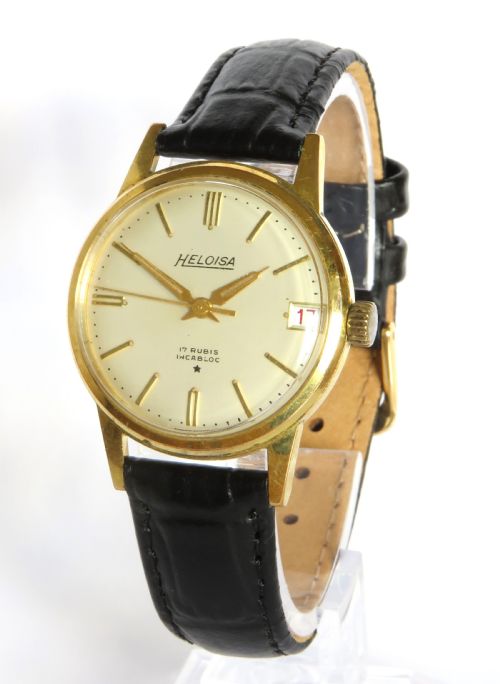
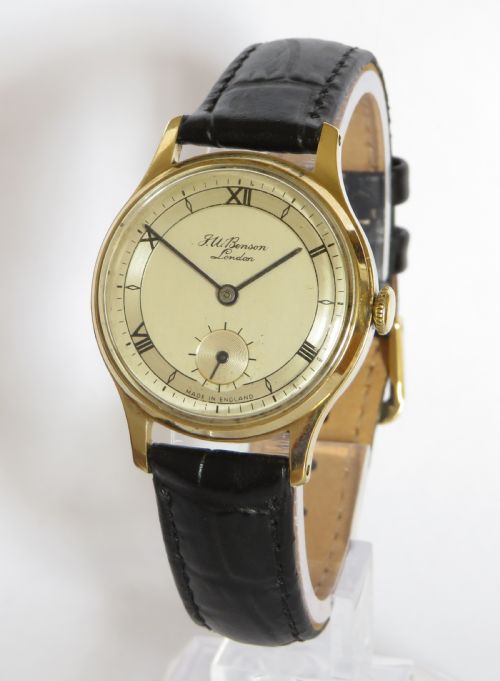
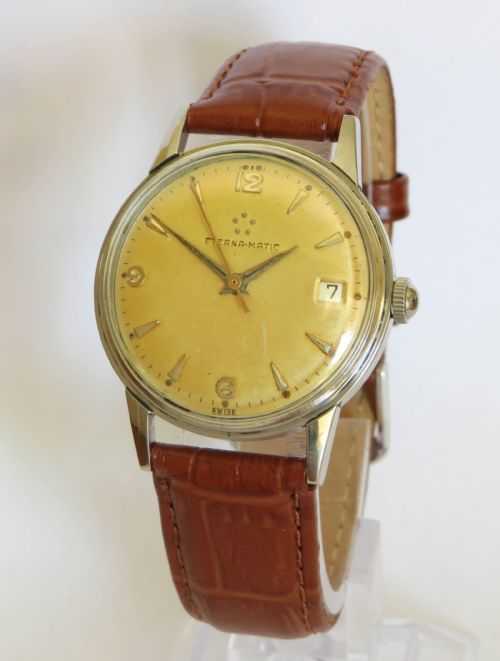
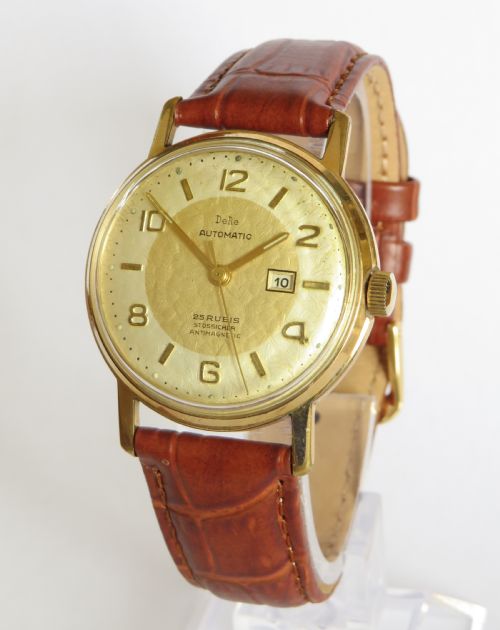
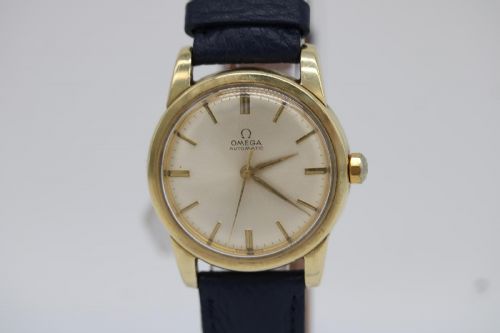
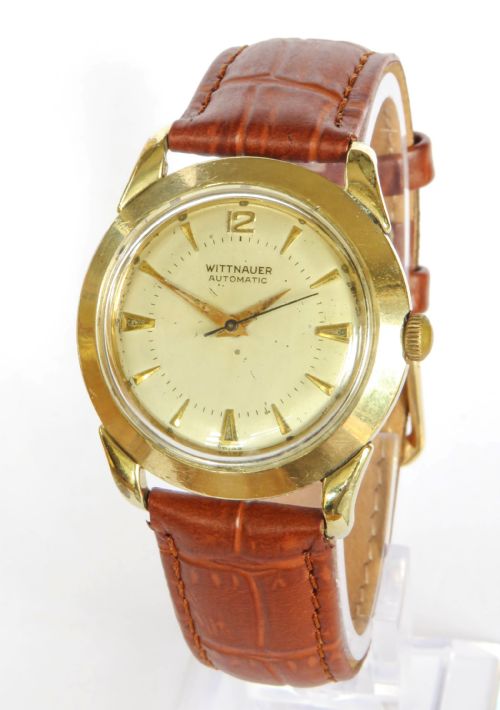
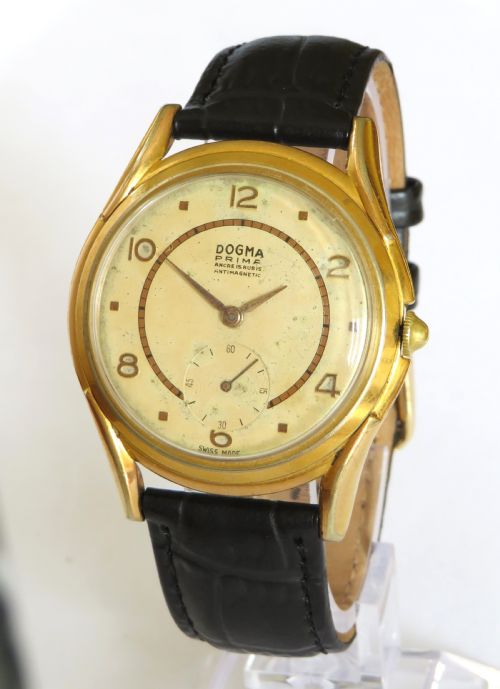
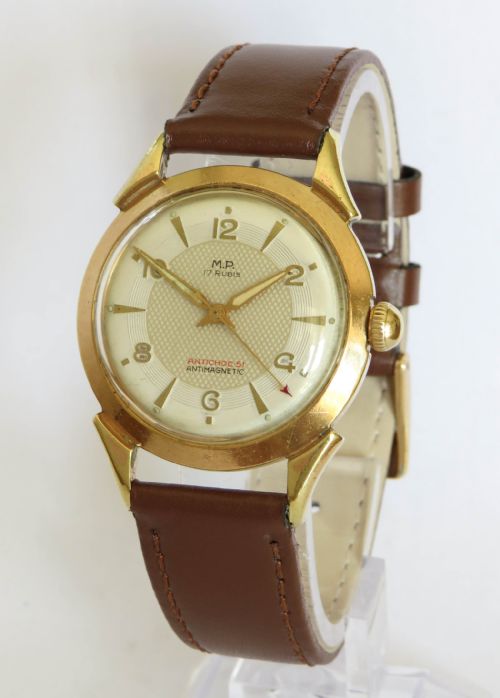


1950s Gold Wrist Watch
A 1950s gold wrist watch brings mid-century horology to the wrist with distinctive metallic warmth and mechanical reliability.
1950s Gold Wrist Watch
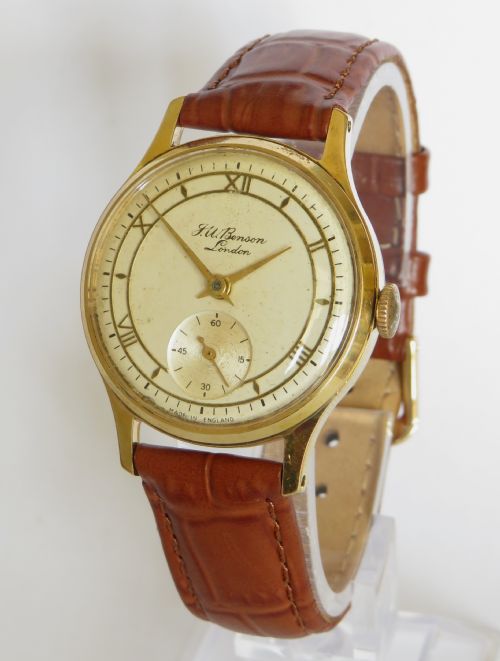
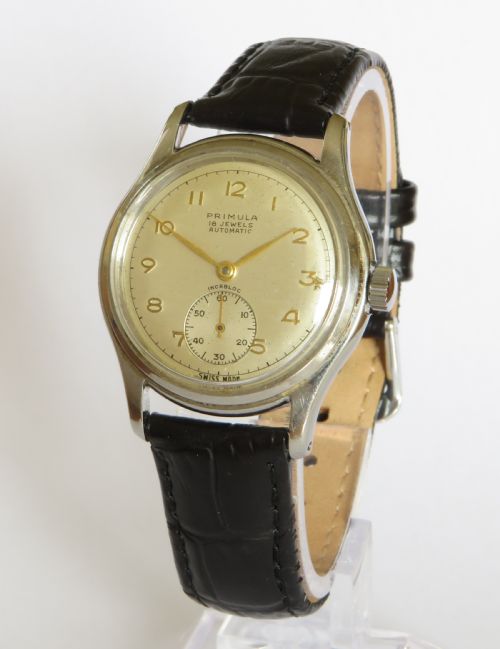
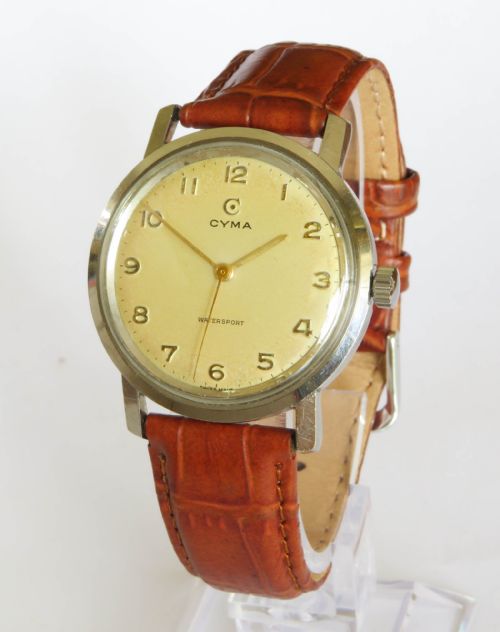
A 1950s gold wrist watch is typically a gents timepiece originating from the mid-century period, encompassing various forms of gold application from solid metal to plated finishes. These horological items reflect the styles of mid-century modern design alongside occasional art deco influences, capturing the aesthetic priorities of the era.
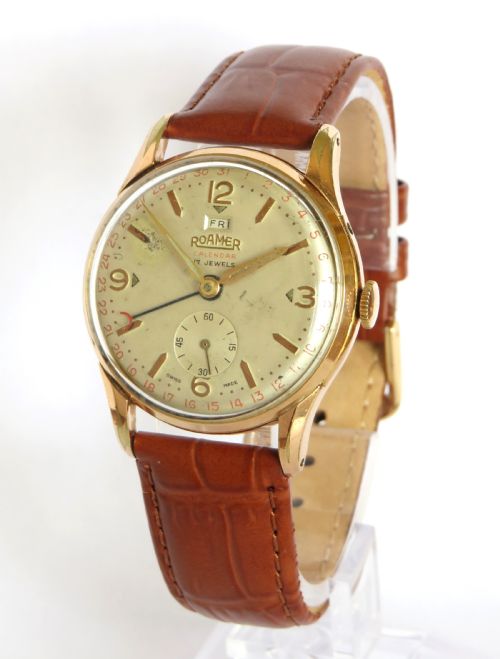
Buyers browsing this selection frequently encounter wristwatches housed in materials such as 9ct gold, 14ct gold, and gold plate, paired with leather straps or metal bracelets. The offerings range from simple daily wearers to calendar complications and chronographs produced by established watchmakers.
The objects span periods around the 1950 decade, drawing on stainless steel accents, glass, and acrylic components to protect the dial. These pieces represent a distinct chapter in watchmaking where mechanical movements dominated before the quartz revolution.
How They Were Made
Cases of a 1950s gold wrist watch utilise solid 9ct, 14ct, or 18ct gold, alongside gold plating and gold-filling techniques over base metals. These metallic housings protect mechanical movements powered by manual winding or early automatic systems, such as bumper movements.
Dials sit beneath clear covers of glass or acrylic crystals, often paired with metal hands and hour markers. Leather straps complete many assemblies, providing a flexible interface between the metallic watch head and the wrist.
The documented periods span the 1940s, 1950s, and 1960s, with the vast majority originating directly from the 1950 decade.
What Varies in Quality
The standard of a 1950s gold wrist watch depends heavily on the precious metal content of the case, distinguishing solid gold examples from gold-plated or gold-filled alternatives. Movement complexity and finishing also dictate distinction, separating standard time-only calibres from chronographs and calendar complications.
Preservation of original dial details and case geometry differentiates superior examples from those with heavily worn finishes or replacement components. Maker reputation further influences standing, with certain Swiss and British workshops commanding greater recognition for their internal engineering.
Heloisa·Smiths·Eterna Matic·Roamer·Cyma·Omega·Wittnauer·Dogma Prima·Baume Bimatic·Lanco·Certina·Fludo·Ebana·Tudor·Rolex·Longines·LeCoultre·Marvin·Wyler·Elco·Mappin·Majex·Accurist·Doxa·Bulova
The 1950s Gold Wrist Watch Glossary
- Gold-filled
- A manufacturing method where a layer of gold is mechanically bonded to a base metal core. This provides a thicker layer of gold than standard plating.
- Automatic
- A self-winding mechanical movement that uses a weighted rotor to wind the mainspring using the natural motion of the wearer's wrist.
- Chronograph
- A watch equipped with a stopwatch function alongside its standard timekeeping display. It typically includes independent sub-dials and pusher buttons on the case.
- Bumper automatic
- An early type of self-winding movement where the rotor swings back and forth within a limited arc rather than making a full rotation, creating a noticeable bump sensation.
- Acrylic crystal
- A lightweight, transparent plastic material used to cover and protect the dial of the watch. It can be easily polished to remove minor surface scratches.
1950s Gold Wrist Watch: Frequently Asked Questions
How do I wind a vintage watch?
Mechanical timepieces require turning the crown manually clockwise until gentle resistance is felt. Care must be taken not to overwind the mainspring.
Automatic versions wind themselves through wrist movement, though manual priming via the crown may be needed if the watch has stopped entirely.
Are these watches waterproof?
Vintage timepieces from this era generally lack modern waterproof seals. Exposure to moisture, rain, or hand washing can allow water to enter the case and damage the movement.
It is best to keep these items entirely dry and away from humid environments to preserve the internal metallic components.
What is a bumper movement?
A bumper movement represents an early form of automatic winding mechanism used before full rotor systems became standard. The internal weight swings back and forth against springs rather than rotating freely.
Wearers can feel a distinct gentle tap on the wrist as the weight moves, which characterises this specific mid-century engineering approach.
Can I wear a vintage watch daily?
Regular daily wear is possible provided the watch receives appropriate care and routine mechanical servicing by a professional horologist. Gentle treatment suits these delicate period pieces best.
Avoiding heavy impacts and magnetic fields helps maintain accurate timekeeping during everyday use.