

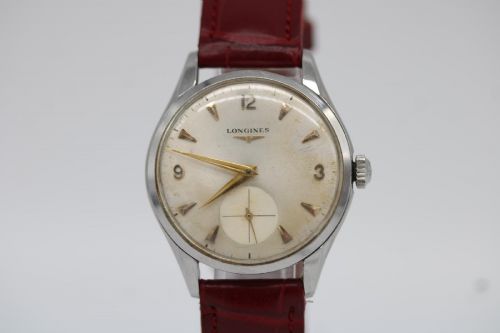


Longines Wristwatch
A longines wristwatch offers enduring Swiss horological heritage, combining mid-century mechanical movements with classic gold and steel dress forms.
Longines Wristwatch
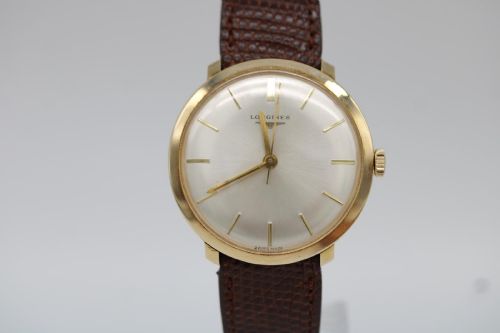
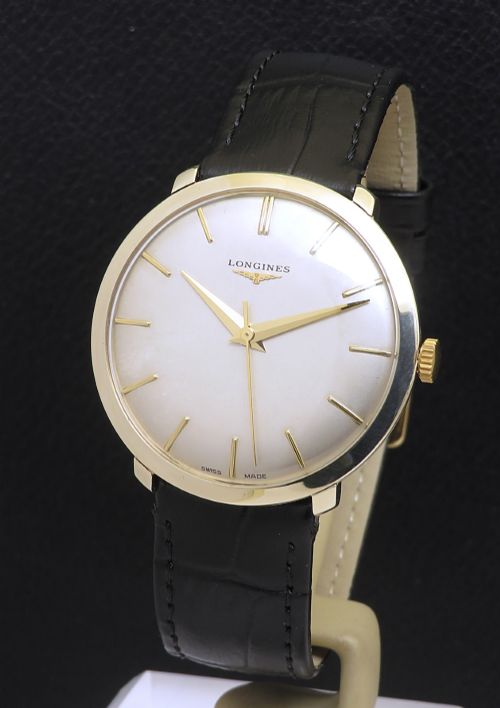
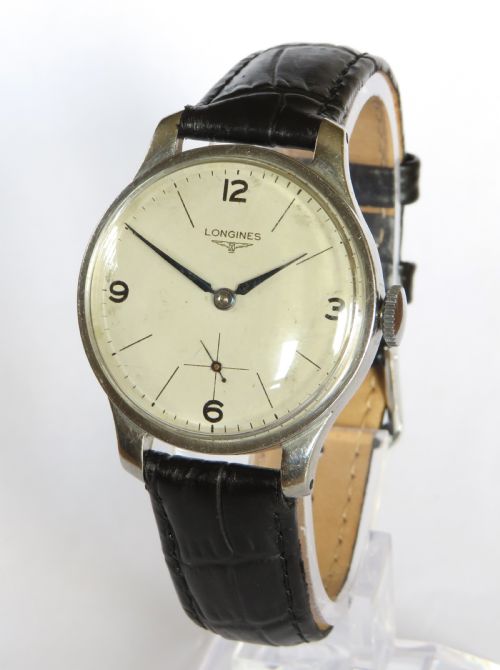
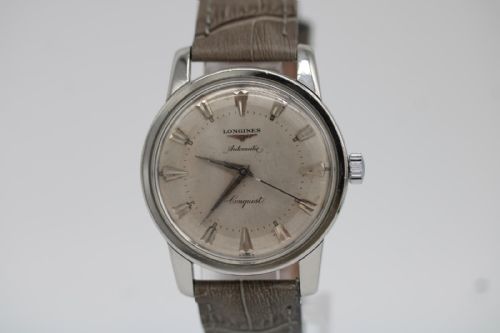
A longines wristwatch represents mid-century Swiss horology, spanning the 1940s, 1950s, and 1960s with mechanical movements and traditional dress watch proportions. Buyers encountering this selection will frequently find gents dress watches alongside specialised pieces such as cocktail watches and automatic models.
The objects take several distinct forms, including manual wind variants, automatic movements, and licensed pieces produced in collaboration with retailers like Baume. Styles range from utilitarian steel cases to refined Art Deco diamond dress pieces.
Origins trace back to Swiss manufacture, often featuring named movements like the calibre 280 or 12.68Z. These timepieces capture the transition from post-war utility to mid-century modern elegance.
Materials and construction
Cases are formed from solid 9ct gold, 9K gold, 14ct white gold, gold plate, and stainless steel, frequently paired with acrylic crystals and leather straps. Metal selection dictates the weight and formality of the piece, ranging from robust stainless steel to precious white and yellow gold.
Movements rely on mechanical ingenuity, utilising manual wind calibres and automatic winding systems housing up to 17 jewels. Components are assembled with precision engineering, often enclosed alongside protective glass or acrylic viewing faces.
Longines Wristwatch Retail Price Guide 2026
Typical asking prices for longines wristwatch among the pieces listed under this phrase on Sellingantiques today, from the lower quarter to the upper quarter. They describe what is for sale here now, not the wider market.
Some vintage pieces arrive complete with their original fitted boxes, preserving a tiny capsule of mid-century retail history.
Assessing quality and preservation
Quality separates through the purity and weight of precious metals, distinguishing solid 9ct and 14ct gold iterations from plated brass or steel alternatives. Superior examples retain crisp case geometry and original dial signatures without excessive polishing.
Longines·Wittnauer·Baume
The Longines Wristwatch Glossary
- Calibre
- The specific designation given by a manufacturer to a particular watch movement design. This term allows collectors to identify the internal mechanics driving the timepiece.
- Manual wind
- A mechanical movement wound by hand via the crown rather than through automatic wrist motion. This traditional method requires regular interaction to maintain operation.
- Automatic
- A self-winding mechanical movement that uses the natural motion of the wearer's wrist to power the mainspring. This mechanism relies on an internal weighted rotor.
- Art Deco
- A design style characterised by sleek geometric lines and streamlined forms, prevalent during the 1920s and 1930s and influencing later cocktail watches. It values decorative symmetry alongside precious materials.
- Jewels
- Synthetic rubies or sapphires used as bearing surfaces within a watch movement to reduce friction. Their count often reflects the grade and complexity of the calibre.
Longines Wristwatch: Frequently Asked Questions
How do I wind a manual watch?
Rotate the crown clockwise between your thumb and forefinger until you feel gentle resistance. Stop immediately to avoid over-winding and damaging the internal mainspring.
Perform this action at roughly the same time each day to maintain consistent timekeeping throughout wear.
What is a cocktail watch?
A cocktail watch is a small, highly decorative dress timepiece intended for formal evening wear. These pieces frequently incorporate precious metals and gemstones.
They prioritise ornamental design and delicate proportions over simple time legibility.
How do I identify the decade?
Examine the case style, dial typography, and movement serial numbers recorded inside the watch. Mid-century pieces often display minimalist markers or distinct Arabic numerals.
Documentation, hallmarks, and specific calibre numbers help narrow the production era.
Can I wear it daily?
Vintage timepieces require careful handling and protection from moisture, magnetic fields, and heavy impacts. Acrylic crystals and older case seals lack modern waterproofing standards.
Rotating the piece with modern alternatives preserves its mechanical integrity for special occasions.