


1950s Diamond Cocktail Ring
A 1950s diamond cocktail ring delivers mid-century glamour through bold stones and sculptural platinum or gold settings designed to command attention.
1950s Diamond Cocktail Ring
A 1950s diamond cocktail ring embodies the flamboyant jewellery design of the mid-century period, favouring oversized centre stones and dramatic silhouettes. These pieces emerge from the 1950s era, capturing post-war optimism through substantial gemstone weight and expressive styling.
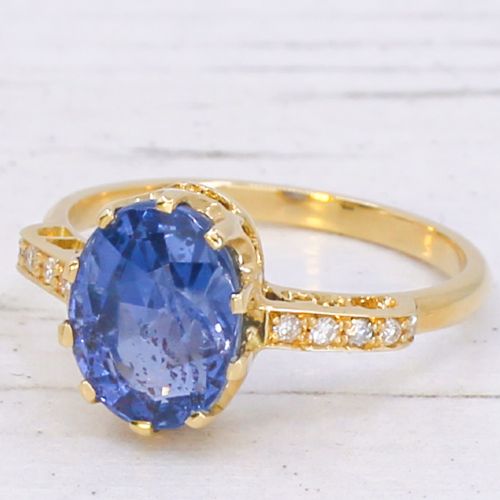
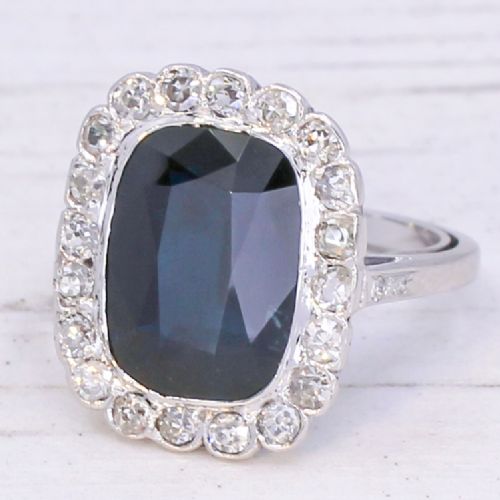
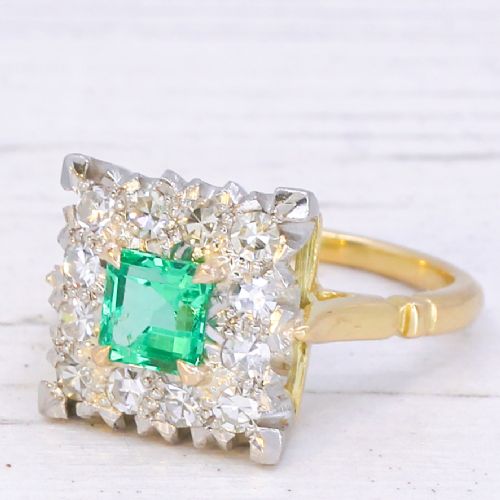
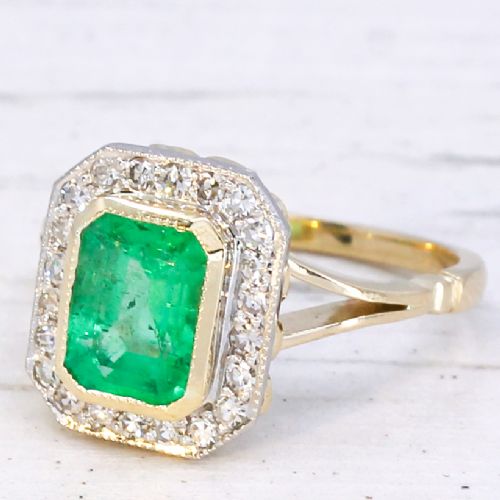
The most common examples on this page are cluster rings, ballerina settings, and bombé designs centred around diamonds accompanied by sapphires, emeralds, rubies, or aquamarines. Makers from this decade utilised platinum alongside 18ct white gold, yellow gold, and occasional 14ct variations to support complex multi-stone layouts.
French and American workshops heavily influence the selection, bringing scroll panel designs, tank styles, and high jewellery finishing to the market. Buyers encounter pieces spanning pure mid-century modern aesthetics to retrospective nods toward Art Deco and Victorian styles.
Materials and Construction Techniques
Goldsmiths of the 1950s constructed these rings primarily in platinum and 18ct white or yellow gold, pairing high-carat precious metals with robust claw and bezel settings. Platinum provided the tensile strength required to secure large central aquamarines, sapphires, and emeralds without heavy metal bulk.
Diamond placement frequently combined brilliant cuts with baguette or old-cut stones to accentuate central coloured gems like unheated Ceylon sapphires or Colombian emeralds. Pierced gallery work and multi-tiered cluster arrangements added architectural depth to the profile of each ring.
Several pieces squeeze over thirty carats of aquamarine into a single hand, proving mid-century fingers required serious muscle.
Evaluating Mid-Century Craftsmanship
Quality rests upon the natural origin and treatment status of the primary gemstones, where unheated sapphires or minor-oil emeralds elevate a piece significantly above standard commercial stones. The calibre of the supporting diamond pavé and the crispness of the surrounding metalwork dictate the overall refinement.
Structural integrity separates average production from exceptional studio output, visible in how fluidly the platinum or gold wraps around irregular centre stones like star sapphires and baroque pearls. Heavier gram weights and integrated French or maker signatures denote superior atelier standards.
Kutchinsky·Boucheron
The 1950s Diamond Cocktail Ring Glossary
- Ballerina ring
- A cluster ring featuring a central oval or marquise stone surrounded by a tight, radiating halo of tapered baguette diamonds that mimics a dancer's tutu. This setting style gained immense popularity during the mid-century period.
- Bombé
- A rounded, dome-shaped ring design that swells outward from the finger to create a voluminous profile. Jewellers paved these curved surfaces heavily with diamonds and coloured stones.
- Tank ring
- A bold, angular jewellery style developed in France during the 1940s and persisting into the 1950s, characterised by tracks of gold and platinum resembling military tank treads. These geometric forms often incorporated large central diamonds or rubies.
- Marquise cut
- An elliptical gemstone shape with pointed ends, offering a large surface area relative to its carat weight. Mid-century designers utilised this cut to elongate the finger within cluster and solitaire arrangements.
1950s Diamond Cocktail Ring: Frequently Asked Questions
How do I wear a cocktail ring daily?
These prominent mid-century pieces work best on the right hand to prevent everyday wear on delicate prong settings and large centre stones. Their substantial weight and height make them natural focal points for evening attire.
Store each ring individually in a fabric-lined box away from other jewellery to avoid scratching softer gems like pearls or emeralds. Routine professional checks ensure the heavy platinum or gold claws remain secure around the primary stones.
What defines the 1950s cocktail style?
The aesthetic relies on exaggerated scale, curved contours, and a fearless mix of diamonds with vivid coloured gemstones such as aquamarines and rubies. Designs broke away from wartime austerity by embracing abundance and sculptural volume.
Jewellers experimented with asymmetrical arrangements, tiered clusters, and tactile finishes like textured gold and sweeping platinum scrolls. This era produced some of the most flamboyant dress rings in modern jewellery history.
Are these gemstones treated?
Many coloured stones from this period carry historical certifications noting specific treatment levels, such as negligible or minor oil in emeralds and unheated origins in Ceylon sapphires. Natural formation remains a key driver of authenticity for mid-century fine jewellery.
Diamonds used in these settings are typically natural earth-mined stones featuring brilliant, old, or transitional cuts. Laboratory reports often accompany higher-carat pieces to confirm the exact nature of the primary gems.