



1950s Gold Statement Ring
These striking 1950s gold statement rings bring bold mid-century design and vibrant gemstones together for anyone wanting a dramatic hand ornament.
1950s Gold Statement Ring
A 1950s gold statement ring provides a substantial presence on the hand through generous proportions and high-impact central stones. These pieces originate from mid-century workshops in Britain, France, and America, reflecting a period of exuberant post-war design.
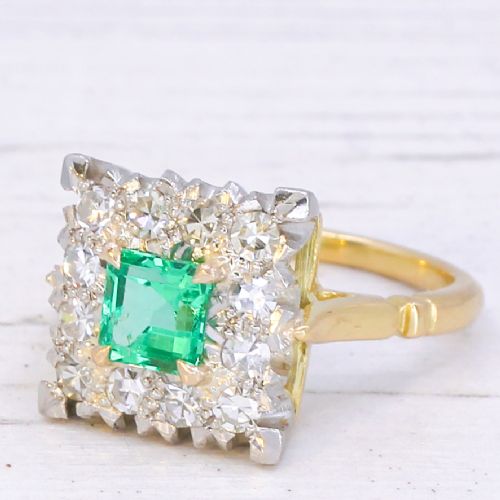
The selections available include cocktail and dress rings featuring large aquamarines, emeralds, rubies, and turquoise set alongside diamonds. Most examples utilise yellow gold or white gold, often taking the form of dramatic scroll panels, ballerina clusters, or bombé silhouettes.
How these rings were constructed
Goldsmiths utilised 18ct yellow gold, 18ct white gold, and 14ct gold to build robust structural mounts capable of supporting large feature stones. These metals were shaped into curvaceous scrolls, dense pavé settings, and tiered ballerina formations characteristic of mid-century manufacturing.
Gemstones such as diamonds, aquamarines, emeralds, and rubies were secured using precise claw and channel techniques to maximise light entry and visual impact. Master jewellers balanced heavy stone weights with intricate gold wirework and volumetric contours.
1950s Gold Statement Ring Retail Price Guide 2026
Typical asking prices for 1950s gold statement ring among the pieces listed under this phrase on Sellingantiques today, from the lower quarter to the upper quarter. They describe what is for sale here now, not the wider market.
Some mid-century rings contain enough gold and stone weight to double as effective paperweights.
What separates the finest examples
Quality depends upon the scale and optical purity of the primary gemstones, such as substantial aquamarines or certified Colombian emeralds. Superior pieces display exceptional colour saturation and careful stone matching within complex multi-gem clusters.
Execution of the metalwork also defines the upper tier, where heavy gold gauge meets fluid mid-century styling without structural weakness. Maker signatures and British or French assay marks add distinct provenance and confirmation of origin.
Kutchinsky
The 1950s Gold Statement Ring Glossary
- Bombé ring
- A domed, swelling ring design popular in the mid-century period that creates a three-dimensional bulbous profile on the finger. This rounded volume allows for generous gemstone arrangements and heavy gold usage.
- Ballerina ring
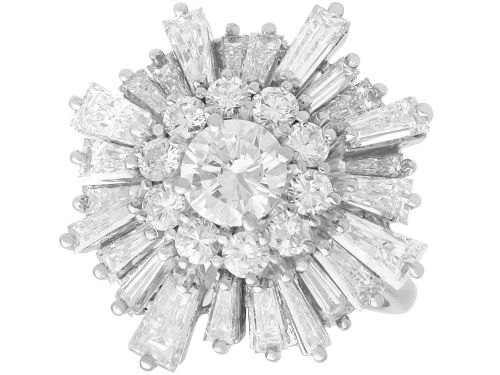
- A cluster ring style featuring a central stone encircled by a radiating fringe of tapered baguette or brilliant-cut diamonds resembling a tutu. It remains a hallmark of mid-century fine jewellery.
- Cocktail ring
- A large, prominent ring designed to draw attention during evening social occasions. These pieces typically combine oversized coloured gemstones with diamonds and heavy gold settings.
- Scroll panel
- An ornamental design element featuring curving, ribbon-like rolls of gold. It provides structural width and decorative movement to mid-century dress rings.
- Dress ring
- Any ring worn primarily for decorative appeal rather than as a permanent band or engagement token. They frequently showcase unusual stones like turquoise or large aquamarines.
1950s Gold Statement Ring: Frequently Asked Questions
How do I wear a cocktail ring daily?
These prominent mid-century designs require mindful wear due to their large gemstones and raised profiles. Reserve them for occasions where hand activity is moderate to protect the substantial gold mounts.
Pairing a bold ring with simple attire allows the piece to function as the focal point of an outfit. Ensure the sizing fits snugly to prevent the heavy head from rotating on the finger.
What defines mid-century ring design?
Mid-century jewellery abandons rigid geometric restraint in favour of organic curves, sweeping scrolls, and volumetric bombé shapes. Makers embraced expressive, heavy gold forms that celebrated new optimism through sheer physical presence.
Gemstone combinations became more adventurous, pairing diamonds with turquoise, aquamarine, and emerald within dense, sculptural arrangements.
Are these rings made from solid gold?
The pieces utilise solid 18ct yellow gold, 18ct white gold, or 14ct gold structural foundations. These higher carat weights provide the necessary strength to support heavy multi-stone settings.
Plating is absent, meaning the rich colour of the yellow gold or the bright finish of the white gold runs entirely through the metalwork.
How do I identify a 1950s piece?
Look for characteristic mid-century motifs such as ballerina clusters, scroll panels, and bulbous bombé silhouettes. The combination of heavy gold construction and large emerald-cut aquamarines or rubies frequently points to this decade.
Assay marks and maker signatures stamped inside the shank often provide specific chronological confirmation and geographic origin.