
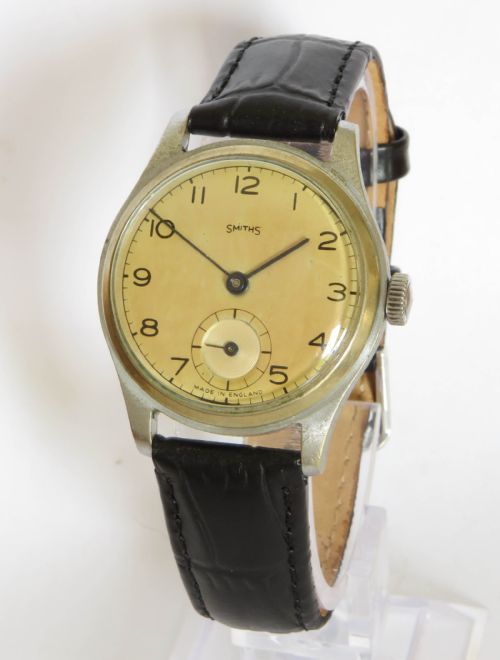


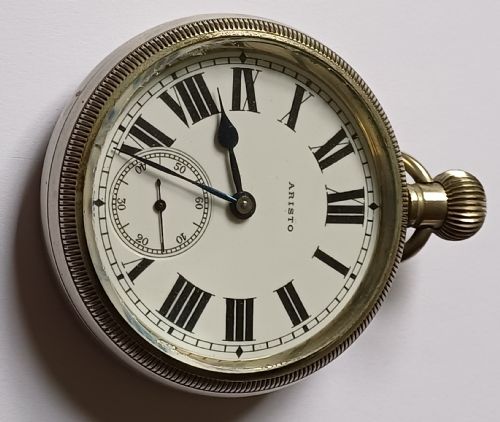


1940s Military Watch
A 1940s military watch delivers honest utility and historic character, offering collectors a tangible link to mid-century service.
1940s Military Watch
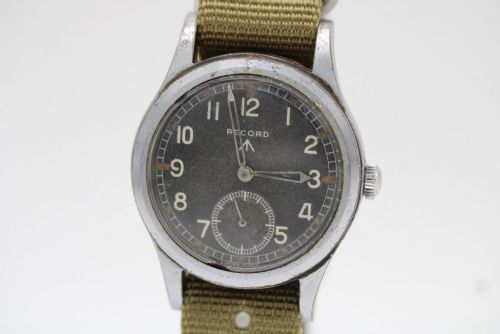
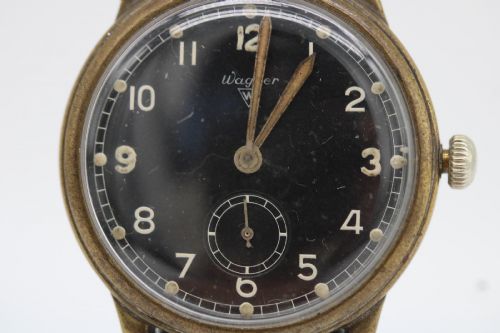
A 1940s military watch encompasses both wristwatches and pocket watches issued to armed forces during the Second World War. These timepieces served various branches, including the Royal Air Force, the British Army, and German military services.
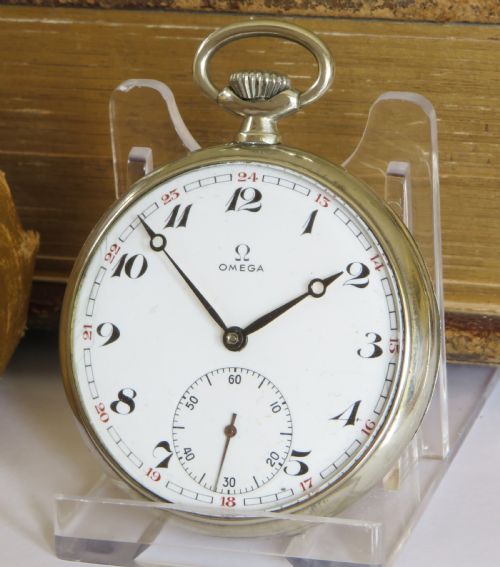
The most common wristwatches on this page include British military issue models and German military watches from the 1940 period. Pocket watches, such as GSTP pocket watches and naval artillery chronographs, appear frequently alongside these wrist-worn pieces.
How they were made
Cases combine stainless steel, chrome plate, brass, and steel, paired with glass or acrylic crystals to protect the dial. Leather straps secure the wristwatches, while movements rely on durable manual wind mechanisms.
Dials feature enamel work and clear numerals designed for legibility under demanding service conditions. Construction prioritises functional reliability above ornamentation.
British and German military contracts from the 1940 period dominate the available stock, including RAF and naval issues.
What varies in quality
Quality differences rest in the originality of dials, case preservation, and the specific military contract or branch association. Pieces retaining original hands and unpolished steel or chrome plate cases hold greater historical integrity.
Makers and specific issue designations, such as WWW or ATP markings, influence how closely a watch aligns with strict military specifications of the era.
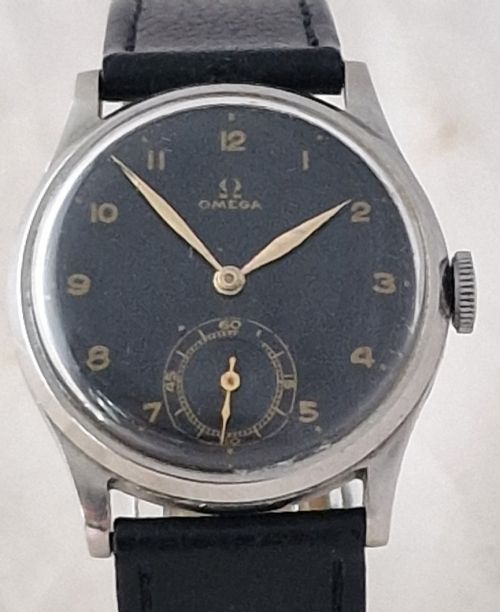
Record·Wagner·Omega·Smiths·Roamer·Ebel·Revue·Vertex·Aristo·Doxa·Buren·Timor·Glycine·Cyma·Helvetia·Damas
The 1940s Military Watch Glossary
- WWW
- Watch Wrist Waterproof. A designation stamped on British military watches issued during the Second World War.
- GSTP
- General Service Trade Pattern. Markings found on British military pocket watches used across various service branches.
- ATP
- Appointment to Purchase. A specification code marking early British army wristwatches procured during the conflict.
- Calibre
- The internal movement mechanism of a watch. Specific calibres help identify the manufacturer and production period.
- Chronograph
- A watch with a stopwatch function in addition to its timekeeping display. These often served naval artillery units.
1940s Military Watch: Frequently Asked Questions
What does a WWW mark mean?
The letters WWW stand for Watch Wrist Waterproof, stamped on the case backs of specific British military wristwatches.
These markings denote pieces that met stringent waterproofing and durability standards required by the military during the conflict.
How do I identify a pocket watch?
Pocket watches from this era often feature GSTP engravings or broad arrow marks on the reverse. They lack wrist lugs and were carried in pockets or attached to watch chains.
Naval and general service variants served different branches, visible through specific dial layouts and case back stampings.
Were these watches worn in combat?
Military personnel across the RAF, British Army, and other forces used these timepieces for coordinated operations and navigation.
Their robust construction in stainless steel, brass, and chrome plate helped them withstand harsh field environments.
How do I care for a manual wind watch?
Manual wind movements require regular winding by hand using the crown, without forcing the mechanism past its stopping point.
Keep the watch away from moisture and magnetic fields to preserve the vintage internal components and glass or acrylic crystals.