
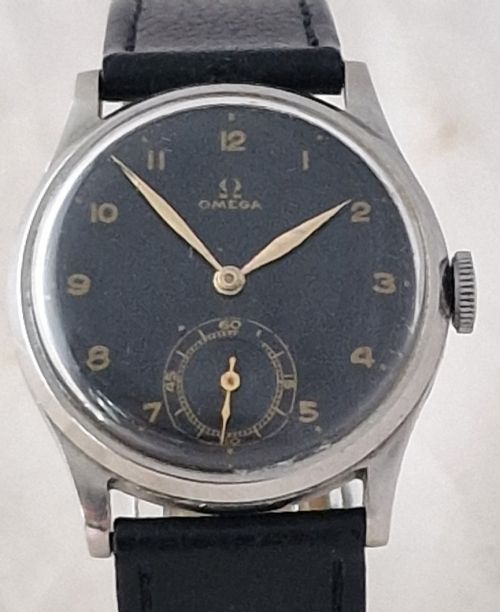
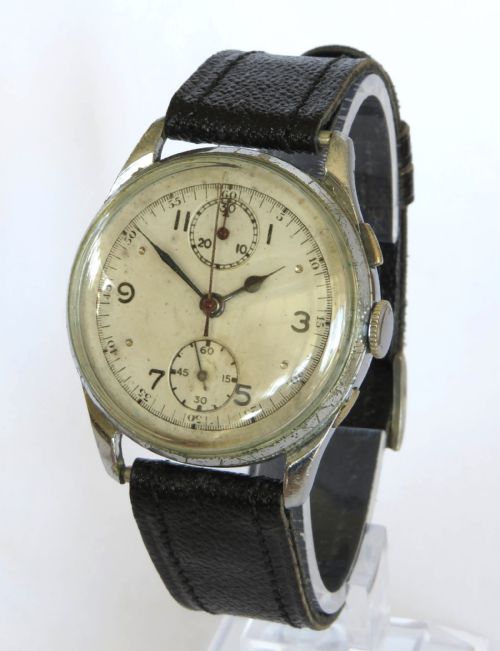
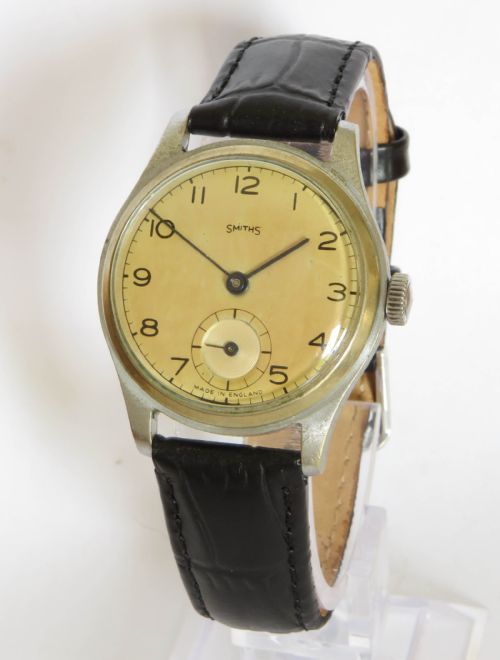
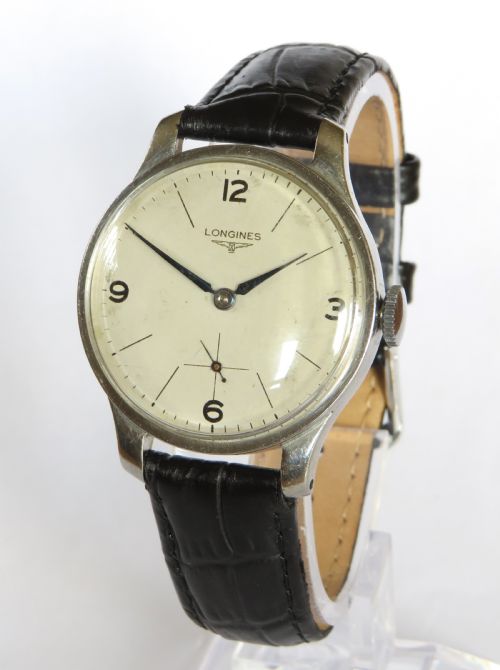


1940s Mechanical Wrist Watch
These 1940s mechanical wrist watch pieces bring functional mid-century design and manual movements directly to the wrist.
1940s Mechanical Wrist Watch
A 1940s mechanical wrist watch is a hand-wound timepiece embodying styles from Art Deco geometry to rugged military utility. Buyers seeking these items encounter gentleman's dress models, oversized jumbo pieces, and official service issues.
The selection ranges from British and Swiss productions to French manual wind examples. Military variants, including RAF and Luftwaffe issues alongside Swedish military models, represent a distinct strand within the period.
Chronographs, triple date complications, and simple centre seconds displays appear frequently across the inventory. These watches capture the horological transition from pocket watches to dedicated wristwear during the mid-century era.
Materials and construction
Cases utilise stainless steel, chrome plate, gold plate, and gold filled metals alongside traditional glass or acrylic crystals. Manufacturers paired these durable housings with leather straps for daily wear.
Movements rely entirely on manual mechanical winding systems, often featuring shock resistance mechanisms or specialised chronograph complications. Skilled watchmakers housed these intricate movements within robust metal cases designed for reliability.
Listings span the 1930s, 1940s, and 1950s eras, incorporating Art Deco designs alongside military specifications.
Assessing quality
Quality rests upon the preservation of the dial, the integrity of the case metal, and the execution of the mechanical movement. Original signed dials and unpolished cases elevate a piece above standard examples.
The reputation of the maker and the complexity of the calibre, such as multi-register chronographs or shock-resistant escapements, dictate the standing of individual watches within the period.
Omega·Venus·Smiths·Longines·Roamer·Marvin·Enicar·Sperina·Ebel·Ebana·Benrus·Le Coultre·Mundus·Elgin
The 1940s Mechanical Wrist Watch Glossary
- Chronograph
- A watch with a stopwatch function alongside the main time display. This complication requires additional sub-dials to measure elapsed seconds and minutes.
- Calibre
- The specific internal movement of a watch. Manufacturers stamp unique numbers or names to identify the design and origin of the mechanism.
- New old stock
- Unused vintage items remaining in original condition from their period of manufacture. These pieces retain factory finishes due to lack of previous wear.
- Centre seconds
- A watch design where the second hand sweeps from the centre pinion rather than operating in a subsidiary dial. This layout became standard for many mid-century dress and military models.
1940s Mechanical Wrist Watch: Frequently Asked Questions
How do I wind a mechanical watch?
Rotate the crown clockwise between your thumb and forefinger until you feel gentle resistance. Stop immediately to avoid damaging the mainspring.
Wind the watch at roughly the same time each day to maintain consistent tension and accurate timekeeping.
Are these watches waterproof?
Vintage models lack modern rubber gaskets and screw-down crowns. Exposure to moisture or heavy rain will damage the internal movement.
Keep the watch entirely dry and remove it before washing hands or swimming.
How accurate is a 1940s watch?
Mechanical movements from this era can gain or lose a short number of minutes per day. Variations depend on temperature, position, and service history.
Professional servicing helps regulate the movement for closer daily precision.
What is a military issue watch?
These timepieces were commissioned by government armed forces for pilots and ground personnel. Case backs often bear official military markings and issue numbers.
Robust construction and high legibility were essential requirements for service use.