


1940s Swiss Wrist Watch
A 1940s swiss wrist watch brings mechanical precision and mid-century character to the wrist, offering dependable timekeeping for daily wear.
1940s Swiss Wrist Watch
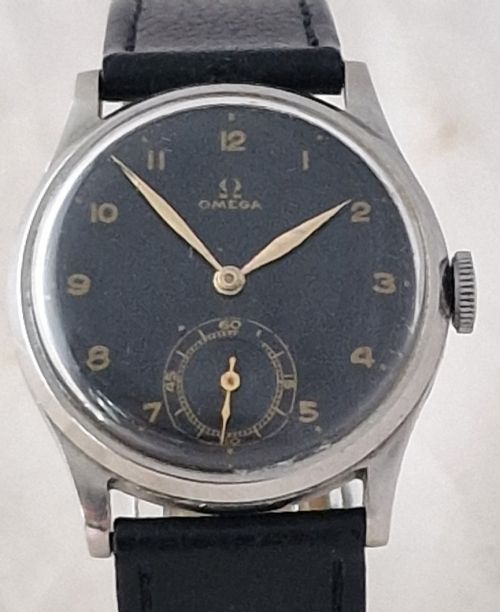
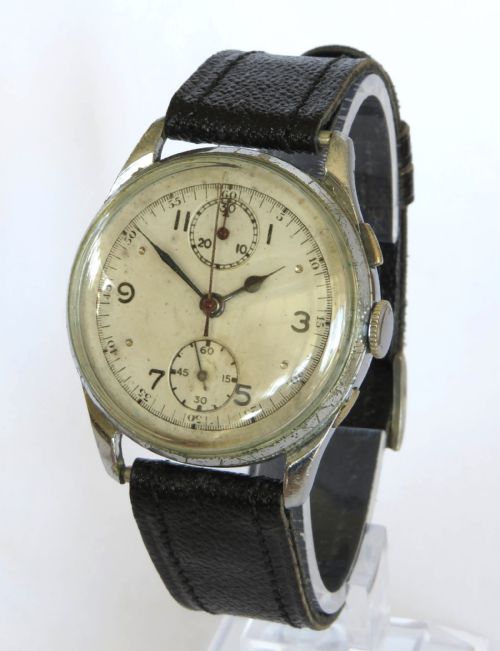
A 1940s swiss wrist watch represents a period of robust mechanical watchmaking from Swiss workshops and makers. These pieces span civilian designs, chronograph models, and military issue watches.
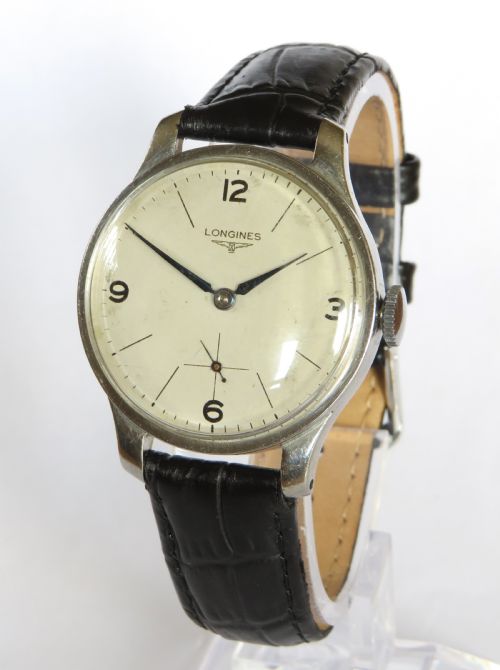
The wristwatches on this page include gents and lady's versions, featuring styles from Art Deco to mid-century military and vintage aesthetics. Buyers will frequently encounter stainless steel and gold plate cases alongside distinctive black and light dials.
Civilian dress watches sit alongside military specification pieces intended for specific armed forces service. Each piece reflects the horological output of Swiss makers working through the 1930s, 1940s, and 1950s.
How they were made
Cases utilise stainless steel, chrome plate, brass, and 18ct gold plate, paired with glass or acrylic crystals to protect the dial. Movements rely on hand winding mechanical calibres designed for accuracy.
Dials feature applied numerals and chapter rings, while straps are fashioned from leather. Shock resistance systems and chronograph complications appear in select mechanical movements of the era.
Some watches survived decades in drawers as unused old stock, emerging with their original factory character intact.
What varies in quality
Quality rests in the original specification of the movement, such as chronograph mechanisms or specialised military issue standards. Higher quality examples retain clean dial printing and crisp case geometry without excessive polishing.
The grade of materials used for the case, from solid gold and stainless steel down to plated brass, determines the enduring resilience of the watch. Original components and signed movements elevate the standing of an individual piece.
Omega·Venus·Longines·Roamer·Marvin·Enicar·Sperina·Revue Vertex·Ebana·Le Coultre·Mundus
The 1940s Swiss Wrist Watch Glossary
- Chronograph
- A watch with a stopwatch function alongside the primary timekeeping display. This complication requires additional gear trains within the movement.
- Calibre
- The specific manufacturer's designation for a particular mechanical movement design. It denotes the internal architecture and dimensions of the mechanism.
- Military Issue
- Equipment commissioned directly by armed forces for service use. These watches often feature specific government marks or department codes on the case back.
- Acrylic
- A lightweight transparent plastic material utilised for watch crystals before synthetic sapphire became standard. It can be polished to remove surface scuffs.
- New Old Stock
- Unsold vintage items remaining in original condition from their period of manufacture. These pieces have not seen previous retail ownership or long-term daily wear.
1940s Swiss Wrist Watch: Frequently Asked Questions
Are these watches suitable for daily wear?
These mechanical timepieces function well for regular wear when handled with care. Avoiding water exposure and observing proper winding habits preserves the movement.
Vintage mechanisms benefit from routine servicing by a horologist to ensure reliable daily timekeeping and proper lubrication of internal gears.
How do I wind a hand winding watch?
Rotate the crown clockwise between your thumb and forefinger until slight resistance indicates the mainspring is fully tensioned. Do not force the crown past this stopping point.
Wind the watch at approximately the same time each day to maintain consistent tension and stable amplitude within the mechanical movement.
What is a military issue watch?
Military issue watches are timepieces commissioned by government defence departments for personnel. They feature legible dials and durable cases built to service specifications.
Markings on the reverse often denote the branch of service or issue codes, distinguishing them from civilian equivalents of the same decade.
How do I distinguish 1940s styles?
The decade encompasses military utility designs alongside decorative Art Deco influences and mid-century modern aesthetics. Case shapes range from round steel housings to stepped rectangular profiles.
Dial layouts feature Arabic numerals, subsidiary seconds dials, and distinct handset styles that reflect the transition from pre-war elegance to wartime pragmatism.