

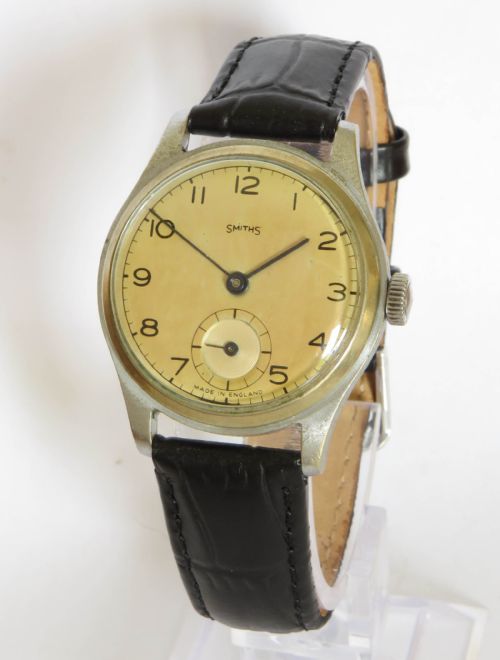
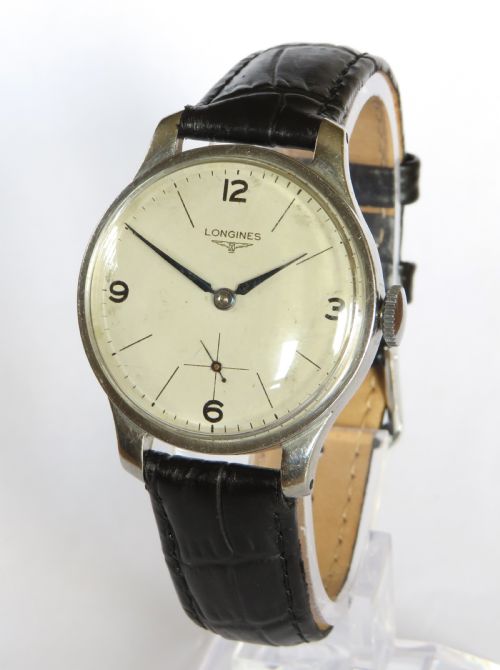
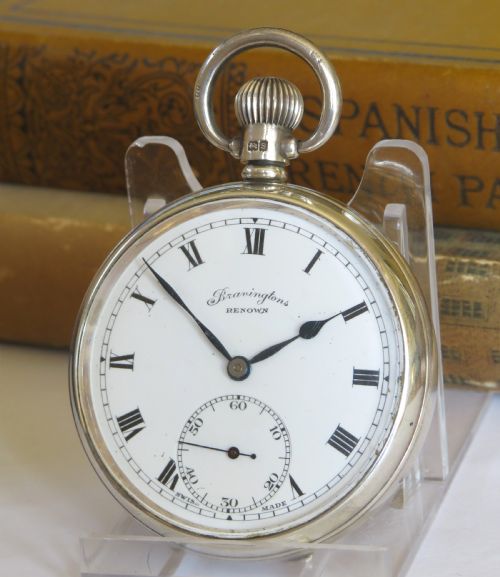


1940s Dress Watch
A 1940s dress watch brings mid-century horology to the wrist, offering mechanical timepieces shaped by Art Deco and post-war design.
1940s Dress Watch
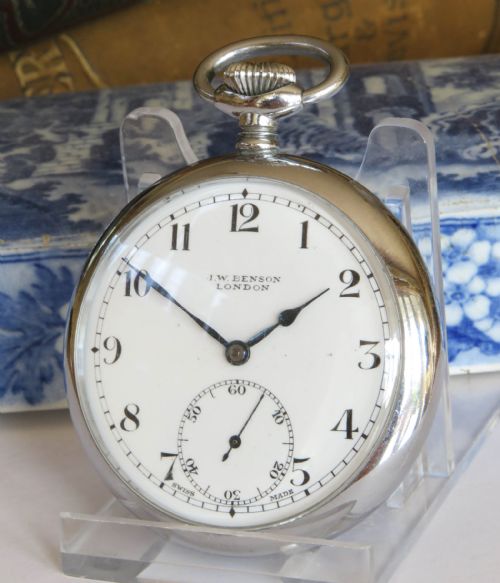
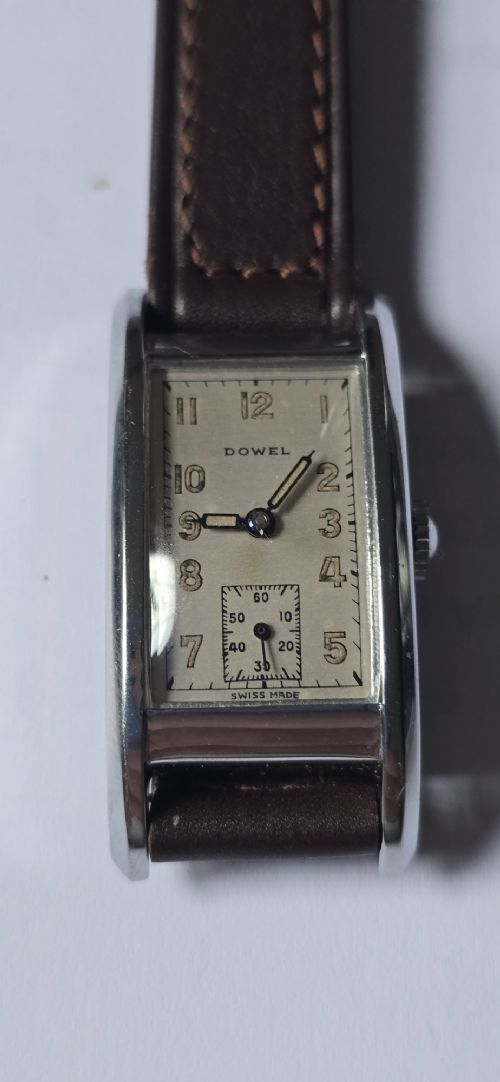
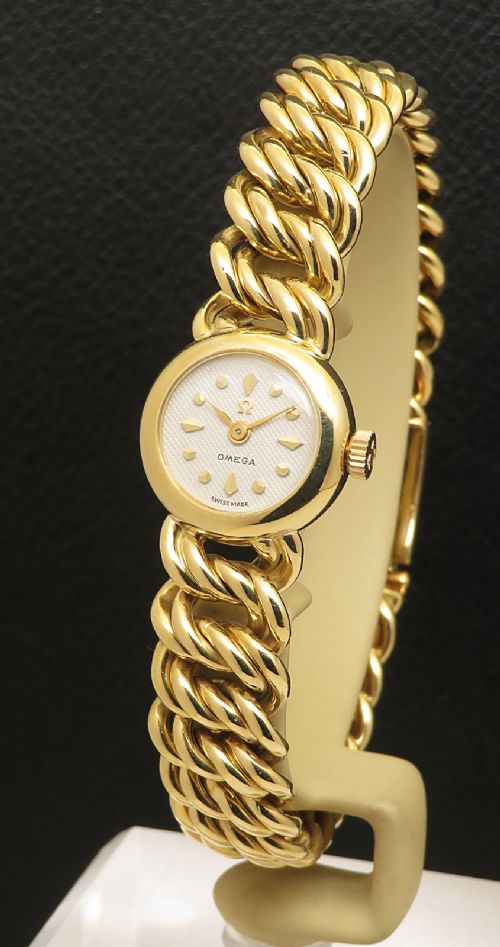
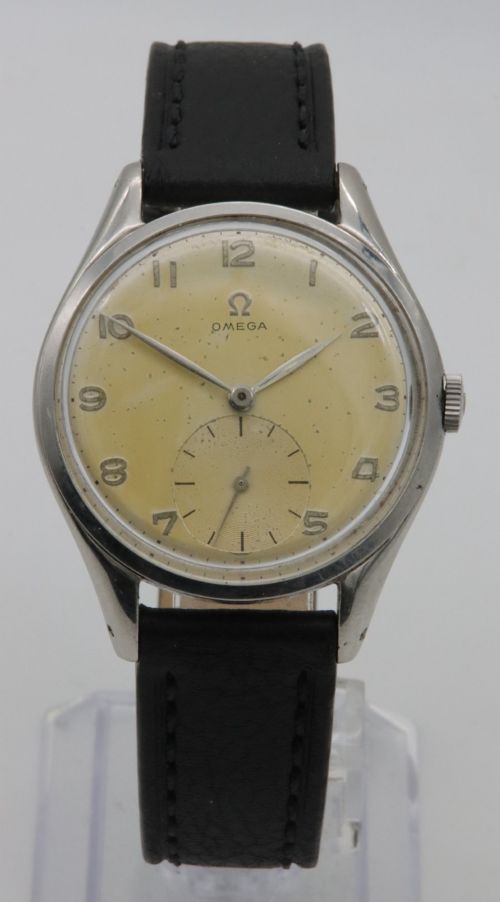
A 1940s dress watch encompasses wristwatches and pocket watches produced during a period spanning the 1930s to the 1950s, with a strong concentration around the 1940s itself. Buyers encountering this selection will find mechanical timepieces reflecting Art Deco, Mid-Century, and classic vintage styling.
The objects take the form of gents and ladies wristwatches alongside pocket watches, originating from English, French, and Swiss makers. Materials range from stainless steel and chrome to solid gold, platinum, and gold plate, often paired with leather straps or enamel dials.
How they were made
These watches utilise metal alloys and precious metals for their cases, including 18ct yellow gold, 18ct white gold, 9ct solid gold, 14k gold filled, and stainless steel. Glass, acrylic, and enamel protect and form the dial faces, while leather provides the material for standard wrist straps.
Movements rely on mechanical components, such as automatic bumper mechanisms and manual wind calibres like the Omega calibre 351. Cases incorporate precious stones like diamonds in platinum settings, alongside mother-of-pearl dial elements.
1940s Dress Watch Retail Price Guide 2026
Typical asking prices for 1940s dress watch among the pieces listed under this phrase on Sellingantiques today, from the lower quarter to the upper quarter. They describe what is for sale here now, not the wider market.
Listings feature periods from the 1930s, 1940s, and 1950s, incorporating materials such as leather, glass, stainless steel, acrylic, gold plate, enamel, 18ct yellow gold, and chrome.
What varies in quality
Case materials dictate the baseline tier of a piece, moving from gold plate, chrome, and stainless steel up to solid 9ct gold, 18ct yellow or white gold, and platinum set with diamonds. The presence of precious metals and gemstones elevates the standing of a timepiece.
Movement sophistication and origin distinguish individual examples, seen in specialised mechanical calibres and branded Swiss or English workshops. Inclusion of original boxes, papers, or specific dial configurations like mother-of-pearl further separates pieces.
Omega·Smiths·Bravingtons Renown·Longines·Helvetia·Marvin·Enicar·Cyma·Ebana·Le coultre·Elgin·Vacheron Constantin
The 1940s Dress Watch Glossary
- Calibre
- The specific internal mechanical movement manufactured for a watch. It identifies the design and series of the mechanism driving the time.
- Automatic bumper
- An early form of self-winding mechanical movement where the rotor swings back and forth against springs rather than rotating fully. This system defines mid-century automatic watches.
- Gold filled
- A layer of solid gold mechanically bonded to a base metal core. It provides a thicker gold surface than standard gold plating.
- Art Deco
- A design style characterised by sleek geometric lines and streamlined forms. It heavily influences the appearance of watch cases and dials from this era.
- Manual wrist watch
- A timepiece wound by hand via the crown rather than through self-winding mechanical components. Owners must wind the mainspring regularly to keep the watch running.
1940s Dress Watch: Frequently Asked Questions
How do I wear a 1940s dress watch?
These watches pair naturally with tailored clothing and formal attire, utilising their restrained case sizes to sit neatly under a shirt cuff.
Because many examples feature leather straps or precious metal bracelets, they adapt easily to occasional wear or daily rotation with proper care.
How do I wind a manual dress watch?
Wind the crown gently in a clockwise direction until gentle resistance is felt, taking care not to force it past the stopping point.
Doing this at a consistent time each day helps maintain steady tension on the mainspring and ensures accurate timekeeping.
Are these watches waterproof?
Watches from this era were generally not manufactured with modern water resistance standards and lack contemporary seals.
Contact with moisture, rain, or humidity should be avoided to protect the dial, hands, and mechanical movement from corrosion.
How do I tell an Art Deco watch apart?
Art Deco pieces display geometric case shapes, stylized numerals, and symmetrical lines that reflect the prominent design ethos of the 1930s and 1940s.
These aesthetic details separate them from later, more minimal mid-century designs.