

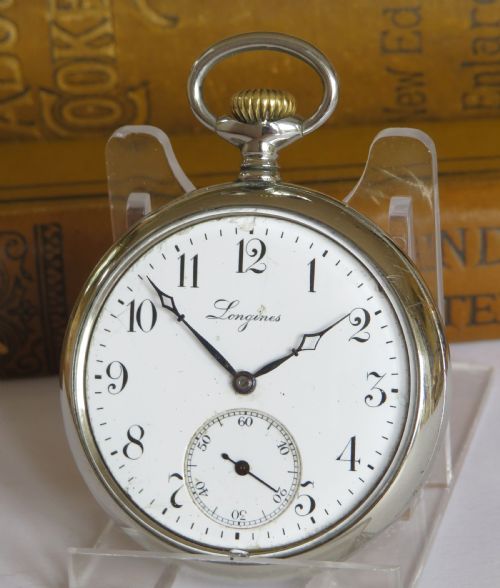
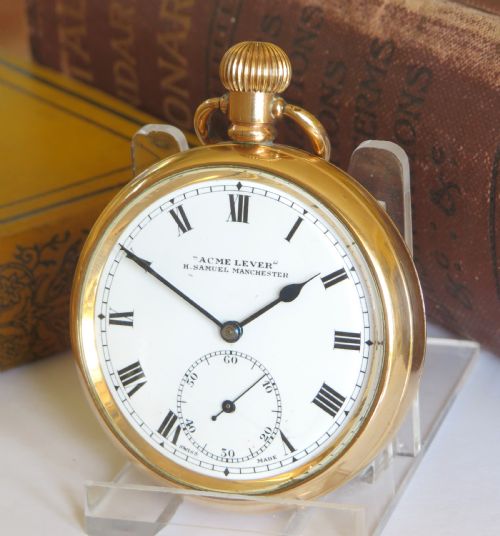
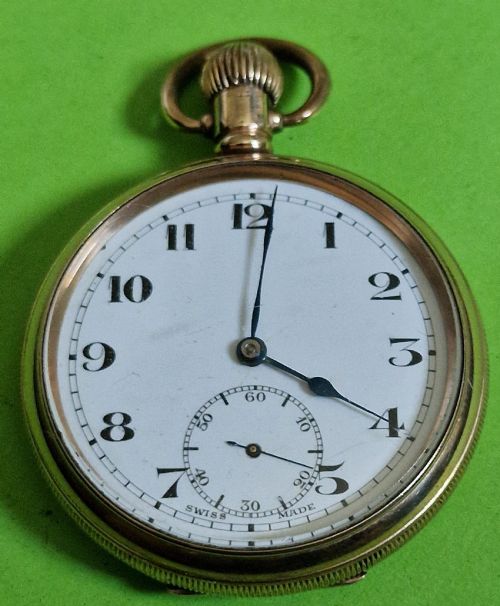


Brass Case Pocket Watch
A brass case pocket watch is a sturdy daily companion from an earlier century, prized for its mechanical honesty and pocket-worn charm.
Brass Case Pocket Watch
When you search for a brass case pocket watch, you encounter timepieces spanning from the Georgian era through the 1940s. These items include everyday functional instruments alongside railway-issued chronometers and specialty pocket barometers.
The selections on this page lean heavily toward early twentieth-century examples, including mechanical models by makers such as Dennison, Helvetia, and Stauffer IWC. You also find Victorian and Edwardian pieces, plus occasional eighteenth-century pair-cased specimens.
Beyond standard timekeepers, related pocket instruments like altimeters and miniature grandfather clocks appear in these listings. The core of the selection remains mechanical pocket watches housed in brass, gold plate, gilt, or silver cases.
How they were made
Casework relies heavily on brass, sometimes augmented with gold plating, gilt, or silver, occasionally paired with protective outer shells of horn. Dial faces are typically white enamel with clear numerals, protected beneath glass crystals.
Internal movements are driven by traditional mechanical gear trains, often windable via the button or key depending on the period. Interior fittings can include fine velvet or leather linings within associated presentation or storage cases.
Brass Case Pocket Watch Retail Price Guide 2026
Typical asking prices for brass case pocket watch among the pieces listed under this phrase on Sellingantiques today, from the lower quarter to the upper quarter. They describe what is for sale here now, not the wider market.
Listings span from the 18th Century through the 1940s, utilising brass, glass, enamel, gold plate, gilt, leather, velvet, and mahogany.
What varies in quality
Quality reveals itself in the precision of the movement and the crispness of the enamel dial lettering. Mass-produced retail items differ perceptibly from specialised railway issues built for exact timekeeping under demanding conditions.
The integrity of the outer casing, whether plain brass, gold plate, or horn-backed, dictates the survival of the piece. Crisp detailing on maker signatures and case engravings separates standard commercial output from superior workshop production.
Primavesi·Acme Lever·H Samuel·Dennison·Everite·Helvetia·John Walker·Borgel·Stauffer IWC
The Brass Case Pocket Watch Glossary
- Full Hunter
- A pocket watch featuring a spring-loaded metal cover that protects the glass dial face from scratches. This style requires the user to press a button to open the lid and read the time.
- Button Wind
- A mechanism allowing the watch to be wound via the crown at the top rather than requiring a separate key. This innovation became standard on later nineteenth and twentieth-century timepieces.
- Enamel
- A glassy substance fused to a metal dial substrate through high-heat firing to create a durable, smooth surface. It provides the classic bright white background for painted numerals.
- Altimeter
- A specialised pocket instrument designed to measure altitude by atmospheric pressure rather than telling time. These barometer-derived devices share the portable format of standard pocket watches.
Brass Case Pocket Watch: Frequently Asked Questions
How do I wind a vintage pocket watch?
Most twentieth-century examples utilise a button wind mechanism at the top crown. Turn the crown gently clockwise until you feel resistance.
Avoid over-winding older mechanical movements, as this can strain the internal mainspring and damage the gear train.
Were these watches waterproof?
Pocket watches from the Georgian, Victorian, and Edwardian eras generally possess no modern water resistance. Brass cases protect against dust and pocket lint, but moisture easily penetrates the movement.
Keep your timepiece away from damp environments and remove it before washing your hands.
Can I carry a pocket watch daily?
Many buyers wear or carry these pieces using appropriate chains secured to a waistcoat or belt loop. Ensure the glass crystal and brass case are free from major structural weaknesses before daily use.
Store the watch in a soft pouch when not being carried to protect the finish.