


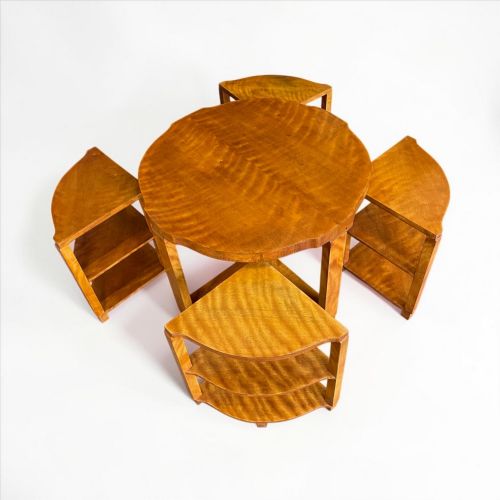

1930s Walnut Occasional Table
A 1930s walnut occasional table brings rich grain and streamlined form to a room, offering a functional surface rooted in Art Deco design.
1930s Walnut Occasional Table
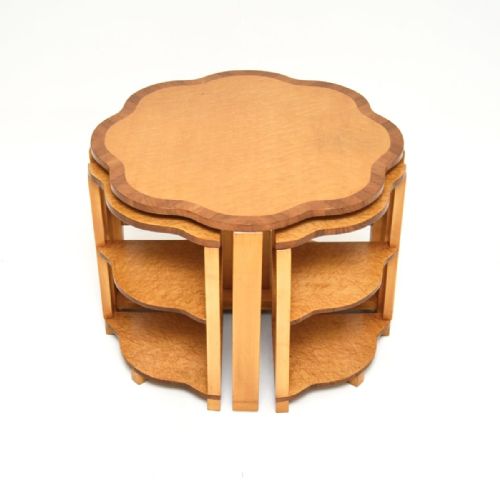
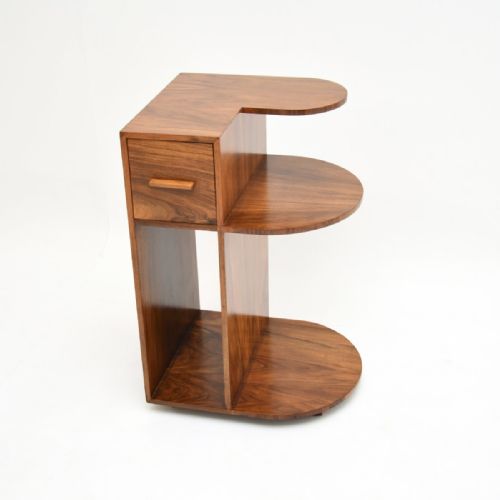
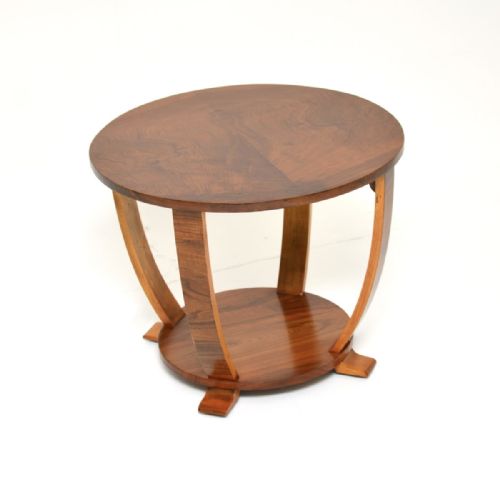
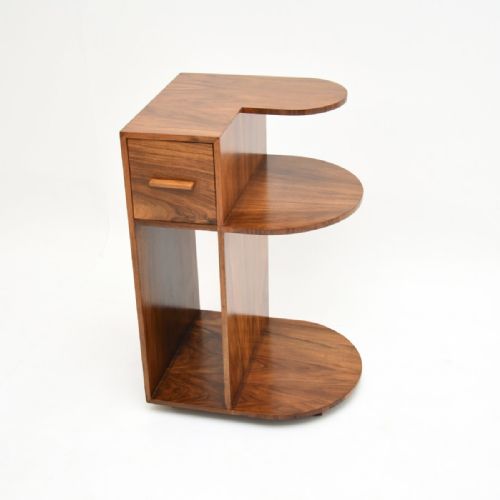
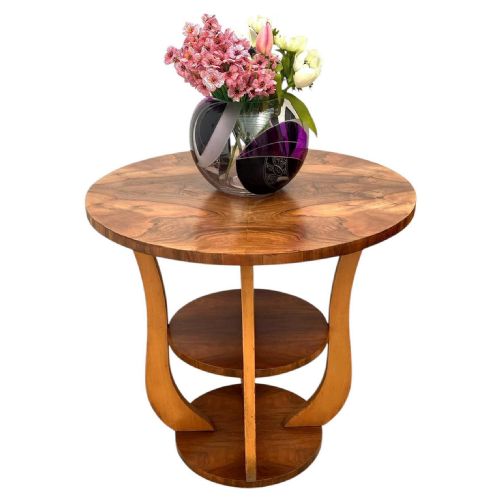
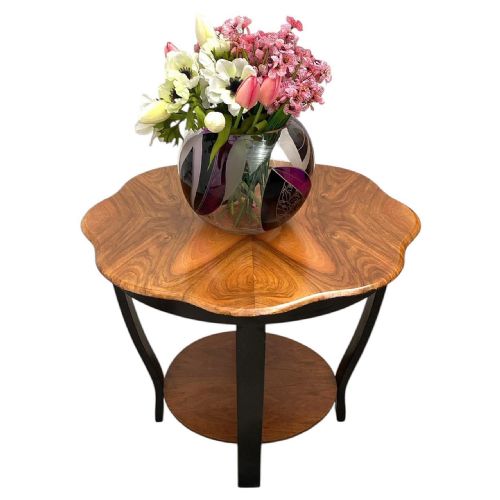
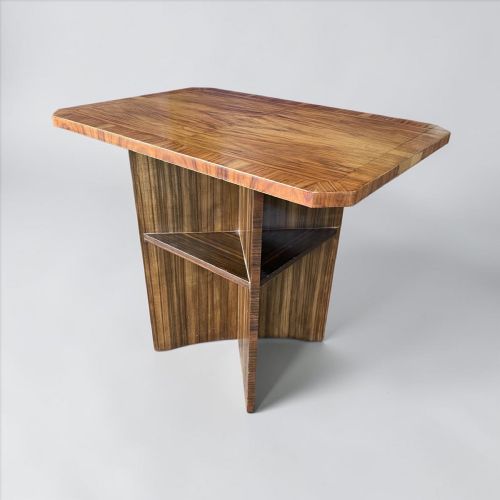
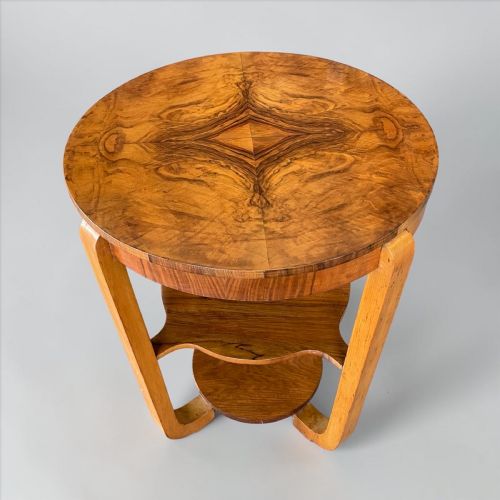
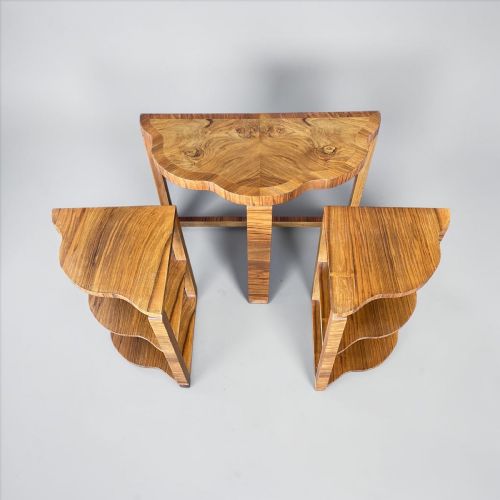
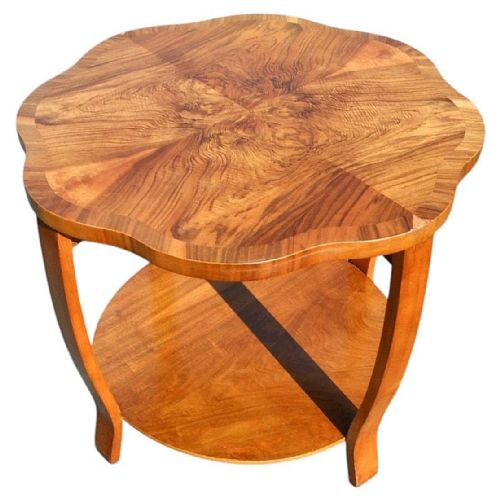
A 1930s walnut occasional table appears in various forms such as side tables, coffee tables, nests of tables, and tiered centre pieces. Most pieces belong to the Art Deco and Art Deco Modernist styles, often originating from England or France.
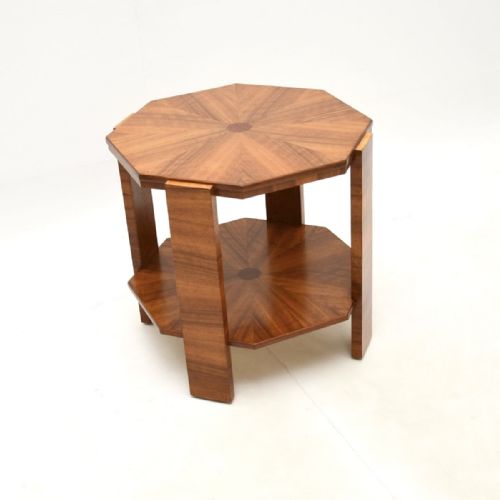
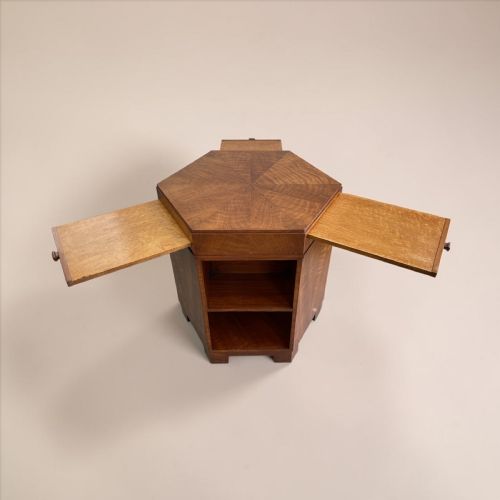
The selection frequently includes multi-tier constructions, octagonal tops, and metamorphic or games designs. Walnut and figured veneers dominate the forms, sometimes paired with maple, glass, ebonised wood, or chrome.
How they were made
Cabinet makers utilised solid wood frames overlaid with walnut, burr walnut, and figured veneers to create striking surface patterns. Techniques involved precise cutting and arrangement of wood grains across table tops and tiers.
Secondary materials such as maple, mirror glass, and chrome were incorporated to provide contrast and structural support. French polishing and specialised finishes protected the delicate veneers while enhancing their natural lustre.
Listings feature walnut, burr walnut, and maple veneers, alongside glass and chrome elements within Art Deco forms.
What varies in quality
The intricacy and visual impact of the wood grain set individual pieces apart, with highly figured burr walnut commanding particular attention. The complexity of the construction, such as multi-tiered designs or metamorphic functions, also indicates the level of craftsmanship.
Origin and maker attribution influence the standing of a piece within the period. Pieces incorporating supplementary materials like chrome and mirror glass demonstrate higher tier manufacturing.
Harry and Lou Epstein·Heal's·Hille
The 1930s Walnut Occasional Table Glossary
- Burr walnut
- A wood veneer taken from the warted growth on a walnut tree, producing swirling and knotted grain patterns. It is highly valued for decorative table surfaces.
- Art Deco
- A design style characterised by sleek geometric shapes, streamlined forms, and modern materials prevalent during the interwar period. These tables frequently adopt this aesthetic.
- Veneer
- A thin layer of superior wood glued to a base timber to give an ornamental appearance. Makers applied figured walnut veneers to achieve symmetrical patterns on table tops.
- Metamorphic table
- A multifunctional piece of furniture that transforms from one form into another, such as a card table converting for games. These showcase clever mechanical ingenuity from the period.
1930s Walnut Occasional Table: Frequently Asked Questions
How do I identify an Art Deco table?
Art Deco tables are distinguished by geometric symmetry, clean lines, and an absence of heavy Victorian ornamentation. The emphasis lies on the natural decorative patterns of the wood grain.
Many examples feature stepped tiers, octagonal shapes, or contrasting inlays of maple and chrome. These geometric elements define the modernist aesthetic of the decade.
Were these tables used for games?
Certain models function specifically as games or card tables, designed to fold out or adapt for entertainment. They combine the decorative appeal of walnut veneer with practical utility.
Such metamorphic pieces allowed households to host card games without permanent large furniture. They represent the versatile approach to domestic design during the period.
What is a nest of tables?
A nest comprises a set of graduated tables designed to slide neatly beneath one another when not in use. This space-saving form gained popularity in English and French production.
Sets range from two to five pieces, often displaying matching figured walnut or burr walnut tops. They provide flexible surface space for entertaining while occupying a minimal footprint.