


Burr Walnut Book Table
A burr walnut book table combines the striking grain of figured timber with practical tiers for volumes, bringing warmth and utility to a room.
Burr Walnut Book Table
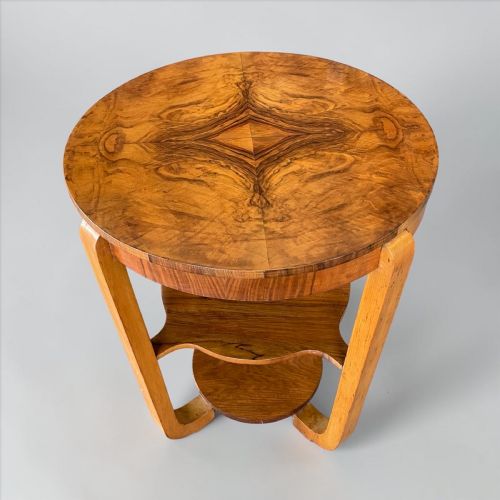
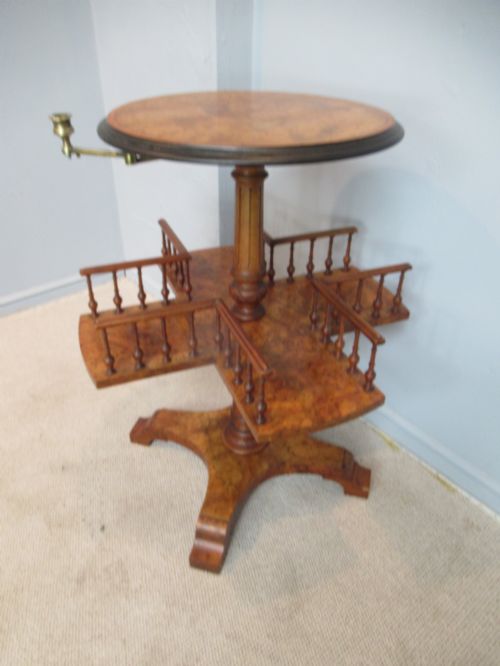
A burr walnut book table brings together a display surface and storage for volumes, appearing most often in revolving two-tier forms or circular occasional formats. These pieces emerge chiefly from the Victorian era and the Art Deco period, spanning from the mid-nineteenth century up to nineteen thirty.
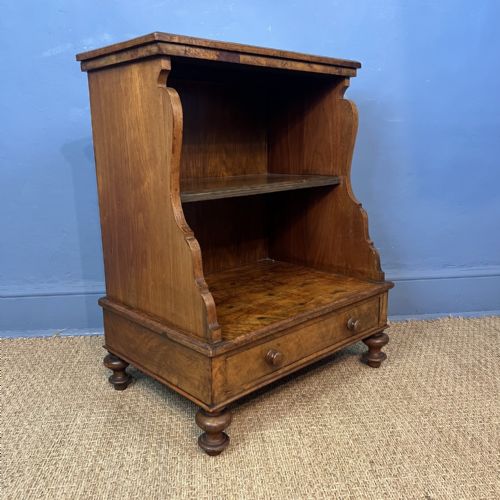
The materials recorded in these listings centre on walnut, burr walnut veneer, and figured walnut, sometimes accented with brass, ormolu, and cross-banding. Alongside revolving bookcases and side tables, the selection includes tilt-top centre tables, library tables, and low open bookcases.
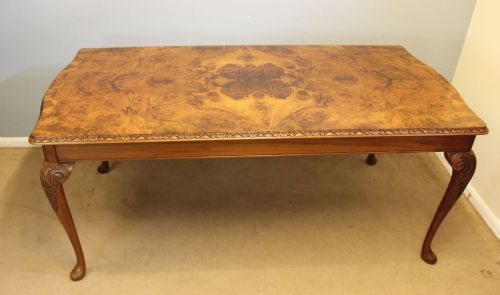
Buyers meet variations that range from nineteenth-century revolving book stands with multiple tiers to nineteen-thirties occasional pieces and Queen Anne revival dining tables. The lineage spans Victorian craftsmanship through to twentieth-century design, maintaining timber grain as the unifying visual element.
Materials and construction methods
Cabinet makers utilised burr walnut veneer applied over solid secondary timbers to produce the highly figured, swirling grain patterns characteristic of these tables. Cross-banding and inlay work frequently define the borders of tops and shelves, framing the natural patterning of the wood.
Metal mounts in ormolu and brass appear on select examples, particularly French chateau styles and nineteenth-century occasional pieces, securing structural corners or embellishing edges. Revolving mechanisms demand precise joinery to allow smooth rotation while supporting the weight of stacked books.
Book tables that revolve allow readers to spin an entire library with a gentle nudge while seated.
Distinguishing quality in grain and joinery
The distinction between tiers of quality rests upon the density and choice of the burr walnut figure, where tightly swirled grain commands greater visual impact than plain walnut surfaces. Careful book-matching of veneers across table tops and shelf surfaces demonstrates the skill of the original workshop.
Structural integrity in the revolving mechanisms and stability in tilt-top actions separate durable specimens from lesser examples. The crispness of cross-banding inlay and the preservation of original ormolu or brass mounts further indicate the standard of production.
Maples
The Burr Walnut Book Table Glossary
- Burr walnut
- A veneer taken from the warted excrescences of a walnut tree, yielding complex, swirling grain patterns. It provides a highly decorative surface for high-end furniture.
- Cross-banding
- A narrow strip of veneer laid perpendicularly to the main grain, typically framing the edge of a table top or shelf. This technique creates a distinct border.
- Ormolu
- Gilded bronze mountings applied to furniture for decorative effect. It appears frequently on nineteenth-century pieces influenced by French design.
- Revolving book table
- A piece featuring a rotating tier designed to hold volumes within arm reach. The mechanism allows access from a seated position.
- Tilt-top table
- A table with a hinged top that folds flat for storage when not in use. This form is common among mid-nineteenth-century occasional tables.
Burr Walnut Book Table: Frequently Asked Questions
How do I spot a Victorian revolving book table?
Victorian revolving book tables typically display rich burr walnut veneers combined with solid timber turnings and internal cruciform partitions to hold volumes upright. Look for heavier proportions and traditional nineteenth-century cabinet-making techniques.
These pieces often feature tiered shelving designed for easy access from an armchair or desk. The presence of brass or wooden castors underneath further points toward nineteenth-century origins.
What is the difference between Victorian and Art Deco examples?
Victorian examples lean towards ornate cross-banding, turned columns, and complex revolving mechanisms. Art Deco pieces from nineteen thirty favour streamlined silhouettes and figured walnut surfaces without heavy ornamentation.
Understanding the transition from nineteenth-century revival styles to twentieth-century modernism helps date the timber work accurately. The joinery and edge treatments shift visibly between these two periods.
How do I care for burr walnut veneer?
Burr walnut veneer requires protection from direct sunlight and excessive heat sources to prevent the thin timber from drying out or splitting. Maintaining stable room humidity preserves the integrity of the antique glue and polish.
Dusting with a soft, dry cloth is sufficient for routine upkeep, avoiding silicone-based polishes that build up over time. Gentle waxing occasionally helps nourish the historic finish.