
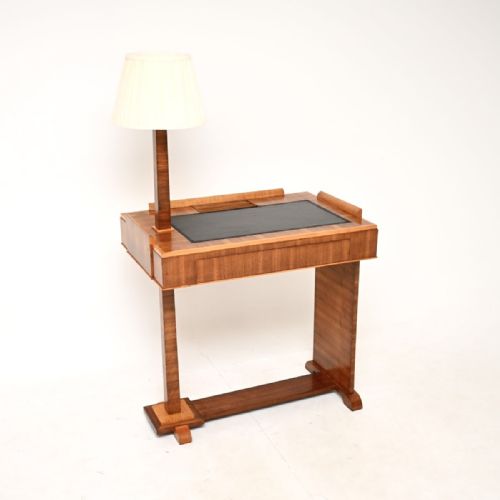


1930s Walnut Lamp Table
A 1930s walnut lamp table brings geometric warmth and rich timber grain to an interior, built for practical placement beside seating.
1930s Walnut Lamp Table
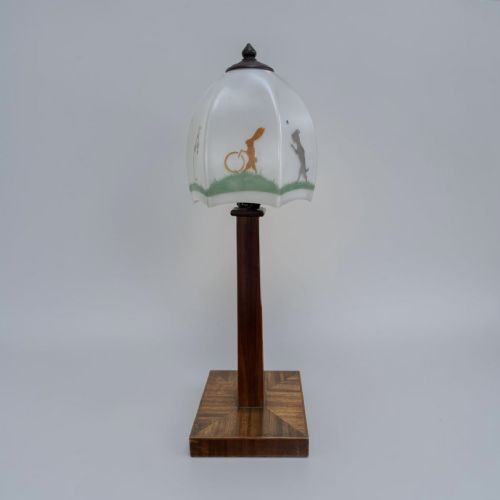
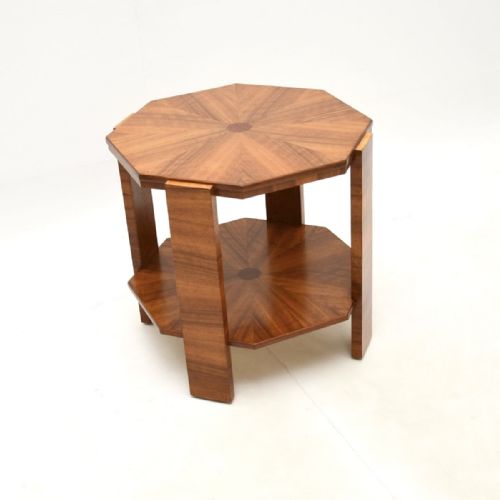
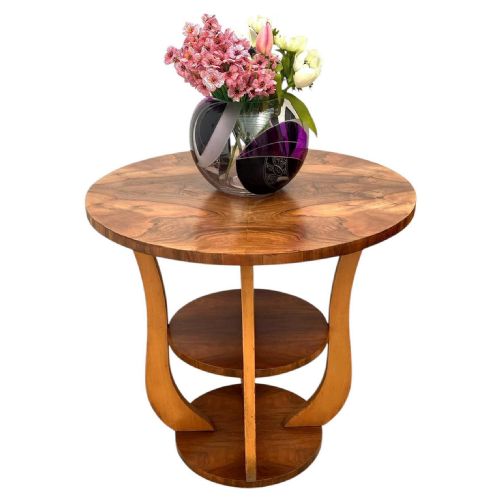
A 1930s walnut lamp table usually takes the form of a compact occasional piece, side table, or tiered stand designed to sit beside armchairs and sofas. Most examples on this page date from the 1930 period, drawing on Art Deco and French styles.
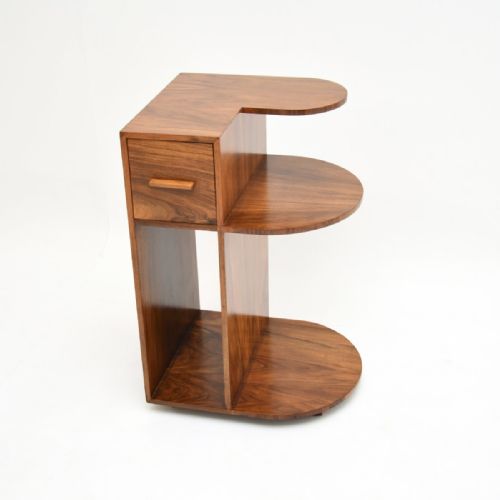
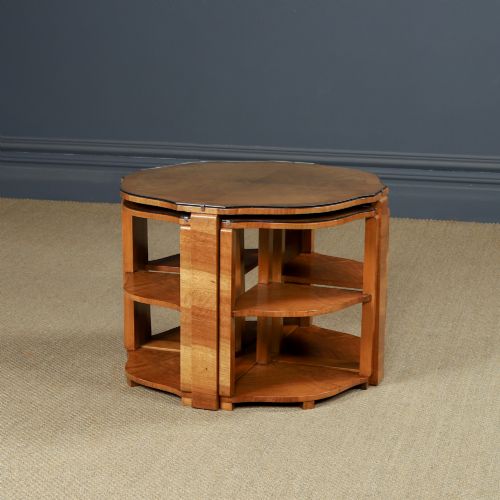
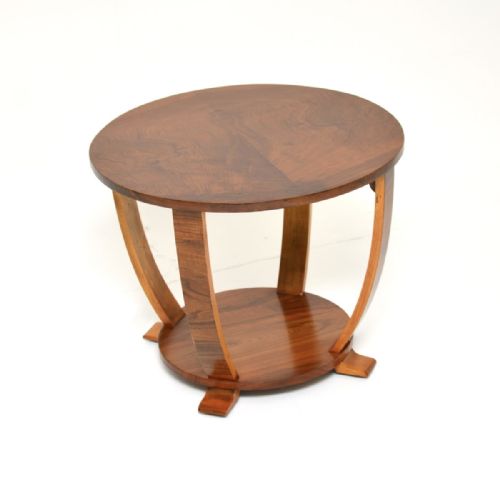
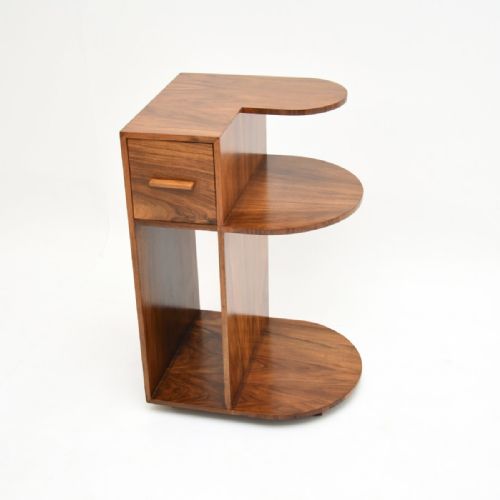
The silhouettes range from round, octagonal, and serpentine tops to multi-tiered structures with shelves for books or ornaments. Buyers encounter variations including square two-tier tables, nests of tables, and occasional stands fitted with drawers.
Origins span English workshops and French cabinets, often constructed with multiple tiers, chrome accents, or casters for mobility. These tables combine utilitarian function with the striking geometry characteristic of the period.
Materials and construction methods
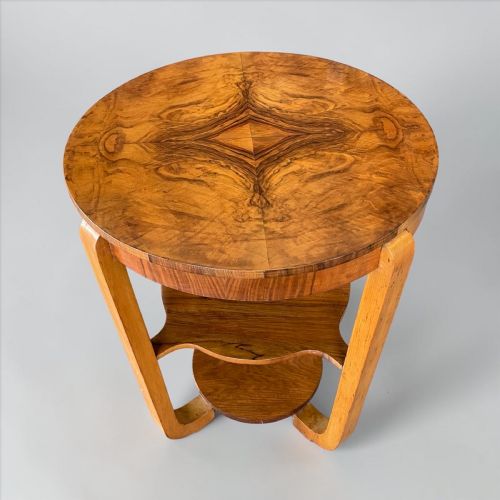
Makers utilised solid walnut and decorative veneers, frequently selecting burr walnut and highly figured grain patterns to create symmetrical visual effects across table tops. Secondary timbers like sycamore, maple, and ebonised wood appeared alongside metal details such as chrome and brass.
Construction relied on skilled veneering techniques applied to sturdy carcases, sometimes incorporating glass, mirror tops, or integrated lighting elements. Multi-tiered tables utilised precise joinery to support stacked surfaces without heavy vertical framing.
Listings for this phrase include examples spanning the 1920, 1930, and 1940 periods, predominantly reflecting Art Deco and French Chateau styles.
Judging quality and execution
Quality rests principally upon the selection and matching of the walnut veneers, where book-matching creates a balanced geometric pattern across the surface. Finer pieces demonstrate precise grain alignment and seamless integration of secondary woods like ebony or maple.
The complexity of the form dictates distinction, separating simple single-tier tables from sophisticated multi-tiered or serpentine designs with metal or glass components. Superior execution shows in the crispness of architectural lines and the stability of tiered tiers.
Hille
The 1930s Walnut Lamp Table Glossary
- Art Deco
- A design style spanning the 1920s and 1930s characterised by streamlined geometric shapes, symmetry, and modern industrial materials. It dominates the aesthetic of furniture from this decade.
- Burr walnut
- A prized timber harvested from the warted growth of a walnut tree, yielding swirling, knotty patterns. It was favoured by cabinet makers for decorative table tops.
- Veneer
- A thin slice of superior wood glued over a stable secondary timber base. This technique allowed craftsmen to display dramatic grain patterns economically.
- Occasional table
- A movable, multi-purpose small table designed for specific sporadic uses around a room. These form the primary category for lamp and side tables of the period.
- Two-tier table
- A piece featuring a primary surface plus a secondary lower shelf connected by upright supports. It provides extra storage for books or decorative objects.
1930s Walnut Lamp Table: Frequently Asked Questions
What is a 1930s walnut lamp table used for?
These tables were originally built to hold bedside or reading lamps, alongside chairs in living spaces, providing a convenient surface for small items.
Today, they serve the same practical function while anchoring an interior scheme with period character and rich wood tones.
How do I identify Art Deco furniture?
Art Deco pieces display clean geometric lines, symmetrical shapes, and a lack of ornate carving in favour of natural grain beauty.
Look for stepped profiles, contrasting veneers like ebony or maple, and occasional metal accents such as chrome.
Are these tables solid walnut?
Most examples utilise a stable secondary timber core covered in figured walnut or burr walnut veneers, which allowed makers to create decorative patterns.
Solid walnut was reserved for structural elements, legs, and mouldings, while veneers displayed the striking grain.
How do I style a multi-tiered table?
Multi-tiered tables offer vertical display space, making them ideal for separating books, decorative objects, and lighting across different levels.
Keep the arrangement balanced to let the figured wood grain remain the visual focus of the piece.