


1930s Walnut Drinks Trolley
A 1930s walnut drinks trolley brings period style and effortless hospitality to any room, offering mobility and charm.
1930s Walnut Drinks Trolley
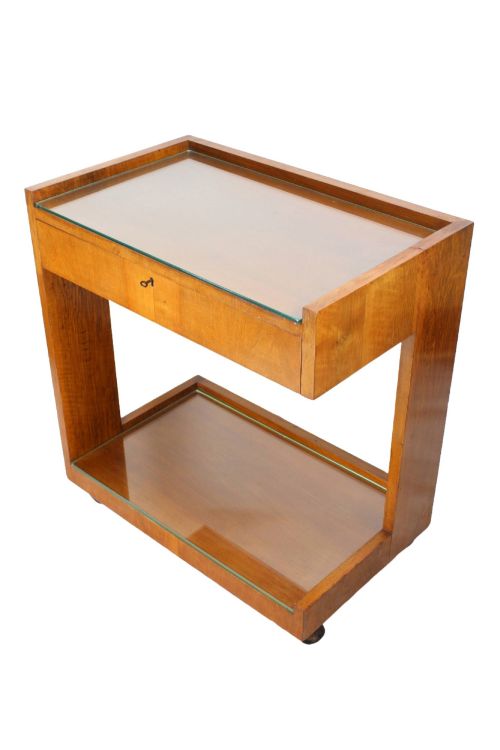
A 1930s walnut drinks trolley is a mobile serving piece designed for entertaining, most frequently encountered in the Art Deco style. These items take various forms on this page, including two tier trolleys, circular bar carts, serving carts, and metamorphic tables that transform for hosting. English origins appear frequently alongside the prominent walnut construction.
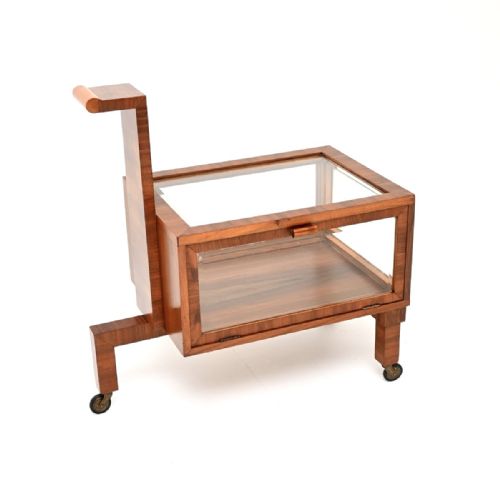
Most examples date firmly to the 1930s, though pieces also span the 1920s and 1940s periods. Buyers will find functional variations such as pop up cocktail tables, display cases, and side table drinks chests equipped for serving. The combination of rich wood and practical castors defines these sought after entertaining accessories.
How they were made
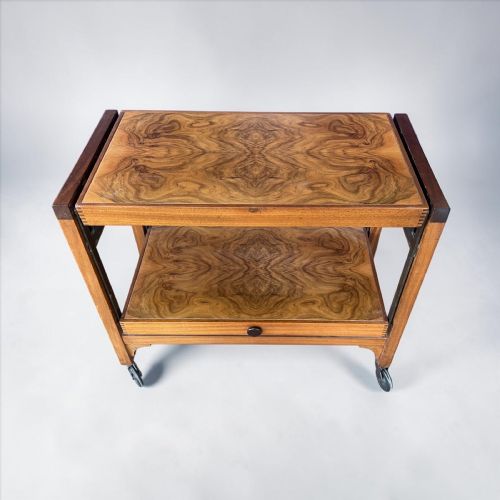
These trolleys utilise walnut timber, often featuring figured veneer applied over a sturdy wooden carcase to create striking grain patterns. Metal accents such as brass components and functional castors provide mobility and contrast against the dark wood surfaces.
Glass panels are integrated into shelves and tiers, while ebonised wood details sometimes accent the primary walnut structure. Complex mechanisms allow certain metamorphic and pop up designs to alter their shape for serving purposes.
Listings feature walnut, brass, glass, and ebonised wood across Art Deco forms.
What varies in quality
Quality in these pieces rests upon the choice of timber and the complexity of the design. Standard two tier serving carts sit at the simpler end, whilst elaborate metamorphic mechanisms, circular Savoy shapes, and pop up cocktail tables represent higher tiers of craftsmanship.
The sophistication of the Art Deco detailing and the integration of brass, glass, and ebonised wood dictate the overall distinction of a piece. Finer examples display superior veneer selection and robust castor assembly that ensure smooth movement.
Incorporall
The 1930s Walnut Drinks Trolley Glossary
- Art Deco
- A design style characterised by sleek lines, geometric shapes, and modern materials that dominated the interwar period. It heavily influences the aesthetic of these serving pieces.
- Metamorphic
- Describing furniture designed to transform its shape or function, such as a side table that opens into a drinks chest. This clever engineering adds versatility to the piece.
- Veneer
- A thin layer of superior walnut wood applied over a base timber to create decorative grain patterns. Figured veneer enhances the visual appeal of the surface.
- Castor
- A small wheel mounted on a swivel at the base of a trolley. It allows the serving cart to move smoothly across floors during gatherings.
- Ebonised
- Wood treated with a dark finish to resemble ebony. This technique provides a sharp contrast against the lighter walnut tones.
1930s Walnut Drinks Trolley: Frequently Asked Questions
How do you use a metamorphic drinks trolley?
A metamorphic drinks trolley transforms its physical structure to reveal hidden compartments, extend surfaces, or raise concealed cocktail sections. Users manipulate the clever hinges and folding leaves to adapt the table for serving.
This ingenuity allows a compact side table to convert into a fully functioning bar station during social gatherings.
How do I style a drinks trolley?
Styling involves arranging glassware, bottles, and bar accessories across the available tiers of the trolley. The inclusion of glass shelves and brass details provides a natural stage for display.
Positioning the cart in a living room or dining space ensures it remains both a decorative focal point and a ready service station.
How can I tell a 1930s trolley from other periods?
Authentic 1930s examples typically display distinct Art Deco geometric lines, circular silhouettes, or streamline forms. The combination of figured walnut veneer, brass accents, and specific construction methods helps identify the decade.
Earlier pieces lean towards 1920s aesthetics, while transitional elements appear in items dated slightly later.