





1930s Walnut Dressing Table
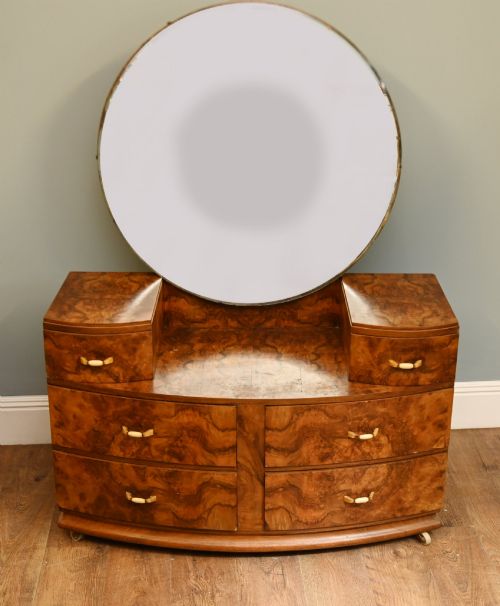
A 1930s walnut dressing table brings geometric warmth and striking grain patterns to a bedroom.
1930s Walnut Dressing Table
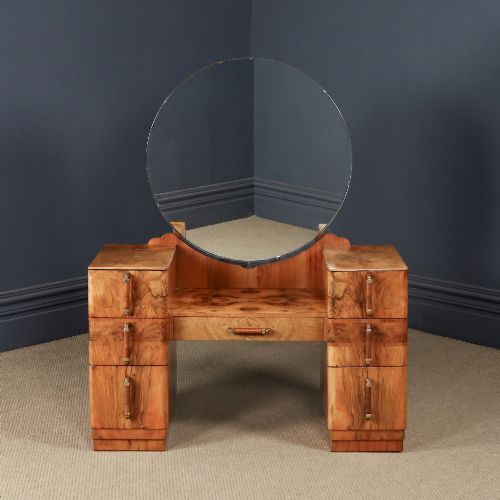
When you search for a 1930s walnut dressing table, you encounter the defined geometry and rich timber surfaces characteristic of the interwar period. The pieces appearing here generally combine pedestal configurations with central mirror glass, reflecting the dominant Art Deco aesthetic of the era.
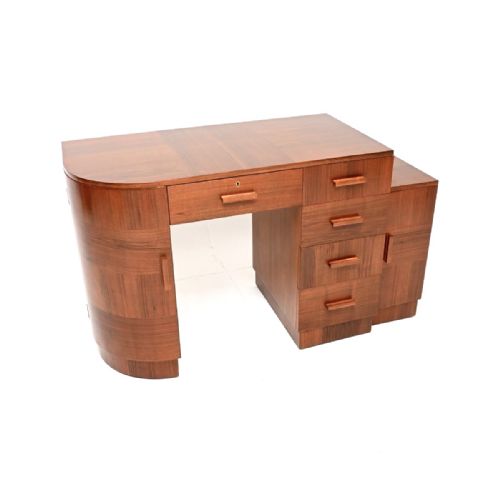
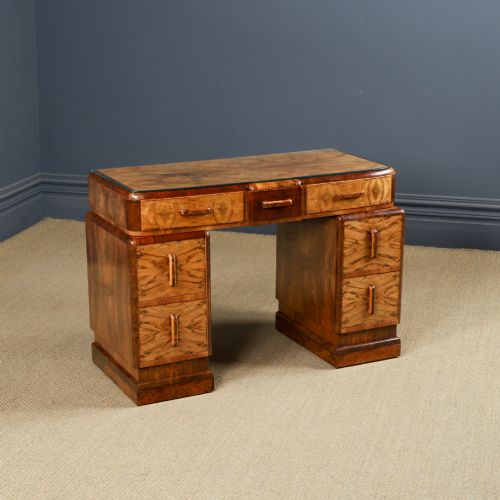
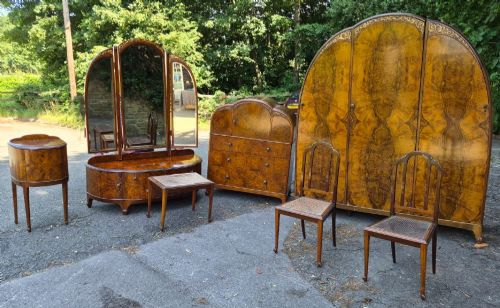
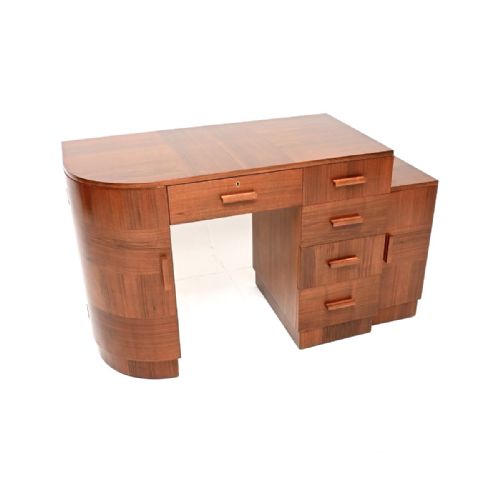
Most examples originate from English workshops and major London retailers, often incorporating matching stools or forming part of larger bedroom suites. Alongside standard dressing chests, you will find related forms such as writing desks and vanity tables built with the same architectural focus.
Materials and Construction
Cabinet makers utilised figured walnut and burr walnut veneers over solid secondary timbers, arranging the grain in symmetrical patterns across drawer fronts and pedestals. This decorative veneering technique defines the visual texture of the furniture.
Metal details, brass fittings, and inset leather surfaces appear alongside clear and mirrored glass. These contrasting materials highlight the clean lines typical of Cotswold School and Art Deco design.
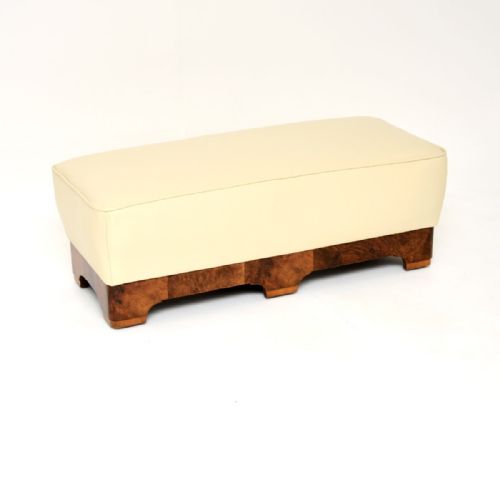
Several dressing chests arrive with matching stools designed specifically to tuck away entirely beneath the kneehole when not in use.
Assessing Quality
The standard of a piece rests on the selection and matching of the walnut veneer across the primary surfaces. Superior examples display continuous grain patterns that flow logically from the centre outwards.
Construction integrity is visible in the execution of the pedestal joins, the stability of the mirror frames, and the quality of the accompanying metal or leather hardware.
Frank Taylor & Co.·Maurice Adams·Harry and Lou Epstein·Heals of london·Whytock & Reid
The 1930s Walnut Dressing Table Glossary
- Burr walnut
- A wood harvested from the abnormal growth of a walnut tree, yielding a swirling, highly figured grain pattern. It was frequently utilised on the primary facades of interwar cabinet work.
- Art Deco
- A design style spanning the 1920s and 1930s characterised by sleek geometric shapes, stylised motifs, and streamlined forms. It dominates the aesthetic of these dressing tables and desks.
- Pedestal dressing table
- A vanity unit featuring twin banks of drawers supporting a central table top and mirror. This layout provides symmetrical storage beneath the working surface.
- Cotswold School
- A design and craft movement focused on traditional woodworking techniques and honest construction methods. Pieces from this tradition emphasise the natural character of the timber.
1930s Walnut Dressing Table: Frequently Asked Questions
How do I style a 1930s walnut dressing table?
Pair the piece with simple, low-profile seating such as an original leather or upholstered stool from the same period. Keeping the surface minimal allows the natural burr walnut grain to remain the focal point of the room.
Ensure adequate natural light reaches the mirror to highlight the geometric lines and reflective glass. Avoid overcrowding the top with modern accessories to maintain the clean aesthetic intended by the designer.
Are these dressing tables suitable for everyday use?
These pieces function well for daily grooming and writing tasks, provided you treat the antique wood and veneer with care. The built-in drawers offer practical storage for modern cosmetics and personal items.
Protect the walnut surface from excessive moisture and direct heat by using coasters or mats. Routine dusting with a dry cloth preserves the original polish without damaging the timber.
How can I tell an authentic 1930s piece apart?
Look for construction methods typical of the period, including traditional drawer dovetails and solid secondary woods behind the walnut veneers. Maker stamps or labels from firms active in the era provide definitive confirmation of origin.
Examine the mirror glass and metal hardware for signs of age, such as subtle foxing or period-correct brass fixings. Modern replacements often lack the precise weight and patination found on interwar hardware.
What is the difference between a dressing table and a pedestal desk?
A dressing table incorporates specific fittings for personal grooming, most notably an integrated swing or fixed mirror glass. The layout prioritises a central kneehole flanked by shallow drawers for accessories.
A pedestal desk omits the mirror structure entirely, focusing instead on a flat writing surface and deeper storage drawers. Both forms share the same walnut materials and geometric Art Deco proportions.