




1930s Walnut Armchairs
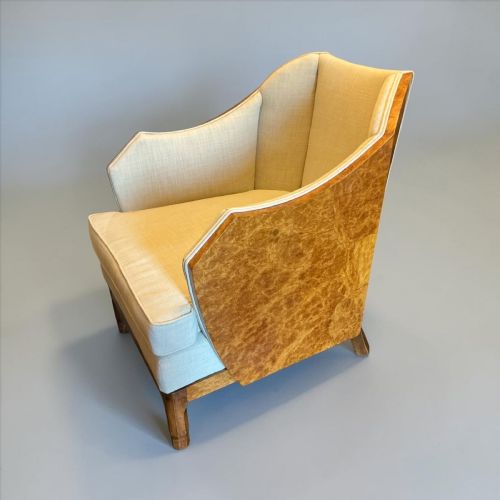
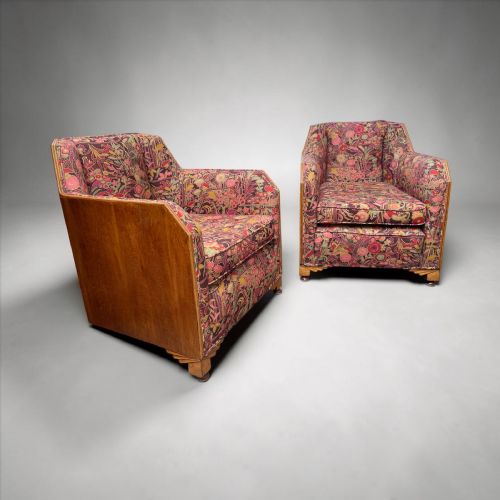
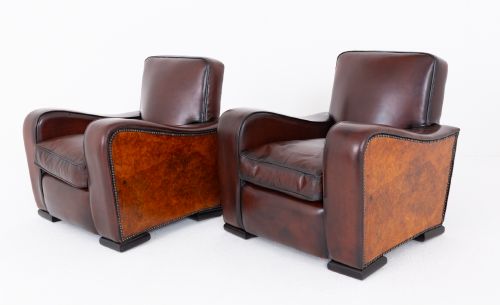
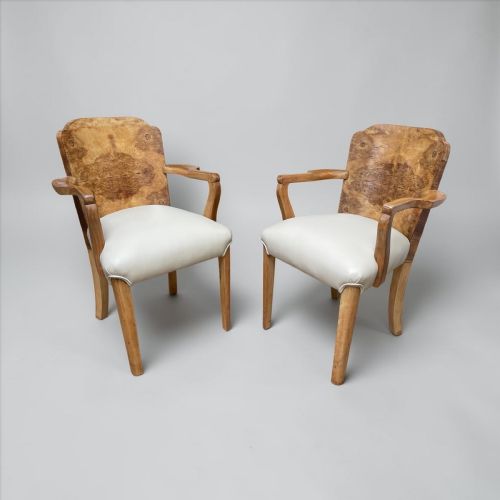
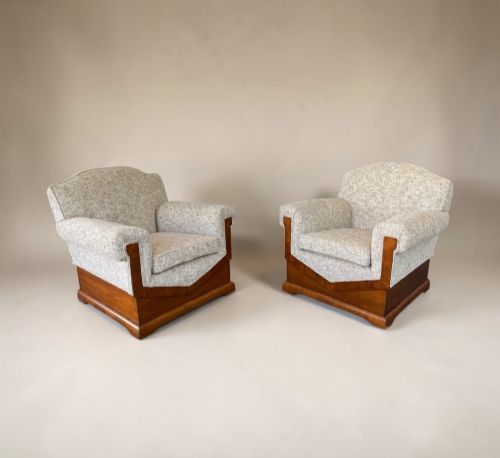
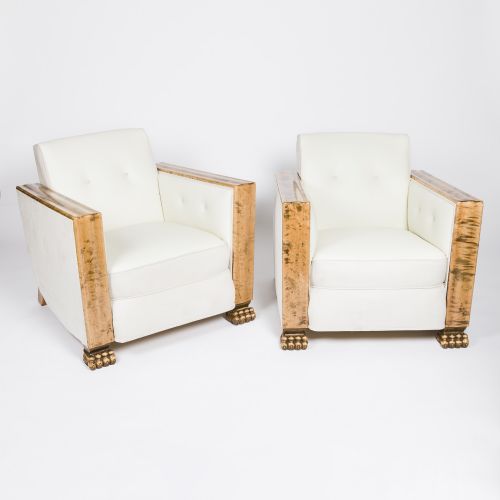
These 1930s walnut armchairs combine striking wood grains with bold silhouettes, offering both period character and deep comfort for a seating layout.
1930s Walnut Armchairs
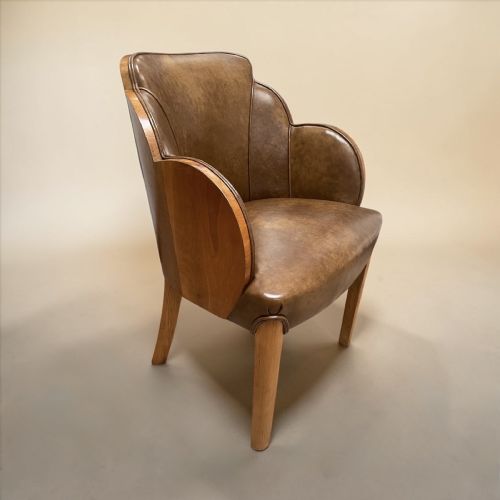
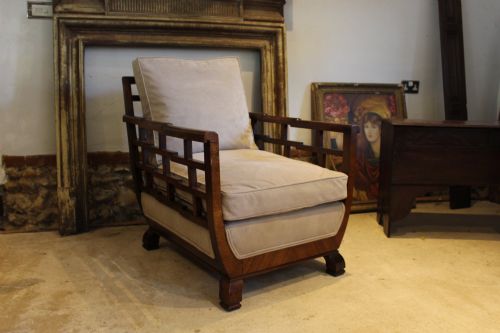
1930s walnut armchairs encompass seating pieces shaped by the prevailing tastes of the interwar decades, led predominantly by the Art Deco movement alongside occasional revivals. Buyers encounter everything from compact occasional chairs to substantial club and cloud chairs designed for relaxed lounging.
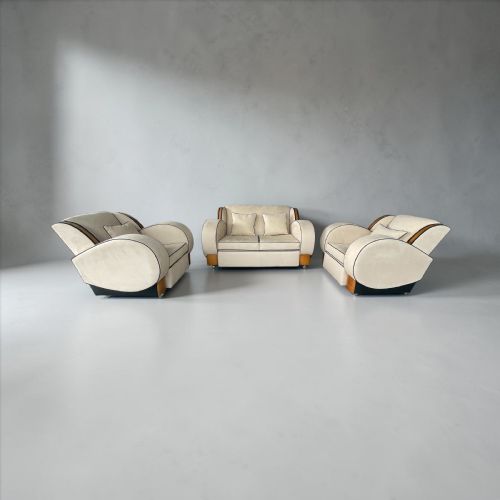
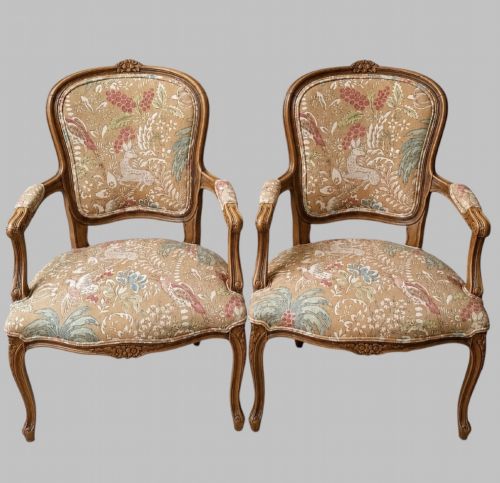
The material palette focuses heavily on walnut and burr walnut, frequently paired with leather, calf suede, or textile upholstery. Alongside individual armchairs, the selections often include matching pairs, full lounge suites, and desk chairs.
While the Art Deco aesthetic dominates the period output, variations such as Neo-Rococo, George I style wing chairs, and Victorian revivals also appear. Miniature apprentice pieces demonstrate that cabinetmakers applied the same stylistic rigour to smaller display items.
How they were made
Framing relies upon solid timber and hardwood foundations, providing structural integrity beneath the visible wooden surfaces. Cabinetmakers selected figured walnut and burr walnut veneers to wrap prominent curves and panels, displaying rich grain patterns.
Upholstery techniques combined traditional stuffing methods with supportive sprung interiors, finished in durable leather, suede, or textile coverings. Exposed wooden armrests and polished frames were shaped to accentuate the fluid lines characteristic of the era.
Miniature apprentice pieces appear among the full-sized suites, proving that tiny armchairs deserve just as much polish.
What varies in quality
The standard of walnut veneer selection and application largely defines the upper tier of these pieces, where book-matched grain patterns create symmetrical visual harmony across the frame. Master workshops devoted greater attention to the seamless integration of wooden chassis work and upholstered sections.
Maker attribution elevates certain examples, particularly where documented firms or prominent designers produced distinct forms like cloud suites or specialised desk chairs. The precision of joinery and the retention of original upholstery materials or complementary hides also distinguish finer specimens.
Hille·Harry and Lou Epstein
The 1930s Walnut Armchairs Glossary
- Burr walnut
- A veneer sliced from the gnarled growths on walnut trees, prized for its swirling, highly figured grain patterns. It provides a decorative surface widely used on prominent panels of interwar seating.
- Art Deco
- A design style emerging in the interwar period characterised by streamlined forms, geometric symmetry, and luxurious materials. It represents the primary aesthetic influence found across these chair listings.
- Cloud chair
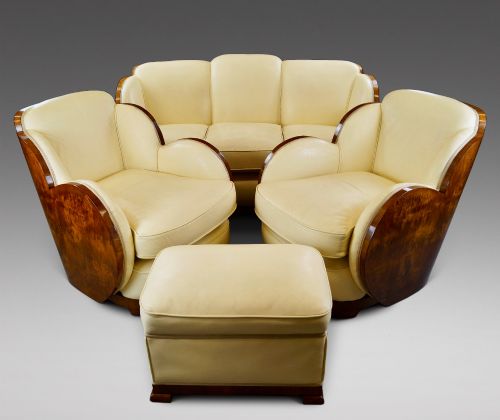
- A generously proportioned armchair featuring rounded, bulbous upholstered sections reminiscent of soft cumulus formations. These pieces are frequently attributed to notable makers of the era.
- Occasional chair
- A light, movable chair designed for intermittent use rather than primary seating, often positioned in corners or bedrooms. They frequently showcase decorative woodwork suited to prominent display.
- Wing armchair
- A traditional seating form featuring protective side panels attached to the backrest to block drafts. Twentieth-century interpretations adapted this classic silhouette using walnut frames and leather upholstery.
1930s Walnut Armchairs: Frequently Asked Questions
What defines a cloud armchair?
Cloud armchairs feature heavily padded, rounded upholstery that creates a bulbous, billowing silhouette. This design prioritizes deep comfort while maintaining a distinct geometric presence typical of the 1930s.
Such seating often forms the centrepiece of a matching lounge suite, accompanied by a matching sofa and smaller chairs.
How do I identify Art Deco chairs?
Art Deco chairs typically display streamlined silhouettes, smooth polished walnut surfaces, and geometric symmetry. Designers minimised superfluous ornamentation in favour of clean, sweeping lines that emphasised the natural grain of the wood.
Upholstery choices on these pieces frequently include smooth leather, suede, or textured fabrics tailored tightly to the rounded frame.
Are these chairs suitable for daily use?
Most of these pieces were built with sturdy hardwood frames and sprung interiors designed for regular domestic seating. Their robust construction supports comfortable daily lounging when maintained properly.
Leather and suede upholstery options offer durability, though vintage textiles may require more careful upkeep or professional conservation.
How are different stylistic periods distinguished?
Distinguishing periods relies on observing the underlying structural motifs and historical revivals present in the woodwork. While 1930s pieces lean towards Art Deco streamlining, occasional examples borrow elements from George I or Neo-Rococo traditions.
Examining the shape of the armrests, legs, and backrest proportions helps clarify whether a piece follows modernist or revivalist design codes.