
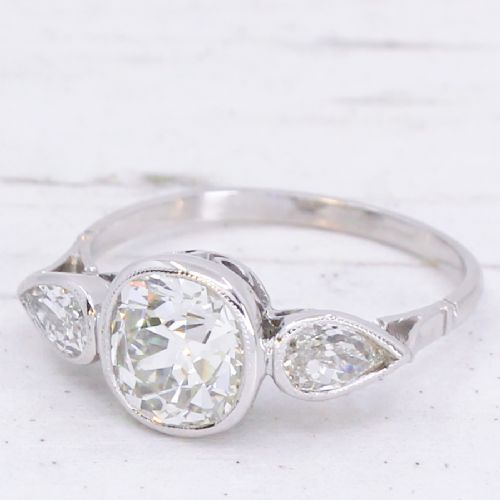
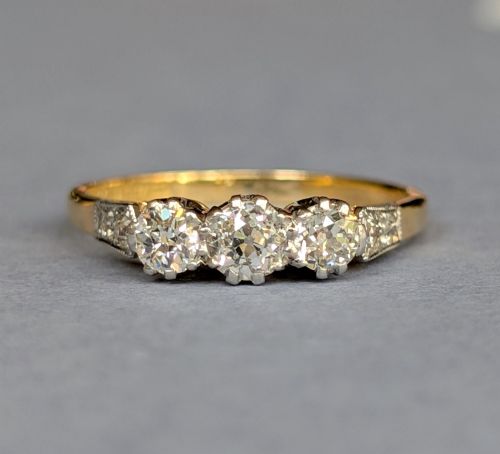


1930s Three Stone Ring
A 1930s three stone ring carries a distinct geometric elegance, offering a bold trilogy of gems that collectors seek for authentic period character.
1930s Three Stone Ring
A 1930s three stone ring embodies the geometric discipline of the Art Deco era, placing three principal gems in a linear horizontal arrangement along the finger. Buyers encounter these pieces in distinct forms, primarily as traditional trilogy engagement rings or sophisticated dress rings.
The materials span platinum and varied golds, often pairing central diamonds with rich coloured stones such as Burmese sapphires, Colombian emeralds, and natural rubies. These combinations reflect the period preference for high-contrast chromatic brilliance and structured metalwork.
Most examples hail from the 1930s proper, though stylistic overlaps reach slightly into adjacent decades around 1920 and 1940. Surviving pieces demonstrate the enduring appeal of the classic trilogy format executed through the lens of early twentieth-century design.
Materials and Construction
Goldsmiths of this period utilised durable platinum alongside 18ct white gold, yellow gold, and occasionally 9ct gold or palladium to mount the stones securely. Platinum settings allowed for fine, knife-edge claws and intricate piercing that maximised light entry into the diamonds and coloured gems.
Stones were cut by hand, yielding old cushion cuts, old pear cuts, and varied old European cuts that display broad facets rather than modern uniform brilliance. These antique cutting techniques give each ring an individual sparkle that differs noticeably from machine-cut contemporary stones.
Current listings demonstrate a strong preference for platinum settings paired with old cut diamonds and coloured gems like sapphires.
Distinctions in Quality
Quality rests upon the natural origin and saturation of the centre stones, particularly in emeralds, rubies, and sapphires where minor oil treatments or Burmese provenance elevate the significance. The weight and spread of the matched diamonds also dictate the overall visual impact of the piece.
The precision of the metalwork defines the superior end of the market, where hand-pierced platinum galleries and secure claw work remain intact and crisp. Finer rings maintain their structural integrity while presenting a delicate, lightweight silhouette on the hand.
The 1930s Three Stone Ring Glossary
- Trilogy ring
- A ring set with three principal stones, often symbolising the past, present, and future. This term is frequently used interchangeably with a three stone configuration.
- Old cut diamond
- A hand-faceted diamond cut before modern proportions were standardised in the mid-twentieth century. These stones typically feature smaller tables and higher crowns.
- Platinum
- A dense, strong white metal prized in the period for its ability to hold delicate settings securely without heavy bulk. It remains the quintessential metal for fine Art Deco jewellery.
- Illusion setting
- A technique where a metal plate surrounding a smaller diamond is faceted or polished to reflect light, making the stone appear larger. This method was popular in utilitarian and decorative periods alike.
1930s Three Stone Ring: Frequently Asked Questions
How do I wear a 1930s three stone ring safely?
These rings suit daily wear provided you remove them during heavy manual tasks to protect the antique settings and claws.
Store each ring separately in a lined box to prevent the diamonds from scratching softer gemstones or adjacent pieces.
What does a trilogy ring symbolise?
Traditional lore associates the three stones with the past, the present, and the future of a relationship.
In the context of the 1930s, the arrangement served primarily as a striking geometric design choice rather than a strict sentimental rule.
How do I identify Art Deco style?
Art Deco design relies on clean lines, symmetrical motifs, and strong geometric shapes rather than the flowing organic curves of earlier Edwardian or Art Nouveau jewellery.
In rings, this translates to stepped shoulders, calibrated side stones, and crisp architectural mountings.
Can I resize an antique ring?
Most gold and platinum rings from this era can be adjusted by a skilled jeweller who understands antique construction methods.
Care must be taken near pierced galleries and side stones to avoid compromising the original metalwork.