

1930s Tallboy
A 1930s tallboy brings vertical storage and strong geometric presence to a room, combining upright proportions with practical drawer space.
1930s Tallboy
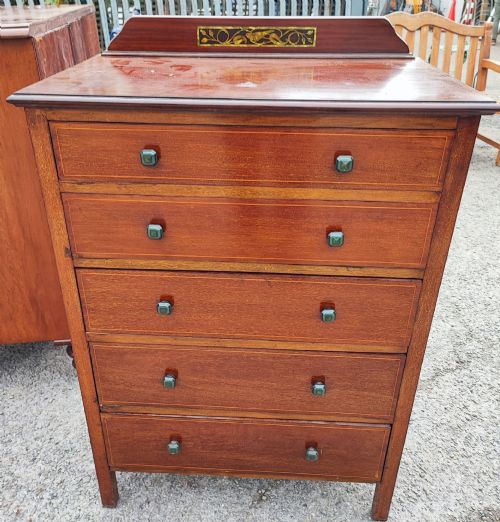
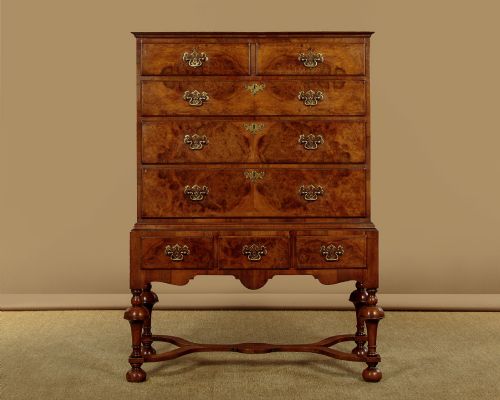
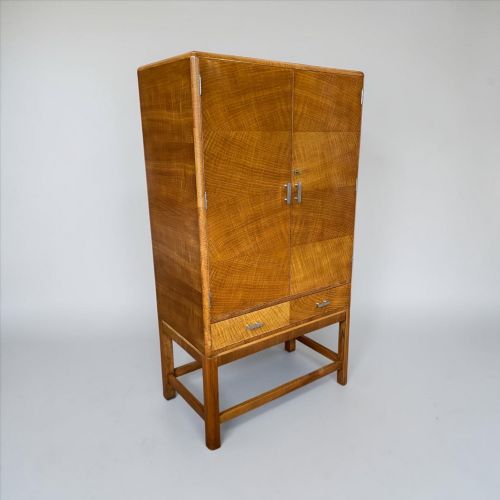
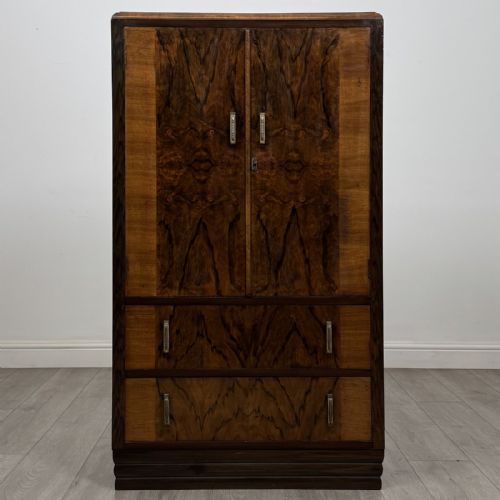
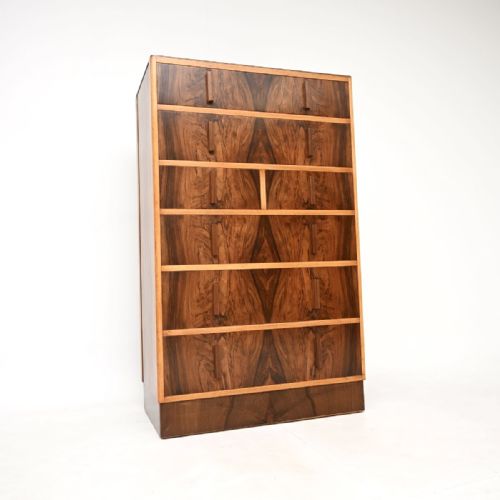
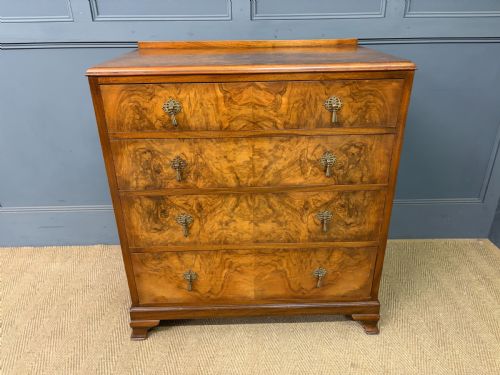
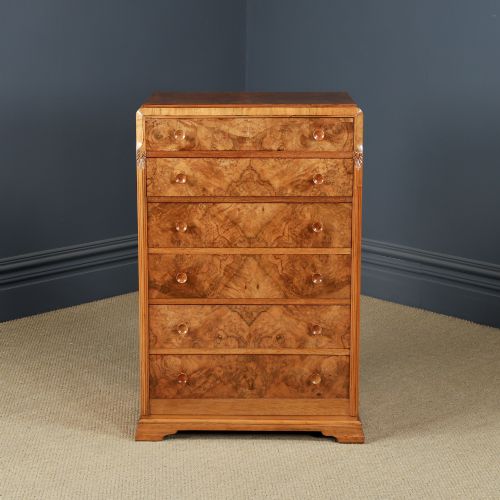
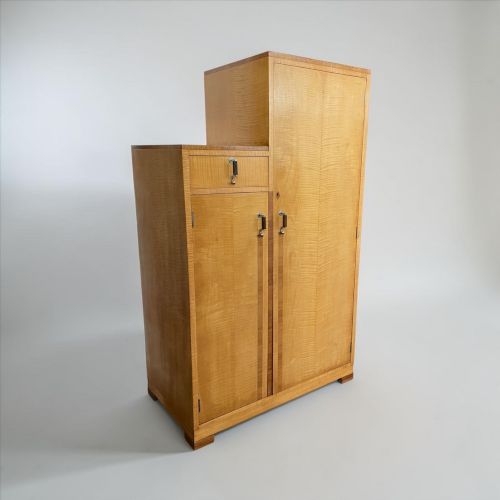
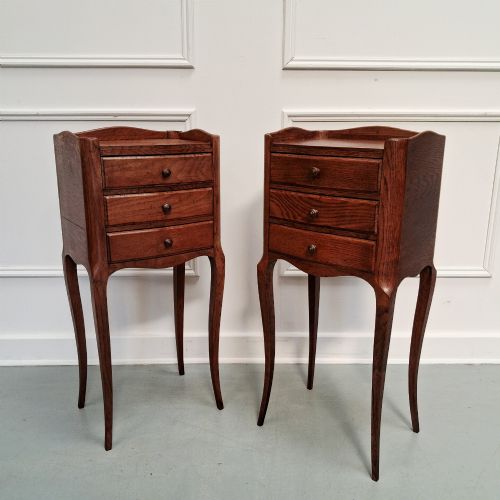
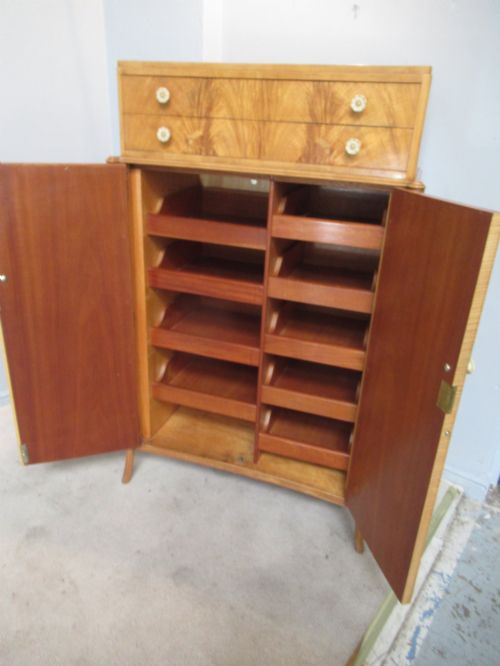
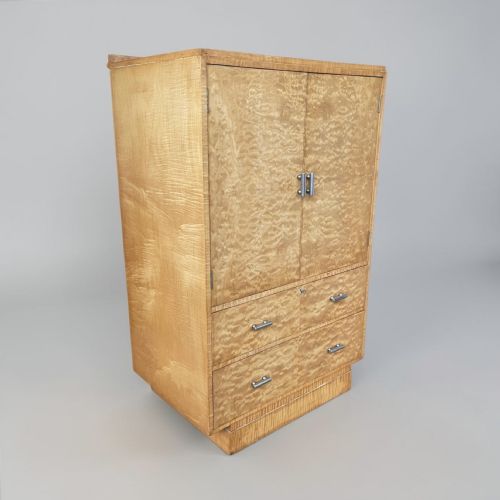
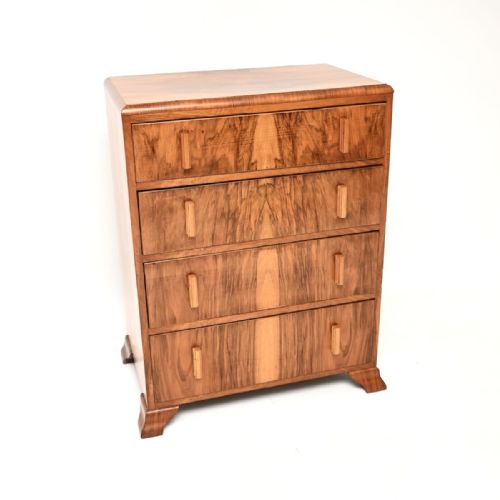
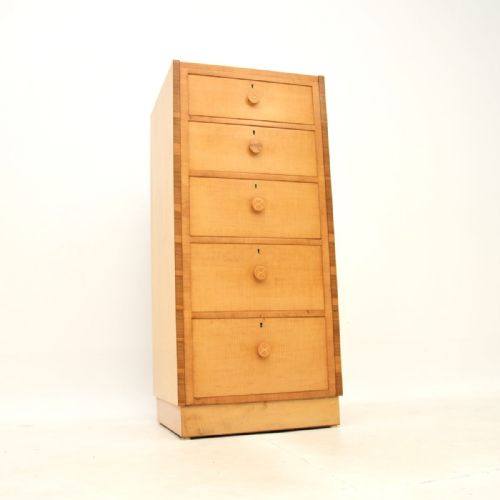
A 1930s tallboy stands as a tall chest of drawers, often combining cupboards or compactum sections within its upright frame. These pieces emerge predominantly from the Art Deco period, though listings include examples spanning from the Edwardian era into the 1940s.
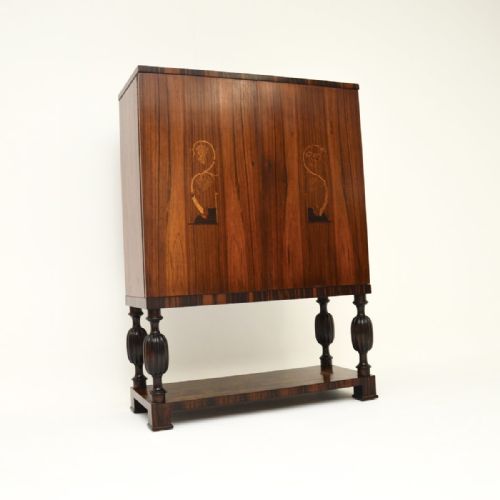
The form appears in various regional interpretations, taking shapes from English walnut designs to French provincial styles and Swedish Grace cabinets. Buyers will also encounter related pieces such as bedside tables, chests of drawers, and wardrobes sharing the same vertical emphasis.
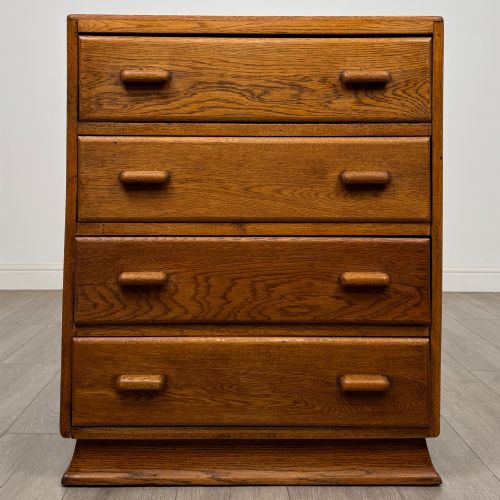
Makers represented in the inventory include Hille, Betty Joel, and Heal's, marking the height of cabinet-making during this era. Construction ranges from utilitarian oak to highly decorative figured timbers designed to anchor a bedroom scheme.
Factors influencing quality
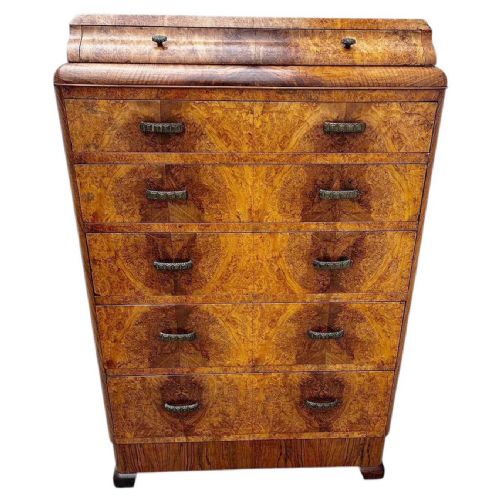
The selection of timber veneer dictates much of the visual merit, where book-matched burr walnut or figured grain patterns elevate a standard carcass into an arresting focal point. Superior examples display thoughtful grain continuity across multiple drawers and doors.
Construction methods and hardware integration separate standard production items from pieces produced by noted firms. Original wooden handles, specialist metalwork, and clean interior drawer linings demonstrate the underlying standard of manufacture.
1930s Tallboy Retail Price Guide 2026
Typical asking prices for 1930s tallboy among the pieces listed under this phrase on Sellingantiques today, from the lower quarter to the upper quarter. They describe what is for sale here now, not the wider market.
Listings for this phrase feature pieces spanning from the Edwardian era through the 1940s, with a heavy concentration originating from the 1930s.
Hille·Betty Joel·Heal's
The 1930s Tallboy Glossary
- Tallboy
- A tall upright chest of drawers, often combining a wardrobe or cupboard section above or beside the primary drawers. This form maximises vertical storage capacity while occupying a compact floor footprint.
- Compactum
- A fitted wardrobe or multi-compartment storage cabinet designed to hold a variety of garments in an organised manner. These pieces frequently feature internal shelving, hanging space, and small drawers.
- Burr walnut
- A specialised wood veneer harvested from the gnarled growths on walnut trees, prized for its swirling, highly decorative grain patterns. Makers applied this material to prominent exterior surfaces for dramatic effect.
- Art Deco
- A design style spanning the 1920s and 1930s characterised by streamlined geometric shapes, stylised motifs, and luxurious materials. It heavily influences the aesthetic of the tallboys and cabinets from this era.
1930s Tallboy: Frequently Asked Questions
What is a 1930s tallboy?
A 1930s tallboy is a tall chest of drawers designed to provide substantial vertical storage within a relatively narrow footprint. Many examples incorporate cupboards or compactum sections alongside standard drawers.
These pieces typically date from the Art Deco era and showcase the characteristic veneers and streamlined forms of that decade. They serve as both practical bedroom furniture and sculptural decorative objects.
How do I identify Art Deco furniture?
Art Deco furniture relies on clean geometric lines, symmetrical wood grains, and an absence of fussy historical ornamentation. Look for streamlined silhouettes and contrasting timber veneers.
Materials such as burr walnut, maple, and sycamore often feature alongside metal or bakelite handles. Pieces by notable firms like Heal's or Hille frequently embody these modern design principles.
Where should I place a tallboy?
A tallboy suits bedrooms, dressing rooms, or hallways where floor space is limited but vertical storage is required. Its height allows it to hold a large volume of clothing without dominating the room's footprint.
Position the piece against a solid wall where its grain patterns and proportions can be fully appreciated. Ensure adequate clearance for opening doors and pulling out drawers.
How do I care for walnut veneer?
Walnut veneer requires protection from direct sunlight and excessive moisture to prevent fading and warping. Dust the surface regularly with a soft, dry cloth.
Avoid silicone-based polishes and instead use traditional beeswax sparingly to nourish the timber. Maintaining a stable room temperature helps preserve the integrity of the underlying wood and veneer.