






1930s Streamlined Credenza
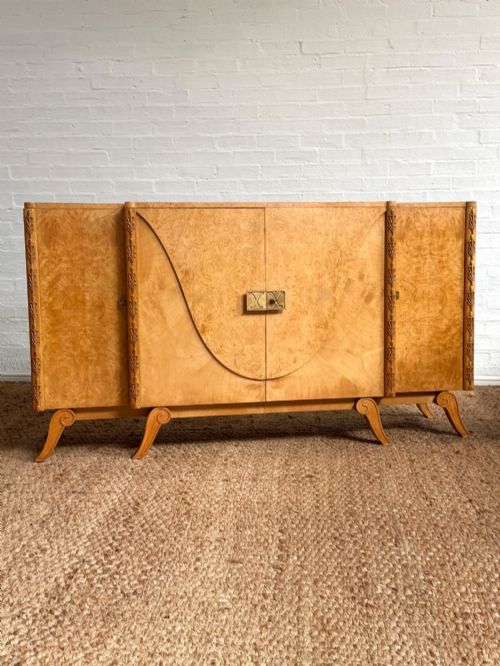
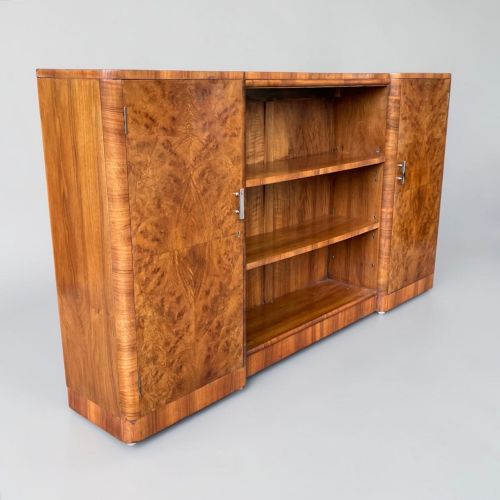
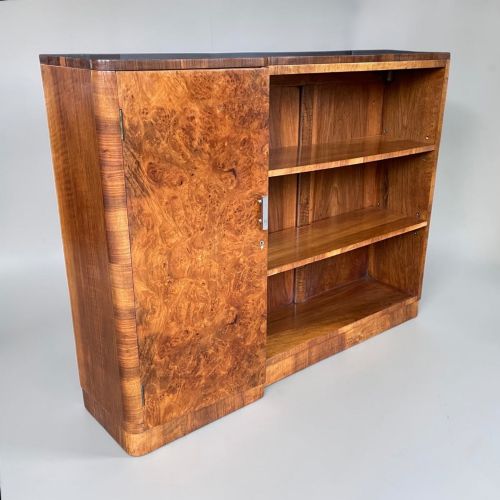
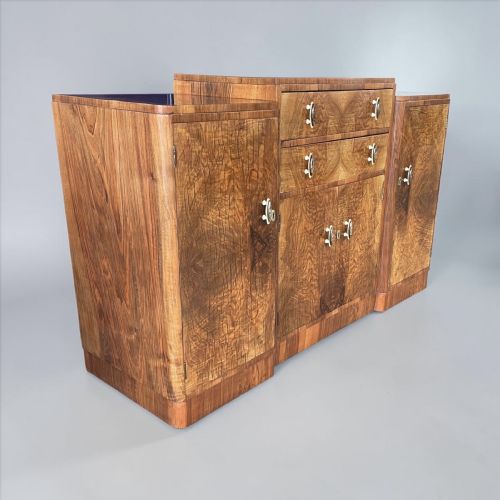
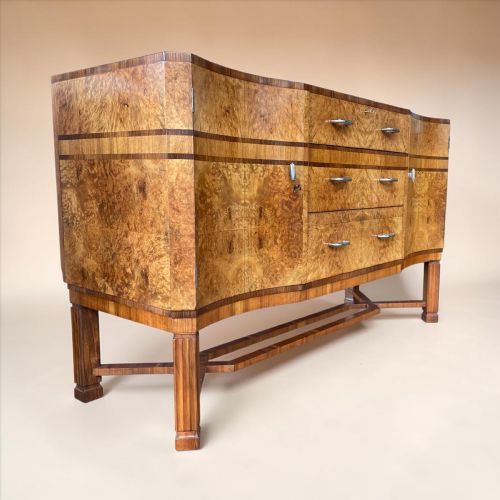
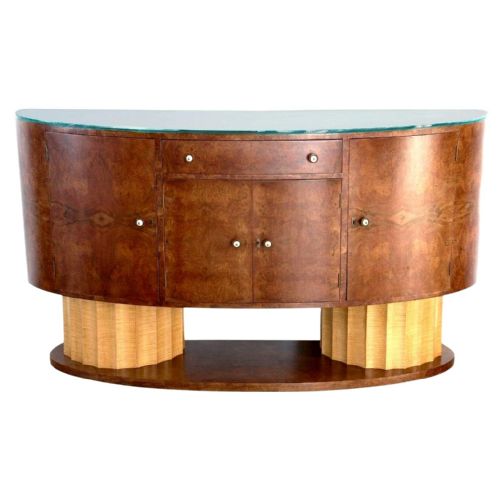
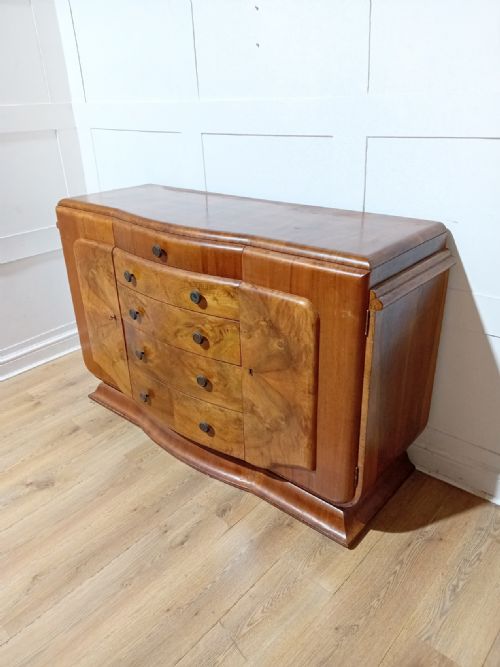
A 1930s streamlined credenza brings the bold geometries and sweeping horizontals of Art Deco design into a room.
1930s Streamlined Credenza
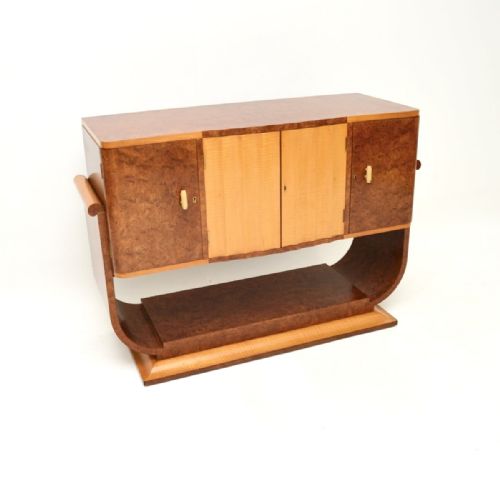
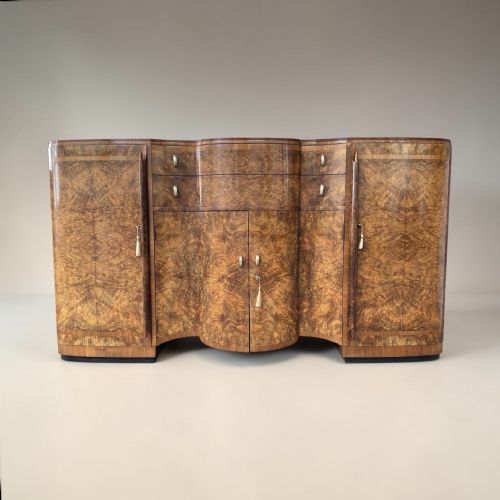
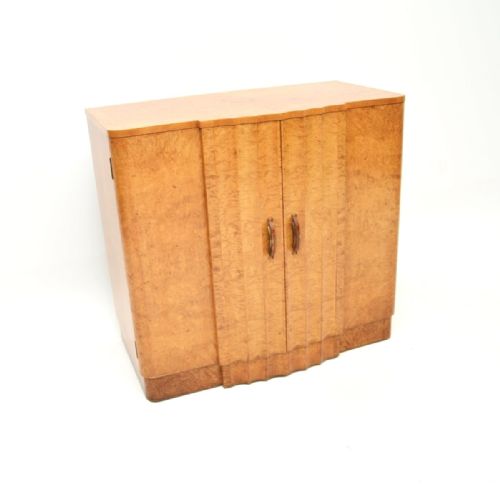
A 1930s streamlined credenza belongs to the Art Deco movement, taking the form of sideboards, sideboards and buffets, sideboards and credenzas, cabinets, and cocktail cabinets. These pieces serve as substantial storage furniture for dining rooms and principal living spaces, providing surface area and internal compartments behind fitted doors.
The version most commonly met on this page is the Art Deco sideboard or cabinet originating from the 1920 and 1930 periods. These forms lean into long, low silhouettes and curved profiles that define the streamline aesthetic of the era.
Makers such as S. Hille & Co. Ltd., Maurice Adams, Harry and Lou Epstein, and Hamptons of Pall Mall London produced these forms. Alongside these major workshops, many pieces appear without recorded attribution while maintaining the same characteristic styling.
How these pieces were made
Makers constructed these pieces using solid woods and wood veneers, prominently employing walnut and burr walnut alongside contrasting sycamore. Metal and brass elements appear as decorative details, handles, and trim to accentuate the clean lines.
The application of burr walnut veneer and sycamore required precision woodworking techniques to align complex grain patterns across large surfaces. Cabinetmakers matched wood figures symmetrically on doors and drawer fronts to create striking visual rhythms.
1930s Streamlined Credenza Retail Price Guide 2026
Typical asking prices for 1930s streamlined credenza among the pieces listed under this phrase on Sellingantiques today, from the lower quarter to the upper quarter. They describe what is for sale here now, not the wider market.
Several cocktail cabinets hide mirrored glass and mixing slides behind curved doors, ready for a 1930s party.
What varies in quality
Quality depends upon the selection and matching of wood veneers, where symmetrical burr walnut figures and crisp sycamore stringing elevate a piece above plain alternatives. The integration of metal and brass hardware also distinguishes standard production from more ambitious workshop output.
Construction standards differ between larger attributed commissions from London firms and anonymous workshop pieces. The handling of curved corners, internal fitting for cocktail compartments, and overall proportion separate standard storage units from exceptional examples.
S. Hille & Co. Ltd.·Maurice Adams·Harry and Lou Epstein·Hamptons of Pall Mall London
The 1930s Streamlined Credenza Glossary
- Credenza
- A long, low cabinet traditionally used for serving food or storing dining items. In this context, the term groups together sideboards, buffets, and large cabinets from the period.
- Art Deco
- A design style spanning the 1920s and 1930s characterised by streamlined forms, geometric ornamentation, and modern industrial materials. It replaced the ornate floral motifs of earlier Victorian and Edwardian periods.
- Burr Walnut
- A specialised wood cut from walnut tree growths, yielding a swirling, marbled grain pattern. Cabinetmakers used burr walnut veneer on primary display surfaces for decorative impact.
- Sycamore
- A pale hardwood utilised for contrasting inlay, stringing, and secondary internal surfaces. Its light tone balances the darker, richer hues of walnut.
- Cocktail Cabinet
- A specialised storage piece fitted internally for the preparation and service of drinks. These cabinets often feature mirrored interiors, glass shelves, and pull-down mixing surfaces.
1930s Streamlined Credenza: Frequently Asked Questions
What is a 1930s streamlined credenza?
A 1930s streamlined credenza is a low, horizontal storage cabinet from the Art Deco period, typically featuring rounded edges and polished wood surfaces.
These pieces were designed to store dining room items or serve as cocktail cabinets in contemporary homes.
How were these credenzas used originally?
Originally, these pieces functioned as sideboards for serving meals, storage for fine china, or dedicated cocktail cabinets for entertaining guests.
Interior fittings often included specialised shelves, bottle racks, and pull-down surfaces for mixing drinks.
How do I live with a walnut credenza?
Living with a walnut credenza involves placing it out of direct sunlight to protect the wood veneers and polished finishes from fading.
Regular dusting with a soft cloth maintains the natural lustre of the burr walnut and sycamore surfaces.
How do I identify Art Deco period pieces?
Art Deco pieces are identified by their geometric symmetry, streamlined horizontal lines, and the use of modern metals combined with exotic wood veneers.
Maker marks, signatures, or workshop stamps inside drawers and cabinets provide further confirmation of origin and date.