




Art Deco Server Cabinet
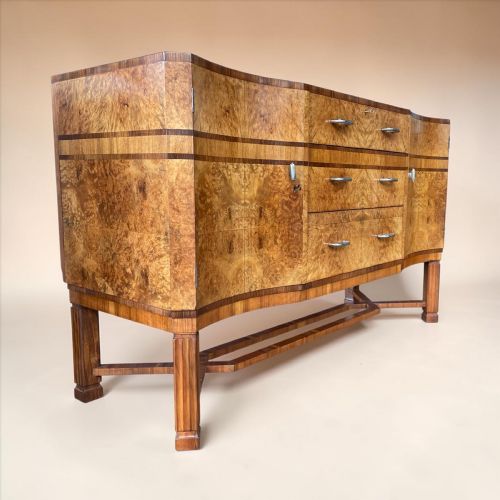
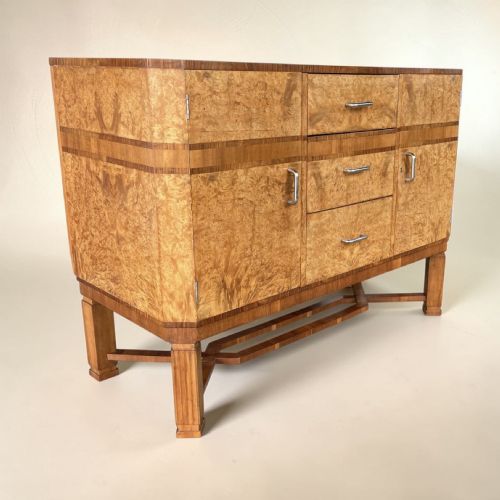
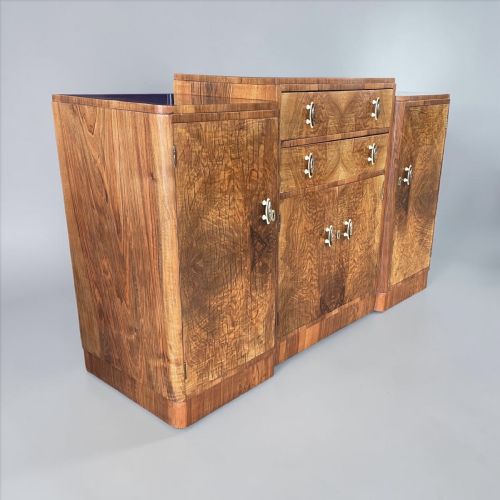
An art deco server cabinet anchors a dining room with bold geometric lines and rich figured woods.
Art Deco Server Cabinet
An art deco server cabinet combines storage and display, appearing mainly as sideboards, sideboards and buffets, or cocktail cabinets from the 1920 and 1930 periods. These pieces serve dining rooms and living spaces by offering fitted compartments for cutlery, glassware, and bottles.
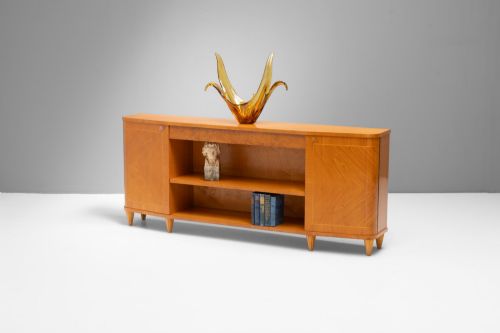
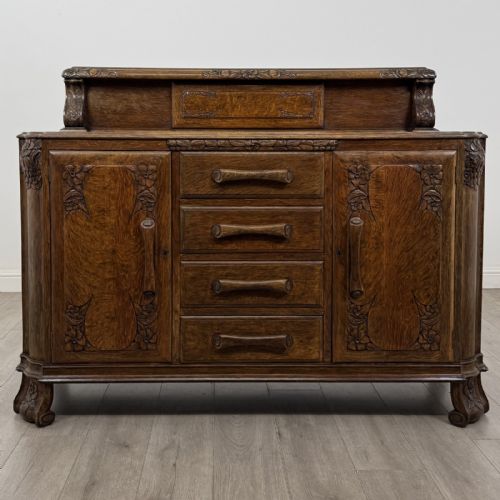
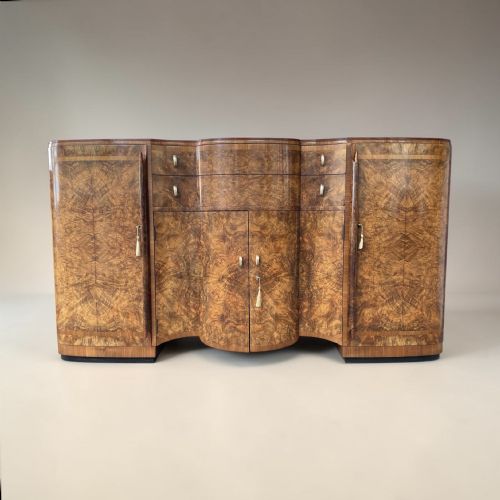
The version most commonly met on this page is a sideboard form, often featuring double bow fronts or streamlined rectilinear carcases. Makers paired substantial storage capacity with decorative veneers to create a striking silhouette against interior walls.
Origins span British workshops as well as French and Italian makers, introducing regional variations in proportion and ornamentation. Buyers select these cabinets to anchor a room with period character while providing practical storage surfaces.
Materials and Construction
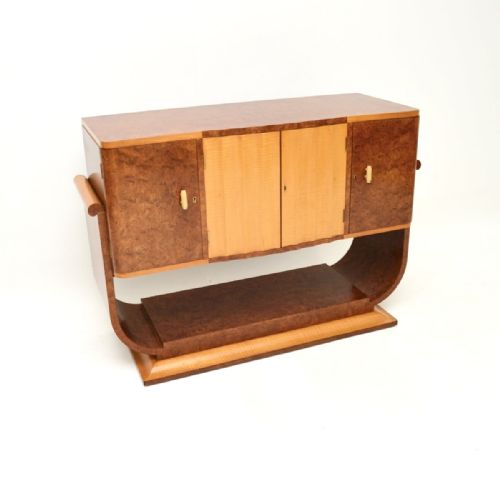
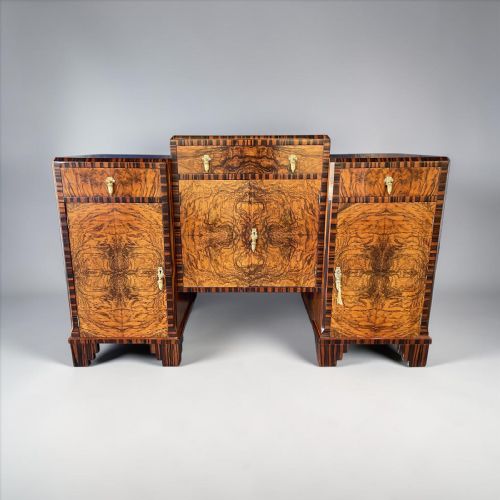
Cabinet makers relied on walnut and burr walnut veneers applied over solid secondary timbers to create highly figured, symmetrical grain patterns on the main surfaces. Sycamore, oak, and macassar ebony appear alongside walnut to provide contrasting borders and interior details.
Metal elements in chrome, brass, and occasional metal fittings define the handles, hinges, and structural trims. Glass and bakelite components feature in cocktail sections and interior shelving, completing the mixed-media aesthetic typical of the style.
Art Deco Server Cabinet Retail Price Guide 2026
Typical asking prices for art deco server cabinet among the pieces listed under this phrase on Sellingantiques today, from the lower quarter to the upper quarter. They describe what is for sale here now, not the wider market.
Listings feature pieces spanning the 1920 and 1930 periods, incorporating materials such as burr walnut, walnut veneer, brass, glass, bakelite, and chrome.
Qualities That Set Pieces Apart
The choice of veneer sets the visual hierarchy, with book-matched burr walnut and macassar creating intricate, mirrored patterns across the doors and drawers. Plain timber surfaces sit lower in the range than those showcasing expert grain selection.
Hardware integration and interior fitments distinguish workshop production, particularly where fitted bottle racks, pull-out slides, and original glass sections remain intact. Cabinets bearing attributed maker marks demonstrate higher levels of joinery precision in curved carcase construction.
Maurice Adams·Gomme·Heals of London·Harry and Lou Epstein·Hamptons of Pall Mall London
The Art Deco Server Cabinet Glossary
- Burr walnut
- A wood veneer taken from the growth excrescence of a walnut tree, yielding swirling, knotty patterns. It forms the primary decorative surface on many high-end cabinets.
- Cocktail cabinet
- A specialised storage unit designed for mixing and serving drinks, typically featuring mirrored interiors, glass shelves, and pull-out preparation slides.
- Bow front
- A convex, curved cabinet front that projects outward in a smooth arc. This shape softens the geometric rigidity typical of the period.
- Macassar
- A heavily figured tropical timber featuring dark brown and black stripes against a warm background. It provides a dramatic contrast in Parisian pieces.
- Veneer
- A thin layer of choice wood glued to a base timber to give an ornamental finish. Skilled application ensures grain patterns align across multiple doors.
Art Deco Server Cabinet: Frequently Asked Questions
How do I use an art deco server cabinet today?
These cabinets function as traditional sideboards in dining rooms or as dedicated drinks stations in living areas. Their internal shelving and cupboards easily accommodate modern tableware, linens, or glassware.
The flat top surface also provides ample room for serving food during gatherings or displaying decorative lamps and objects. Their robust construction ensures they remain practical for daily domestic use.
What woods were most commonly used?
Walnut and burr walnut dominate the selection, prized for their rich brown tones and decorative grain movement. Secondary woods like oak and sycamore appear in structural framing and contrasting stringing.
Exotic imports like macassar ebony also feature on continental pieces to create bold geometric patterns. Metal and glass details complete the material palette without overshadowing the timber.
How do I care for burr walnut surfaces?
Keep wooden cabinets away from direct sunlight and strong heat sources to prevent the veneers from drying out or splitting. Dust regularly with a soft, dry cloth and apply occasional specialist wax polish to maintain the sheen.
Avoid using abrasive cleaners or excessive moisture on the polished surfaces. Promptly wipe away any liquid spills to protect the delicate grain underneath.