



1920s Art Deco Buffet
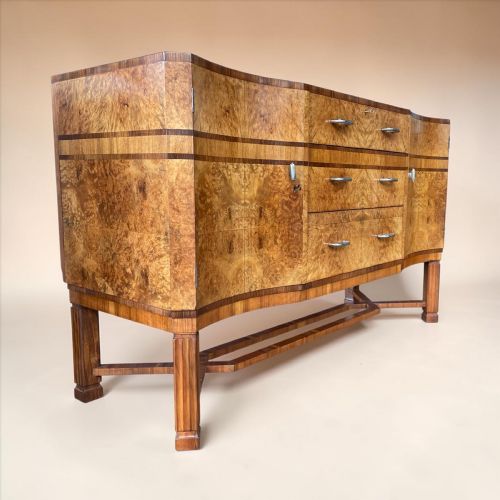
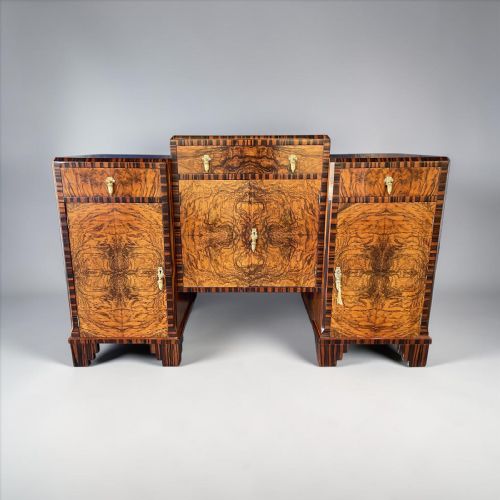
These 1920s art deco buffets bring architectural presence and dramatic grain figures to a dining room, offering serious storage.
1920s Art Deco Buffet
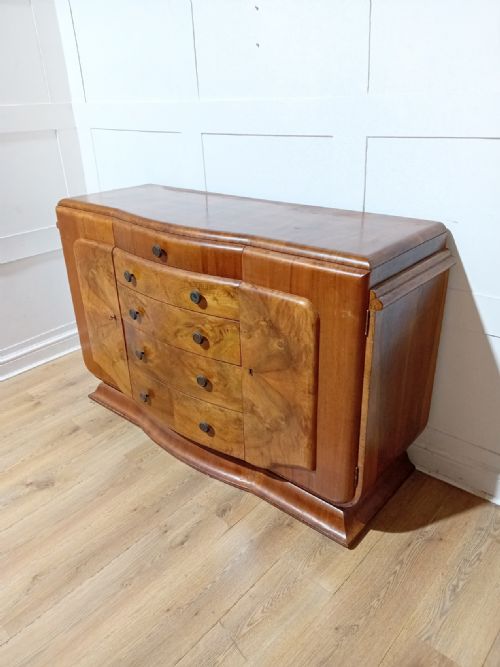
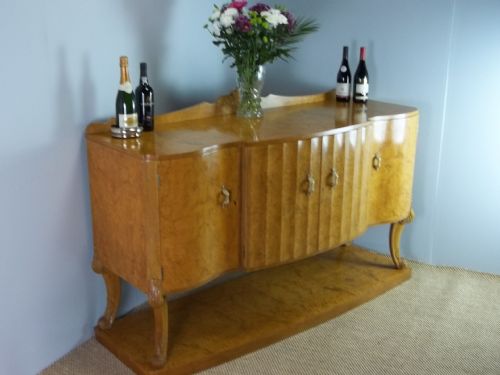
A 1920s art deco buffet serves as a commanding dining room centrepiece, taking the form of sideboards, cabinets, and serving tables. These substantial pieces provide enclosed storage for tableware while displaying the geometric lines and sophisticated profiles characteristic of the period.
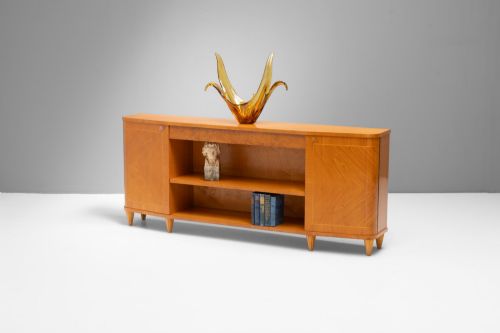
The pieces on this page span the 1920s and 1930s, encompassing distinct regional variations including Swedish Grace and Parisian designs. Alongside traditional British output from workshops like Heal's, buyers encounter French cabinets and streamlined sideboards.
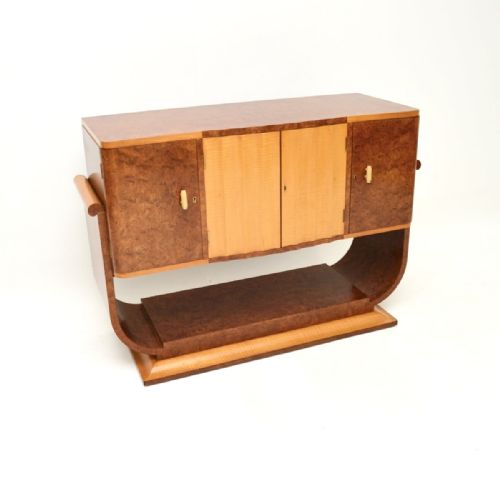
Forms range from compact small sideboards to expansive serving tables equipped with multiple cupboards and drawers. This variety allows a buyer to find a scale suited to modern dining spaces without sacrificing period character.
How they were made
Makers applied choice veneers such as burr walnut, flame birch, and macassar over solid carcases to create striking surface patterns. Sycamore and satinwood appeared alongside these dark woods to provide pale contrasting stringing and interior details.
Metal and brass components formed structural accents, key escutcheons, and handles that punctuated the polished wooden surfaces. Limed oak finishes also emerged, offering a lighter texture favoured in certain modernist workshops.
1920s Art Deco Buffet Retail Price Guide 2026
Typical asking prices for 1920s art deco buffet among the pieces listed under this phrase on Sellingantiques today, from the lower quarter to the upper quarter. They describe what is for sale here now, not the wider market.
Harry and Lou Epstein ensured their luxury sideboards carried enough presence to command an entire dining room entirely on their own terms.
What varies in quality
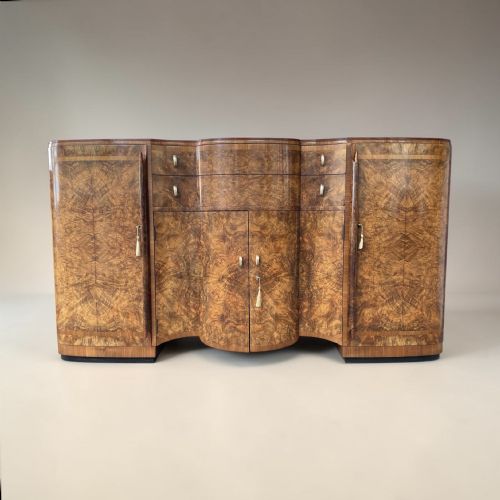
The skill of the veneer matching dictates the visual impact of the frontage, where book-matched grain creates symmetrical patterns across cupboard doors. Lesser pieces rely on plain timber surfaces that lack the deliberate rhythm of high-end cabinet work.
Attribution to documented makers such as Maurice Adams, Heal's of London, or Harry and Lou Epstein elevates a piece through verified workshop provenance. Construction integrity in the drawer lining and carcass stability further separates standard production from master craftsmanship.
Maurice Adams·Heals of London·Harry And Lou Epstein
The 1920s Art Deco Buffet Glossary
- Burr walnut
- A figured wood grain showing intricate swirling patterns caused by growth excrescences on the tree. It provides a highly decorative surface on cabinet doors.
- Swedish Grace
- A transitional architectural and design style bridging neoclassical rigidity and early functionalism. It appears on Scandinavian sideboards of this era.
- Macassar
- A dense exotic ebony veneer featuring dark brown and black stripes. This material originated in the Dutch East Indies and defined luxury Parisian cabinet making.
1920s Art Deco Buffet: Frequently Asked Questions
How do I style a buffet in a modern room?
Keep the top surface uncluttered by placing only one large statement lamp or a single ceramic vase upon it. Allow the strong grain and geometry of the wood to act as the primary focal point against neutral walls.
Position the piece where its length can anchor the room without blocking walking routes around a dining table. Ensure surrounding furniture keeps simple lines so the heavy cabinet work retains its visual authority.
What is the difference between a sideboard and a buffet?
A sideboard traditionally focuses on flat surface serving space and lower cupboard storage for dinnerware. A buffet often incorporates taller cabinetry or tiered serving sections designed specifically for food presentation.
In period terminology, makers used these terms interchangeably depending on regional workshop catalogues. Both forms fulfil the same primary function of dining room storage on this page.
How do I care for burr walnut veneer?
Protect the polished finish by keeping the timber away from direct sunlight and steady heat sources that cause wood to dry and split. Dust regularly with a soft, dry cloth rather than applying heavy silicone polishes.
Feed the grain occasionally with a suitable quality wax to maintain the moisture and lustre of the vintage surface. Avoid placing wet glasses or hot dishes directly onto the wooden top without protective mats.
How can I tell a 1920s piece from a later 1930s example?
Pieces from the early nineteen-twenties often retain subtle neoclassical proportions mixed with emerging geometric decoration. They frequently utilise rich burr walnut and traditional cabinet making joinery methods.
By the nineteen-thirties, designs turned more streamlined and functional, occasionally incorporating limed oak or exotic striped veneers like macassar. Swedish Grace influences also became more pronounced in northern European output towards that decade.