


1930s Standard Lamp
A 1930s standard lamp brings upright height and period presence to a room, cast in walnut, oak, chrome or brass.
1930s Standard Lamp
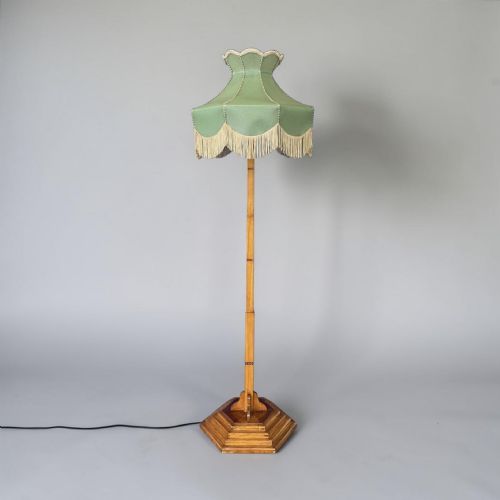
When you search for a 1930s standard lamp, you encounter tall floor-standing lighting designed to illuminate a room from a single vertical column. The pieces on this page span the 1920s and 1930s, reflecting the transition from traditional floor forms to striking modern designs.
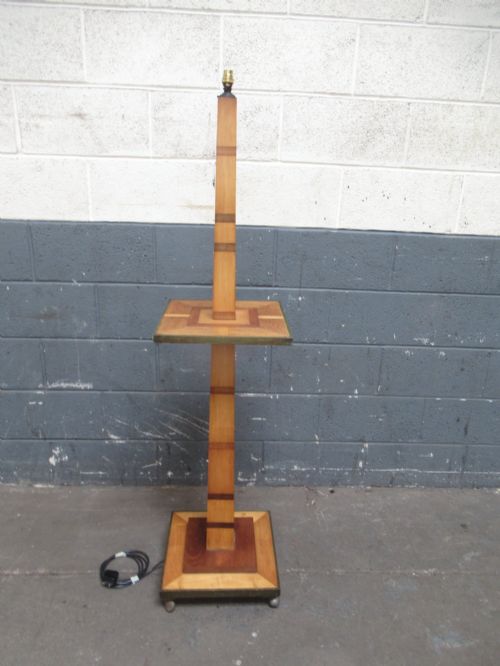
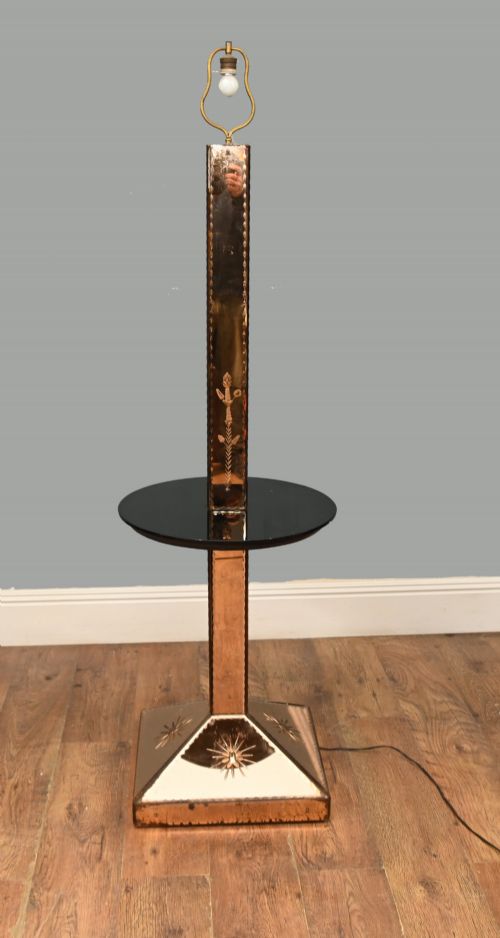
Art Deco examples dominate the selection, appearing alongside neoclassical revival pieces and traditional styles. You will find standard lamps combined with occasional tables, glass cocktail trays and torchiere uplighter formats.
Materials and construction
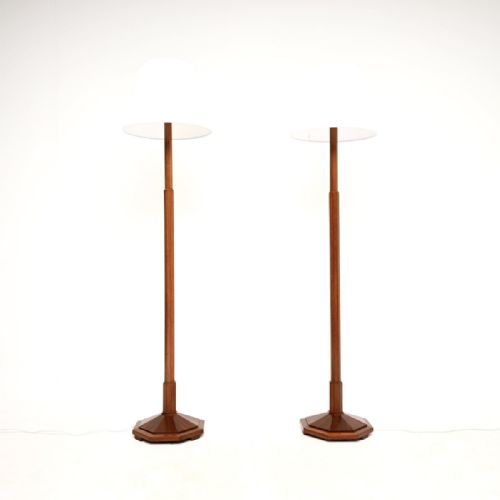
Craftsmen built these lamps using a foundation of hardwoods such as oak, walnut and mahogany, often pairing them with contrasting ebony details, giltwood or painted finishes. Metal components in brass and chrome provide structural stability and reflective contrast against the dark or blond wood grains.
Wiring runs internally through the timber or metal shafts, while shades utilise fabric or triple glass configurations to diffuse the light upwards or outwards. Specialised forms incorporate integral glass tables and torchiere bowls for ambient illumination.
1930s Standard Lamp Retail Price Guide 2026
Typical asking prices for 1930s standard lamp among the pieces listed under this phrase on Sellingantiques today, from the lower quarter to the upper quarter. They describe what is for sale here now, not the wider market.
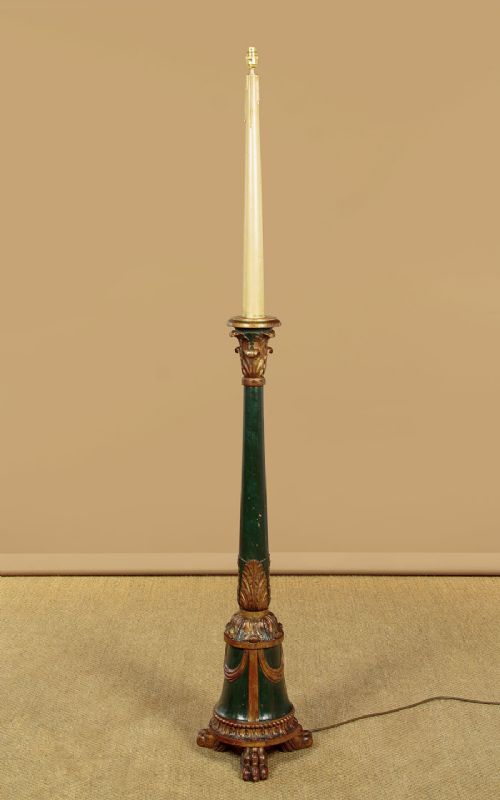
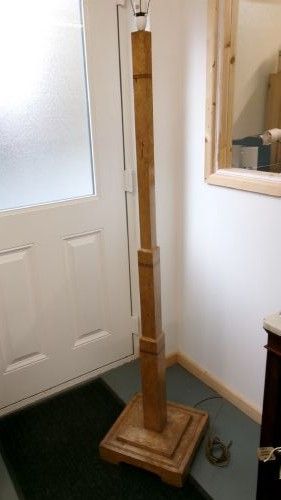
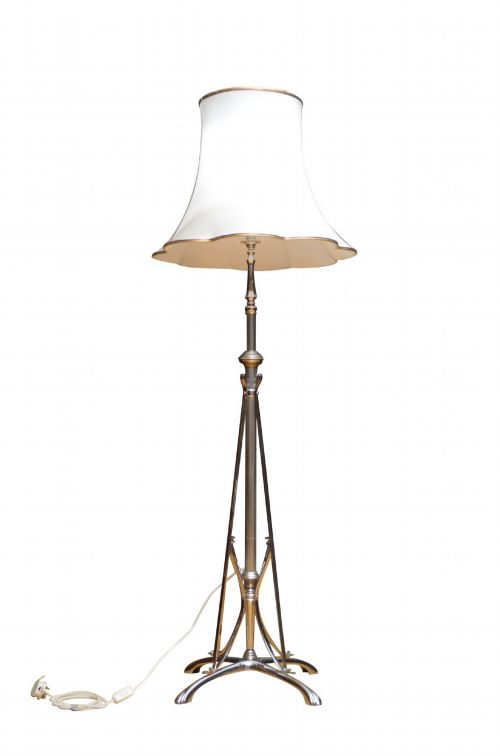
The listings on this page include floor lamps, standard lamps, lamp tables, and floor candle holders executed in oak, walnut, brass, chrome, and glass.
Quality factors in period lighting
The distinction between standard examples and finer pieces lies in the choice of timber veneer, such as figured golden walnut, and the precision of the geometric carving. Well-executed veneering and substantial metal mounts indicate a higher grade of manufacture.
Original fittings, integrated furniture elements like cocktail trays, and named cabinetmaker attributions elevate certain pieces above standard utility lighting. The cohesion of the original materials dictates the overall desirability of the lamp.
Harry and Lou Epstein
The 1930s Standard Lamp Glossary
- Torchiere
- A tall floor lamp designed to direct light upwards toward the ceiling. This form creates soft ambient illumination rather than direct task lighting.
- Standard lamp
- A British term for a floor lamp featuring a vertical post mounted on a heavy base. It typically supports a fabric or glass shade at eye level or above.
- Uplighter
- A lighting fixture that projects its beam straight up. In this period, these often feature wide metal or glass bowls.
- Veneer
- A thin layer of decorative wood applied to a sturdier secondary timber base. Blond walnut and figured oak veneers are common on these pieces.
- Lamp table
- A hybrid furniture form combining a standard lamp with a small occasional surface. These frequently incorporate glass cocktail tops.
1930s Standard Lamp: Frequently Asked Questions
What is a 1930s standard lamp?
A 1930s standard lamp is a tall floor-standing light fixture designed to illuminate a room while adding vertical architectural interest.
These pieces typically feature a wooden or metal shaft supported by a weighted base and topped with a fabric or glass shade.
How do I style a standard lamp?
Place a standard lamp beside a low armchair or sofa to provide functional reading light and height variation in a seating area.
Pieces that incorporate built-in tables or glass cocktail trays serve a dual purpose as both lighting and small occasional surfaces.
What materials are used?
These lamps employ a mix of woods including oak, walnut, mahogany and giltwood, frequently accented with ebony or painted finishes.
Metal elements in brass and chrome appear alongside glass shades and silk-covered diffusers.
How do I identify the Art Deco style?
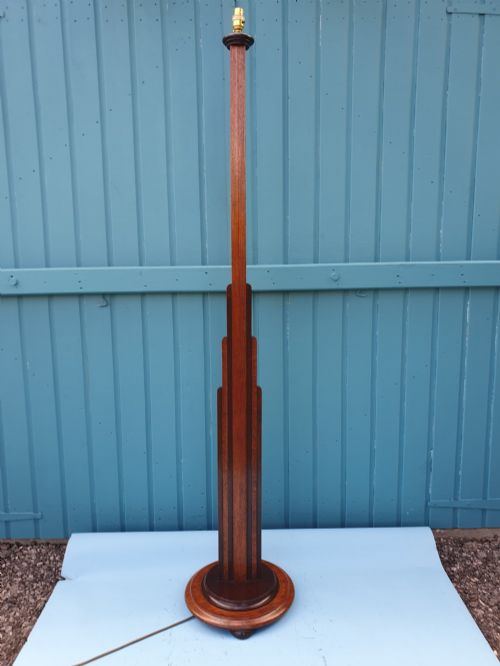
Art Deco standard lamps feature geometric lines, skyscraper or Odeon stepped forms, and contrasting wood grains like golden walnut.
They move away from heavy Victorian ornamentation in favour of sleek, streamlined vertical silhouettes.
Were these lamps combined with tables?
Yes, several examples integrate small surfaces directly into the vertical shaft to hold drinks or accessories.
These combination pieces function as both floor lamps and lamp tables to save space in smaller rooms.