



1930s Silver Box
A 1930s silver box brings geometric proportion and gleaming enamel to the dressing table or desk, offering both decorative presence and practical utility.
1930s Silver Box
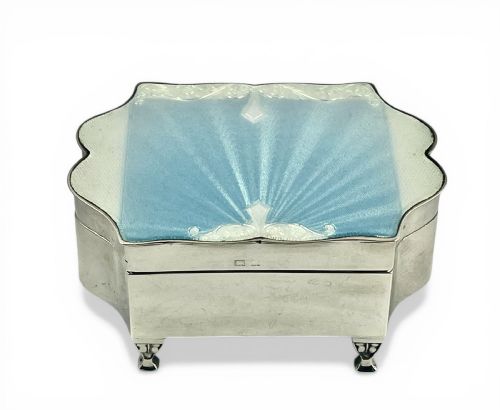
When searching for a 1930s silver box, buyers encounter items produced during a period dominated by geometric Art Deco styling and the reigns of George V and Edward VIII. The pieces appearing here encompass cigarette dispensers, jewellery boxes, powder compacts, vanity jars, and lidded containers intended for the dressing table or smoking room.
The aesthetic is defined by clean lines, crisp angles, and symmetrical patterns that break away from nineteenth-century ornamentation. Most examples stem from English assay offices, particularly Birmingham and Sheffield, alongside French workshops embracing the modern design vocabulary of the era.
Materials and Construction
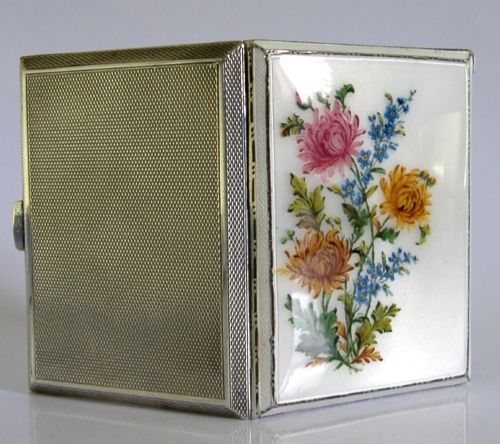
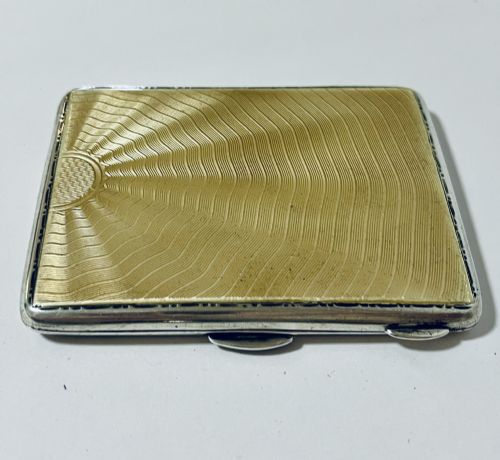
Makers utilised sterling silver alongside base metals, shaping carcasses to receive decorative surface treatments such as hand-painted enamel, translucent guilloche enamel, and textured shagreen. Interior compartments lined with velvet, satin, suede, or fabric provide a soft bed for cosmetics, cigarettes, and small trinkets.
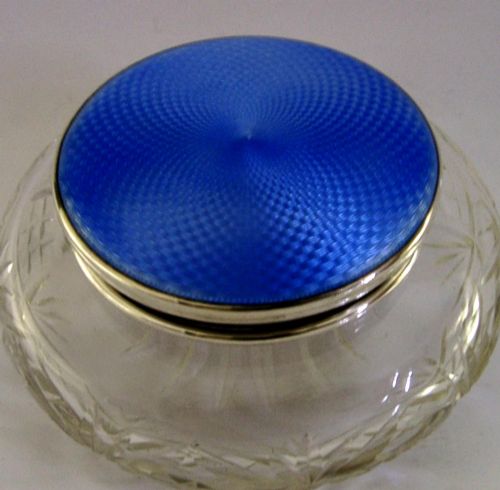
Cut glass and cut crystal frequently form the lower body of vanity jars and powder containers, capped with solid silver lids that often bear Birmingham hallmarks. The combination of reflective polished metal, coloured vitreous enamel, and heavy glass demonstrates the era's focus on tactile contrast.
Listings feature sterling silver, glass, and enamel combined in vanity jars, compacts, and cigarette cases across the 1920 to 1940 period.
Markers of Quality
The distinction between standard production and superior craftsmanship lies in the crispness of the engine-turning, the depth and translucency of the guilloche enamel, and the exactness of the lid closure. Heavy-gauge sterling silver provides a substantial weight in the hand, whereas lighter items rely on thin sheet metal over internal cores.
Makers such as Mappin & Webb or the Goldsmiths and Silversmiths Company maintained rigorous standards in their hinge mechanism construction and hallmark stamping. The preservation of original interior velvet or satin linings also separates well-kept pieces from those requiring restoration.
Goldsmith's and Silversmith's Co.·Walker and Hall·Mappin & Webb·Richard Hudnut
The 1930s Silver Box Glossary
- Guilloche enamel
- A decorative technique where an intricate geometric pattern is mechanically engraved onto metal beneath a translucent layer of coloured enamel. This method allows light to reflect through the glaze to create depth.
- Sterling silver
- An alloy comprising ninety-two point five percent silver by mass, with the remainder consisting of copper or other metals. English pieces regularly display the lion passant hallmark to confirm this standard.
- Assay office
- An official body charged with testing the purity of precious metal items and stamping them with hallmark symbols. Birmingham and Sheffield offices appear frequently on items from this decade.
- Shagreen
- Untanned skin from the back of a shark or ray, characterised by a distinctive rough, granular surface texture. It was often dyed in pastel or dark shades for luxury vanity accessories.
1930s Silver Box: Frequently Asked Questions
Were these boxes used for cigarettes?
Many lidded containers from this decade served as cigarette dispensers, cases, or tobacco boxes to suit the smoking habits of the period. Their dimensions were engineered to hold standard cigarette lengths of the time.
Other lidded examples functioned as powder compacts, vanity jars for dressing tables, or storage for small jewellery items.
How do I read the hallmarks?
English silver carries a series of small stamped marks including a lion passant for sterling standard, an anchor or crown for the assay town, and a date letter indicating the year of manufacture. These stamps provide definitive evidence of origin.
Matching the date letter to assay office records confirms the exact year the item was tested and sold.
What is guilloche enamel?
Guilloche is a decorative technique involving a mechanical lathe that etches precise geometric repeating patterns into a metal substrate. Translucent enamel is then applied over the engraving so the pattern shows through.
This method was widely employed on vanity cases, compacts, and jar lids during the Art Deco era.